 Save to Pinterest
 My kitchen smelled like ginger and soy one Thursday evening when I was racing against the clock to get dinner on the table. A friend had texted asking if she could stop by, and I had maybe thirty minutes to pull something together that didn't feel rushed or thrown together. I grabbed flank steak from the fridge, remembered how my neighbor once mentioned slicing it against the grain changes everything, and suddenly I had this plan forming—something warm, something that would make the apartment smell incredible, something that would feel intentional even though it was improvisational.
When my friend arrived that Thursday night, she walked straight into the kitchen without taking off her coat, drawn by the smell. We stood at the stove watching the sauce thicken in the pan, and she told me about a cooking class she'd taken years ago where the instructor said sauce is the soul of a dish. That stuck with me—suddenly I wasn't just making dinner, I was building something with intention, layer by layer.
Ingredients
- Flank steak or sirloin, thinly sliced: The magic happens when you slice against the grain—those fibers break apart and the meat becomes tender in minutes instead of needing hours of slow cooking.
- Soy sauce: Use it twice: once in the marinade to season the beef, again in the sauce for depth, because a single pass of soy flavor never feels complete.
- Cornstarch: This tiny ingredient does two jobs—it helps the beef stay tender and later thickens the sauce so it actually clings to everything instead of pooling at the bottom.
- Rice vinegar: A splash of brightness that keeps the marinade from tasting one-dimensional; don't skip it even though it seems small.
- Sesame oil: Just a teaspoon adds a toasted, nutty whisper that makes people ask what your secret is.
- Oyster sauce: The umami anchor that makes store-bought sauces taste flat by comparison; it's worth keeping a bottle on hand.
- Fresh ginger and garlic: Minced fresh, not powder—you want them to release their oils and wake up the whole dish when the sauce hits the hot pan.
- Honey or brown sugar: A touch of sweetness that balances the salt and creates complexity without tasting dessert-like.
- Broccoli florets: Steam them just until they turn bright green and still have a little snap when you bite them; overcooked broccoli tastes like surrender.
- Jasmine or long-grain rice: The bed everything sits on—fluffy jasmine holds sauce beautifully, but any rice you have works.
- Green onions and sesame seeds: These aren't afterthoughts; they add texture, freshness, and visual life that makes people want to eat it immediately.
Tired of Takeout? 🥡
Get 10 meals you can make faster than delivery arrives. Seriously.
One email. No spam. Unsubscribe anytime.
Instructions
- Prep your beef and get it marinating:
- Slice your steak thinly against the grain—if you look at the meat and see the lines running one direction, cut perpendicular to them. Toss the slices with soy sauce, cornstarch, rice vinegar, and sesame oil in a bowl, coating each piece evenly, then set it aside while you handle everything else.
- Mix your sauce components:
- In a separate bowl, whisk together soy sauce, oyster sauce, honey, ginger, garlic, and broth until everything dissolves and blends together. Keep the cornstarch slurry separate for now—you'll add it at the end to thicken.
- Steam the broccoli until it sings:
- Get your steamer going and add broccoli florets, cooking just until the color turns bright and vivid—about three to four minutes. Immediately rinse under cold water to stop the cooking and set aside; this keeps it crisp and alive.
- Sear the beef until it's golden:
- Heat your skillet or wok over high heat until it's genuinely hot—you want to hear a sizzle when the beef hits the pan. Lay out the marinated beef in a single layer and let it sit undisturbed for a minute or two, letting it develop color, then flip and cook the other side.
- Build the sauce and bring everything together:
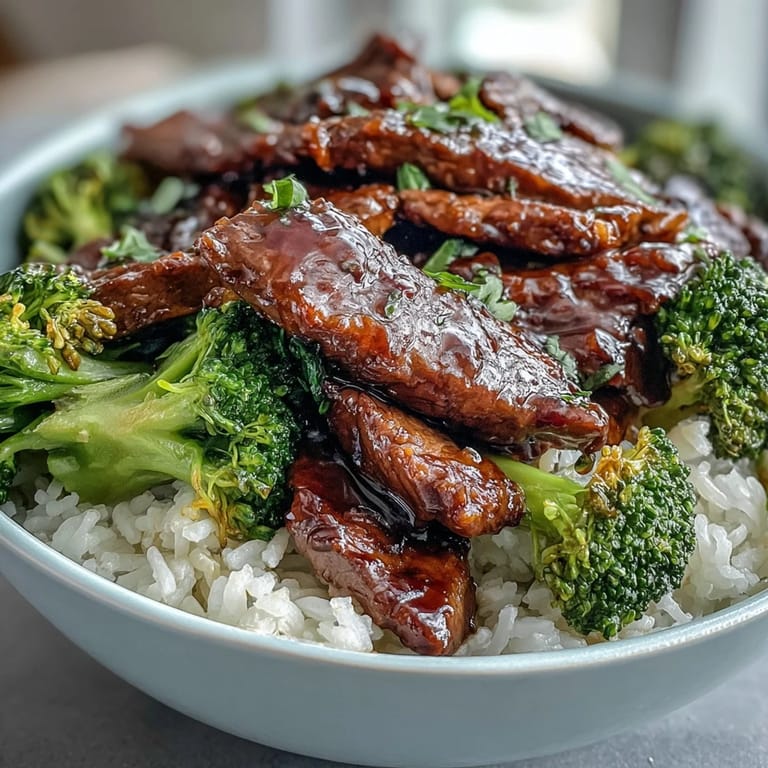
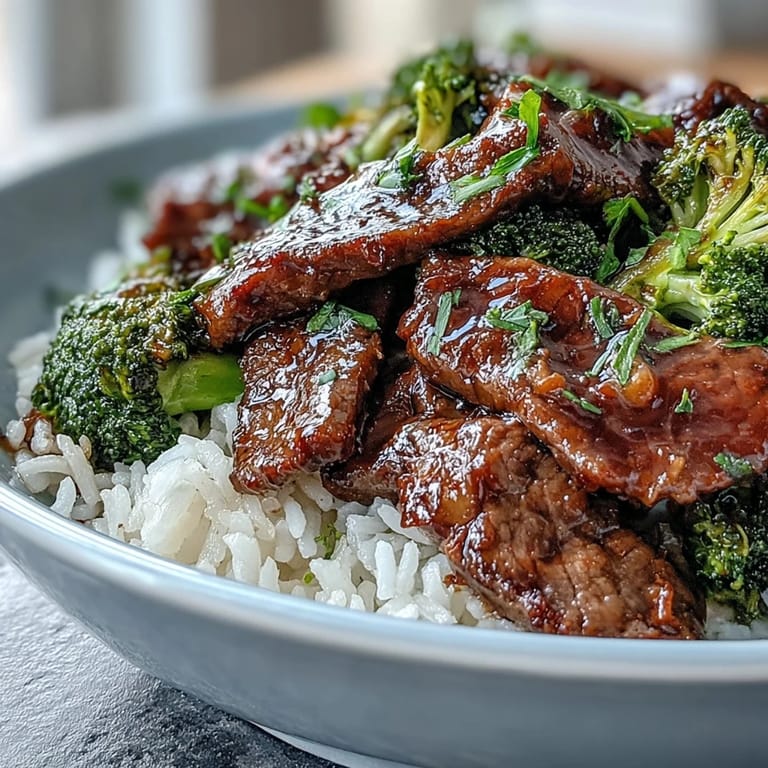
- Pour the sauce mixture into the same pan, let it come to a gentle simmer, then add your cornstarch slurry while stirring so it thickens evenly without lumps. Return the beef to the pan along with the broccoli, toss everything to coat in that glossy sauce, and let it warm through for just a minute.
- Serve and garnish:
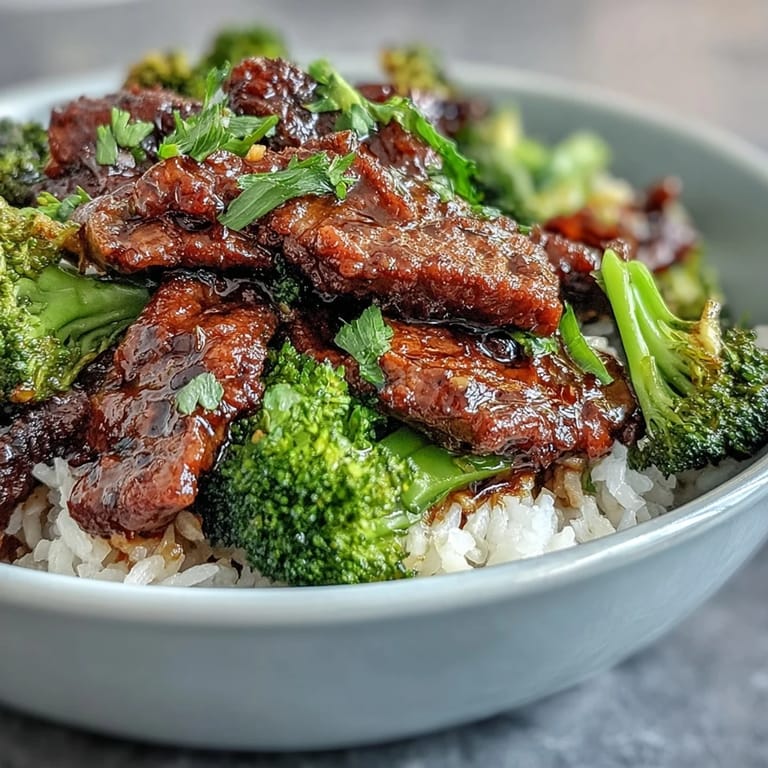
- Divide steamed rice among bowls, top with the beef and broccoli mixture, and scatter green onions and sesame seeds across the top.
 Save to Pinterest
 That night after dinner, my friend leaned back in her chair and said the sauce was the best part—it was the sauce that made it feel like something she'd never make herself, even though now she realizes she absolutely can. Something about watching it thicken in real time, seeing the beef glisten, tasting how the flavors came together—it felt special.
The Secret of Temperature Control
High heat is your friend here, but it requires attention. I've learned that the moment you see the edges of the beef change color, you're already at the sweet spot; going longer means dry, tough meat that no sauce can rescue. The broccoli steams quickly too, and rushing either step usually means you're eating something good instead of something you'll remember fondly.
Why This Becomes a Regular Rotation
Once you make this once, you understand why it becomes the go-to meal when you want something that tastes like you spent hours on it but didn't. It's the kind of dish where people ask for the recipe, and when you tell them it takes thirty-five minutes, they don't believe you. The simplicity hides the sophistication, and that's where the magic lives.
Variations That Keep It Fresh
The beauty of this bowl is that it welcomes substitutions without losing its soul. Swap the beef for chicken breast, tofu, or shrimp depending on your mood or what's in your fridge. Add bell peppers, snap peas, or mushrooms for texture and color, stirring them in with the broccoli so they pick up that glorious sauce. The rice base is forgiving too—use brown rice, cauliflower rice, or even noodles if you want something different.
- Snap peas add sweetness and crunch that broccoli can't quite match.
- A squeeze of fresh lime over the finished bowl brightens everything without overpowering it.
- Crispy fried onions sprinkled on top before serving add texture that makes people stop mid-chew and ask what that is.
 Save to Pinterest
 This dish is proof that simplicity and satisfaction live in the same kitchen. Make it once for yourself, then make it for someone else, and watch how a bowl of rice, beef, and broccoli becomes a moment worth remembering.
Recipe FAQs
- → What cut of beef works best?
Flank steak or sirloin sliced thinly against the grain ensures tenderness. Partially freezing the beef for 20 minutes makes slicing easier and more uniform.
- → Can I make this gluten-free?
Yes. Substitute regular soy sauce with tamari and use gluten-free oyster sauce. All other ingredients naturally contain no gluten.
- → How do I prevent overcooked broccoli?
Steam broccoli for just 3–4 minutes until bright green and barely tender. Immediately rinse under cold water to stop cooking and preserve crunch.
- → Can I use other proteins?
Chicken breast or thighs work well with the same marinade. Firm tofu slices offer a plant-based alternative—press and marinate longer for best absorption.
- → What vegetables can I add?
Bell pepper strips, snap peas, carrots, or baby corn complement the flavors. Add with broccoli or stir-fry briefly before combining with the sauce.
- → How should I store leftovers?
Keep components separate in airtight containers. Rice lasts 4–5 days refrigerated, while beef and broccoli stay fresh for 3–4 days. Reheat gently to maintain texture.