 Save to Pinterest
 My kitchen was chaos that Tuesday evening—my partner had texted saying three friends were coming over in an hour, and I had nothing planned. I opened the fridge, saw ground beef and canned beans, and remembered my grandmother's trick: when in doubt, make chili. That night taught me something simple but powerful: a big pot of chili and some rice can turn a crisis into one of those meals people still talk about months later.
I've made this chili for a neighborhood potluck where I was nervous about my contribution, only to have people ask for the recipe before they'd even finished eating. The combination of beans, spices, and that smoky depth somehow feels both humble and impressive at the same time. That day, I realized comfort food doesn't need to be complicated to be memorable.
Ingredients
- Olive oil: This is your base, so don't skip it or use the cheap stuff—it helps build flavor from the very first sauté.
- Medium onion and garlic: These two are the foundation; when they soften and turn fragrant, you know you're on the right track.
- Red and green bell peppers: They add sweetness and color, balancing the heat from the spices.
- Ground beef: Use 80/20 if you can; it browns better and adds richness that leaner meat can't quite match.
- Tomato paste: A tablespoon concentrates tomato flavor in a way that feels almost like a secret ingredient.
- Diced tomatoes: The canned kind works perfectly here, and honestly, it's often fresher than what's at the store.
- Kidney beans and black beans: Drain and rinse these well to reduce excess sodium and prevent a gummy texture.
- Corn kernels: Frozen corn is underrated; it stays tender and adds a subtle sweetness that people can't quite identify.
- Chili powder, cumin, smoked paprika, oregano: This spice blend is where the magic lives, so measure them properly rather than eyeballing.
- Salt, black pepper, cayenne: Start with the amounts listed, then taste and adjust—heat preference is deeply personal.
- Beef or vegetable broth: This keeps everything from drying out and brings all the flavors together as they simmer.
- Rice or grains: Brown rice adds nuttiness, but quinoa or farro work beautifully if you want something different.
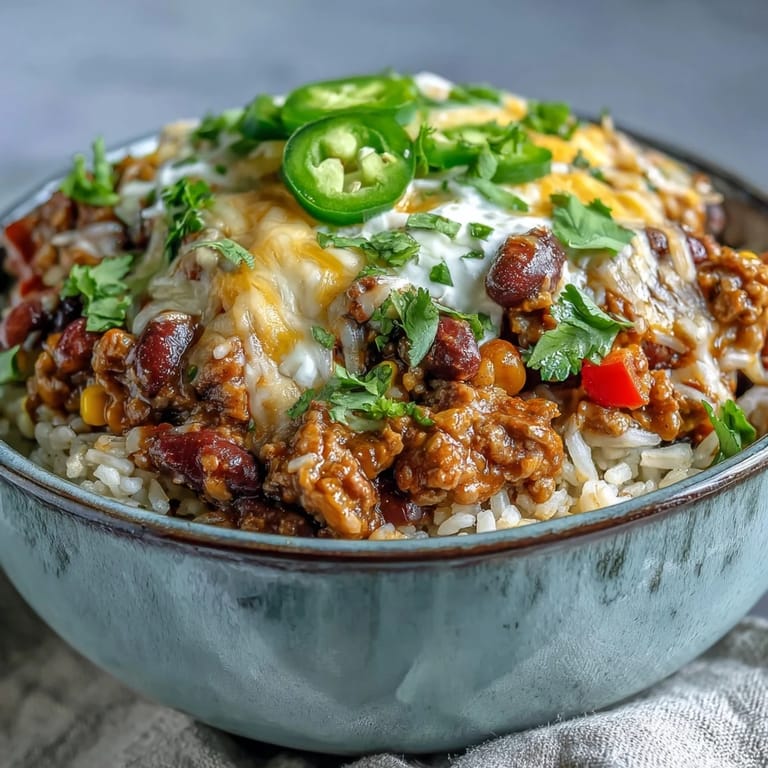
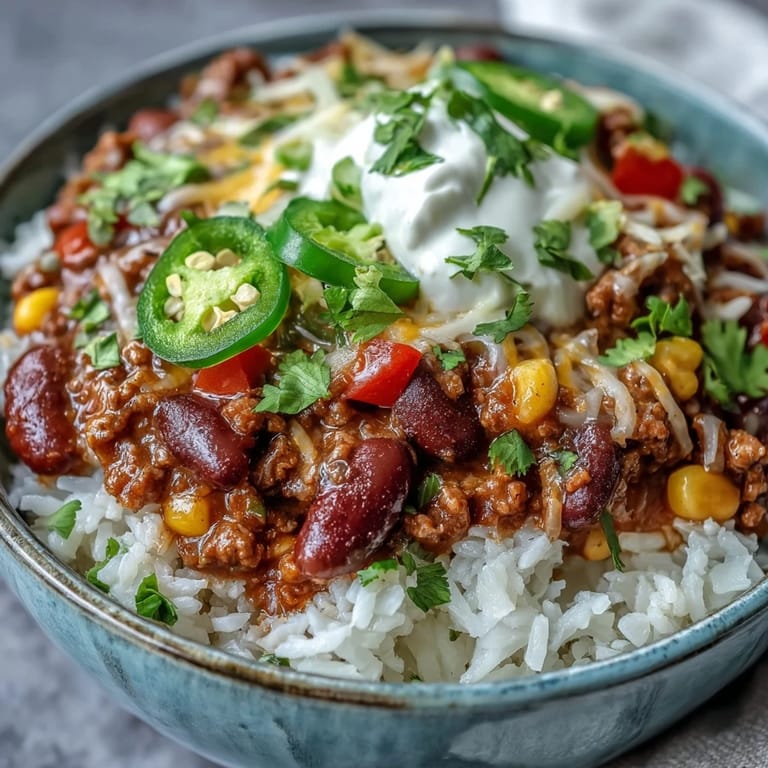
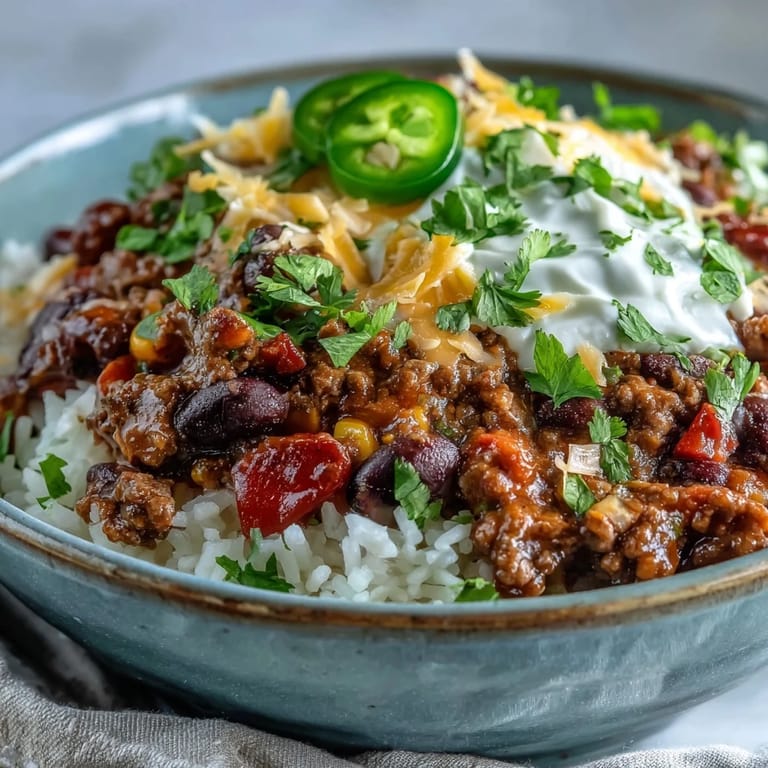
- Toppings: Cheese, sour cream, green onions, cilantro, avocado, jalapeños, and lime are all optional but they transform the bowl into something uniquely yours.
Tired of Takeout? 🥡
Get 10 meals you can make faster than delivery arrives. Seriously.
One email. No spam. Unsubscribe anytime.
Instructions
- Warm your oil and start with aromatics:
- Heat olive oil in a large pot over medium heat and add your diced onion. You'll know it's ready when the kitchen starts smelling like something good is happening—usually 2 to 3 minutes in.
- Build your flavor base:
- Toss in the garlic and bell peppers, letting them soften together for another 3 to 4 minutes. This is when everything becomes fragrant and you realize why people cook.
- Brown your meat:
- Add ground beef and break it apart with a wooden spoon as it cooks, about 5 to 7 minutes until there's no pink left. Listen for the sizzle to quiet down—that's your signal it's done.
- Deepen the flavor:
- Stir in tomato paste and let it cook undisturbed for about 1 minute, allowing it to caramelize slightly and release its concentrated tomato goodness.
- Bring everything together:
- Add the diced tomatoes, both types of beans, corn, and all your spices. Mix thoroughly so every bit of chili powder and cumin gets distributed.
- Add liquid and simmer:
- Pour in your broth, give everything a good stir, and bring it to a gentle simmer. Then lower the heat, cover the pot, and let it bubble away quietly for 25 to 30 minutes, stirring occasionally to prevent sticking.
- Prepare your grains:
- While the chili simmers, cook your rice or grains according to package directions so they're ready at the same time.
- Serve with intention:
- Spoon cooked grains into bowls, ladle the hot chili over top, and let everyone add their own toppings to make it exactly how they like it.
 Save to Pinterest
 There's something about a chili bowl that invites conversation—people slow down, taste thoughtfully, and somehow end up sharing stories. I've watched this simple pot become the centerpiece of moments that mattered, from quiet weeknight dinners to gatherings where everyone left happier than when they arrived.
Why Spices Matter More Than You Think
The first time I made chili without smoked paprika, I wondered why it tasted flat despite having all the other spices. That one ingredient adds a subtle depth that makes people pause and ask what makes this different. I learned that in chili, spices aren't just flavoring—they're the entire personality of the dish, so choosing quality over quantity always pays off.
Making It Your Own
The beauty of this recipe is that it's a starting point, not a final answer. I've made it with ground turkey for a lighter version, added extra jalapeños for friends who love heat, and swapped in pinto beans when that's what I had on hand. Each time it's been delicious, which tells you something about how forgiving and adaptable a good chili base really is.
Leftovers and Second Lives
This chili improves with time, so if you have leftovers, embrace them. I've spooned cold chili over salads, used it as a topping for baked potatoes, and even tucked it into tortillas for quick lunch wraps. The spices continue to develop as it sits in the fridge, making day-three chili somehow better than day-one, though no one ever complains about eating it fresh either.
- Store chili in an airtight container in the fridge for up to 4 days, or freeze it for up to 3 months if you want to set yourself up for an easy dinner later.
- Reheat gently on the stove over medium heat, stirring occasionally and adding a splash of broth if it's thickened too much.
- Fresh toppings like avocado and cilantro should always go on just before eating so they stay bright and crisp.
 Save to Pinterest
 This chili bowl has become my go-to when I want to cook something that feels effortless but tastes like you tried. It's proof that the most satisfying meals don't require complexity, just intention and good ingredients given time to become something greater than their parts.
Recipe FAQs
- → What grains work best for serving chili bowls?
White rice, brown rice, quinoa, farro, bulgur, and barley all make excellent bases. Brown rice and quinoa add extra nutrition while white rice offers a classic comfort.
- → Can I make this vegetarian?
Yes. Replace ground beef with plant-based crumbles or simply add an extra can of beans. Use vegetable broth instead of beef broth for fully vegetarian preparation.
- → How long does chili keep in the refrigerator?
Store cooled chili in an airtight container for 4-5 days. The flavors develop and intensify over time, making it an excellent option for meal prep or make-ahead dinners.
- → How can I adjust the spice level?
Reduce or omit cayenne for milder flavor. Add extra chili powder or include fresh jalapeños while cooking for more heat. Always taste before serving and adjust seasonings.
- → Can I freeze this chili?
Freeze cooled chili in freezer-safe containers for up to 3 months. Thaw overnight in the refrigerator and reheat gently on the stovetop, adding broth if needed.
- → What toppings work best?
Shredded cheddar, sour cream, sliced green onions, fresh cilantro, diced avocado, jalapeño slices, and lime wedges. Tortilla strips or crushed cornbread add crunch.