 Save to Pinterest
 I discovered this dish on an ordinary Tuesday when my farmer's market haul was getting desperate—too many vegetables, not enough ideas. I grabbed eggplant, peppers, zucchini, and thought about that creamy hummus I'd made the week before. Roasting everything together felt like throwing paint at a canvas, and somehow it worked. Now this bowl sits at every gathering, and people keep asking for the recipe like it's some carefully guarded secret.
My friend Maya brought this to a potluck and I watched people drift back to it three times over the evening, long after the fancy dishes were forgotten. She told me later she made it in 45 minutes after work, and somehow that stuck with me—proof that good food doesn't require hours of planning, just a little attention while things roast.
Ingredients
- Canned chickpeas, 1½ cups: Drained and rinsed, they become the creamy foundation—use good quality if you can, the difference shows.
- Tahini, ¼ cup: This is the secret to silky texture; don't skip it or your hummus becomes grainy and sad.
- Fresh lemon juice, 2 tablespoons: Brightens everything, prevents the hummus from tasting flat and one-note.
- Garlic clove, 1, minced: Just one—more and it overpowers the delicate chickpea flavor.
- Extra-virgin olive oil, 3 tablespoons plus more: Use something you'd taste on bread, not the industrial stuff.
- Ground cumin, ½ teaspoon: Adds warmth without announcing itself, the gentle backbone of the whole dish.
- Sea salt, ½ teaspoon: Builds flavor layer by layer as you blend.
- Cold water, 2–3 tablespoons: Added slowly to control the consistency—this is where patience matters.
- Red bell pepper, 1 medium: Sweet when roasted, almost candy-like if you let it char.
- Zucchini, 1 small, sliced: Gets tender and slightly caramelized at high heat.
- Red onion, 1 small, in wedges: Mellows considerably when roasted, losing its bite.
- Eggplant, 1 small, cubed: The star vegetable—meaty texture that makes this feel substantial.
- Smoked paprika, ½ teaspoon: Gives that charred-over-fire flavor without an actual fire.
- Pine nuts, 3 tablespoons: Toasted until golden, they add richness and a subtle crunch that changes everything.
- Fresh parsley, 2 tablespoons, chopped: A bright garnish that feels fresh against all that earthiness.
- Sumac or zaatar, 1 teaspoon optional: If you have it, use it—the tang is the final touch that makes people lean in and ask what it is.
Tired of Takeout? 🥡
Get 10 meals you can make faster than delivery arrives. Seriously.
One email. No spam. Unsubscribe anytime.
Instructions
- Get your oven ready:
- Preheat to 425°F (220°C) so it's hot and waiting when your vegetables are prepped.
- Prepare and season the vegetables:
- Toss bell pepper, zucchini, red onion, and eggplant with 1 tablespoon olive oil, smoked paprika, salt, and pepper until every piece is coated. Spread them on a baking sheet in a single layer—crowding means steam, not char.
- Roast until charred and tender:
- Into the oven for 22–25 minutes, stirring once halfway through. You want edges that look almost burnt, that's where the flavor lives.
- Build the hummus while vegetables roast:
- In a food processor, combine drained chickpeas, tahini, lemon juice, minced garlic, 3 tablespoons olive oil, cumin, and sea salt. Blend until it moves like silk, adding cold water one tablespoon at a time until you reach that perfect creamy state.
- Taste and adjust:
- This is the moment to trust yourself—add more salt if it needs edge, more lemon if it tastes flat, more water if it's too thick.
- Toast the pine nuts:
- In a dry skillet over medium heat, toast them for 2–3 minutes, stirring constantly, until golden and fragrant. They'll continue toasting slightly after you remove them, so pull them a touch early.
- Plate like you mean it:
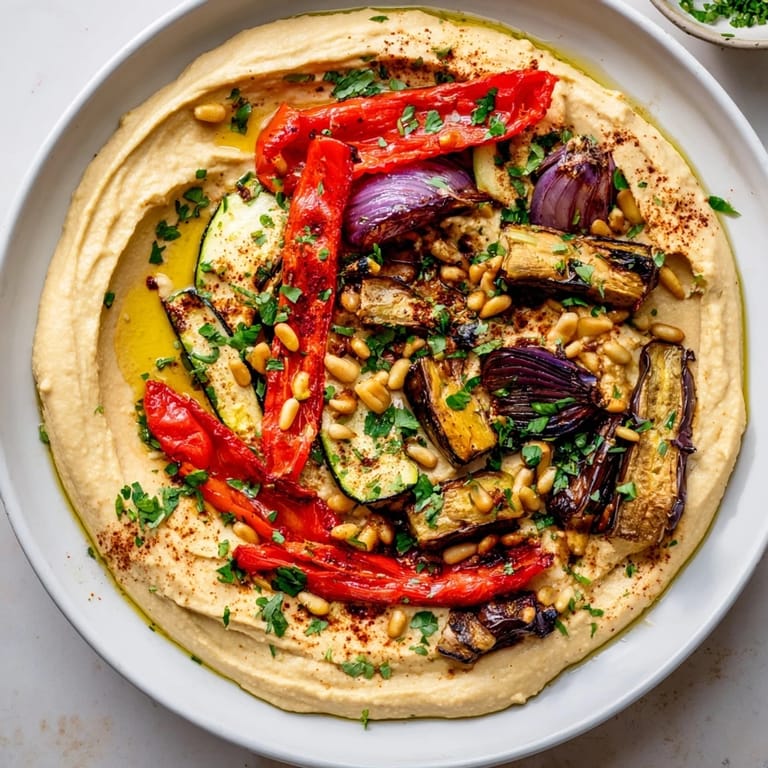
- Spread hummus across a serving platter or shallow bowl, making a swoosh with the back of a spoon—it looks intentional and holds the vegetables beautifully.
- Build the final dish:
- Top with warm roasted vegetables, scatter toasted pine nuts across, sprinkle chopped parsley and sumac or zaatar if using. Drizzle generously with more olive oil—it's not excess, it's finishing.
 Save to Pinterest
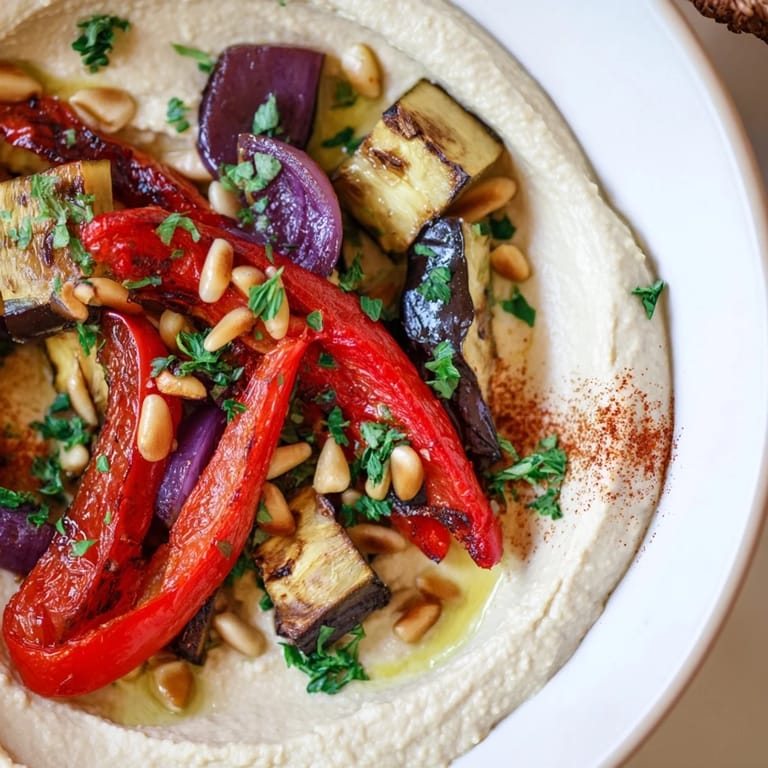
 There's a moment when you've spread that silky hummus and arranged the warm roasted vegetables on top, and the steam is still rising off them, when you realize this simple bowl has become something. It's the kind of food that brings people together not because it's complicated, but because it tastes like someone cared.
Why Roasting Changes Everything
Raw vegetables are fine, but there's something about heat that coaxes out their sweetness and adds complexity. When zucchini roasts, it becomes tender and slightly honeyed. The eggplant softens completely and absorbs the smoked paprika like a sponge. Even the onion loses its sharp bite and turns caramel-sweet. That's the shift from a simple dip to something memorable.
Making It Your Own
This dish loves flexibility—carrots become nutty and crispy-edged when roasted, cauliflower develops char that tastes almost meat-like, and mushrooms get earthy and concentrated. Try different combinations depending on what's in season or what's left in your crisper drawer. The hummus stays the same, but the personality changes with each set of vegetables you choose.
Serving and Storage Wisdom
Serve this immediately while the vegetables still hold their warmth and texture against that cool, creamy base. If you're making it ahead, keep the hummus and vegetables separate and combine them just before serving. The hummus keeps for days in the fridge, actually becoming even silkier, while roasted vegetables are best fresh but will hold for a day or two.
- Serve with warm pita, crackers, or crudités if you want to make it interactive.
- A drizzle of really good olive oil at the end makes the whole dish sing.
- Double the hummus batch if you're feeding a crowd—people always want more.
 Save to Pinterest
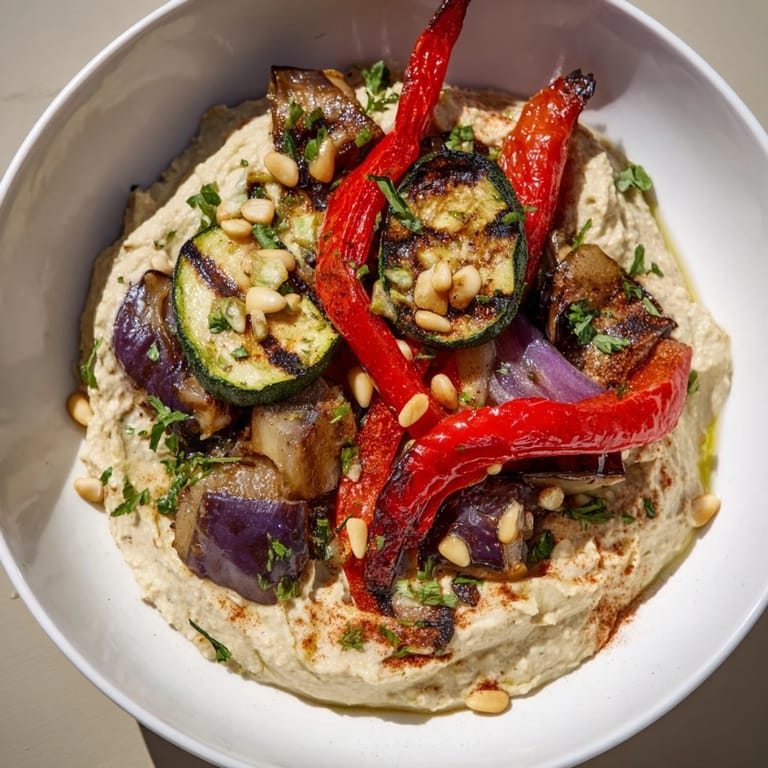
 This bowl exists somewhere between appetizer and main course, and it doesn't really care which role you give it. Make it when you want to feel like you're cooking something special without actually breaking a sweat.
Recipe FAQs
- → What vegetables work well for roasting?
Bell peppers, zucchini, red onion, and eggplant are excellent choices. Seasonal alternatives like carrots or cauliflower also complement the flavors.
- → How can I achieve a creamy hummus texture?
Blending chickpeas with tahini, lemon juice, garlic, olive oil, and cold water gradually helps create a smooth, whipped consistency.
- → What spices enhance the roasted vegetables?
Smoked paprika, salt, and black pepper add depth and a subtle smoky warmth to the roasted veggies.
- → Can I make this dish nut-free?
Omit pine nuts or replace them with toasted seeds to avoid tree nuts while maintaining a crunchy topping.
- → How should I serve this dish?
Serve it with warm pita bread, fresh crudités, or as a flavorful accompaniment to grains for a satisfying meal.
- → Does it fit special diets?
Yes, it suits vegan and gluten-free diets if gluten-free sides are chosen and no bread with gluten is served.