 Save to Pinterest
 My friend Sarah showed up at my door one weeknight with a container of gochujang and a knowing smile, insisting my boring weeknight dinners needed rescuing. She walked me through this Korean ground beef bowl while my kitchen filled with the most incredible aroma of sesame and garlic, and I realized right then that some of the best meals come from someone else's enthusiasm rubbing off on you. Within twenty minutes, we were sitting at my counter with steaming bowls, the pickled vegetables adding this bright crunch that made everything feel intentional and special. It became our thing after that, though now I make it solo and it still carries that same energy she brought.
I made this for my partner during that weird phase when we were both trying to eat better but refused to sacrifice flavor, and watching him go back for seconds while actually enjoying vegetables felt like a small victory. The bowl somehow convinced us that healthy eating didn't have to taste like punishment, and now it's rotated into our regular lineup whenever we want something that feels indulgent but isn't.
Ingredients
- Lean ground beef (500 g): Choose a good quality beef with some marbling so it stays tender and flavorful as it cooks down in the sauce.
- Soy sauce (2 tablespoons): This is your umami backbone, though tamari works seamlessly if you're avoiding gluten.
- Toasted sesame oil (1 tablespoon): Don't skip the toasted version, regular sesame oil tastes flat by comparison and won't give you that nutty depth.
- Brown sugar (1 tablespoon): It balances the salty-spicy elements and creates a subtle glaze that coats each bite.
- Freshly grated ginger (2 teaspoons): Fresh ginger matters here more than ground, it adds brightness that powdered ginger simply can't match.
- Garlic (3 cloves, minced): Mince it fine so it melts into the sauce rather than leaving little chunks.
- Gochujang or sriracha (1 teaspoon): Gochujang has this fermented complexity that sriracha lacks, but either works depending on your heat preference.
- Green onions (2, thinly sliced): Save some for garnish because they add a sharp bite that wakes up your palate with each spoonful.
- Sesame seeds (1 tablespoon, plus extra for garnish): Toast them yourself if you can, they taste dramatically better than pre-toasted from a jar.
- Rice base (4 cups cooked): Jasmine rice is traditional and fragrant, but cauliflower rice transforms this into a completely different eating experience.
- Carrot, cucumber, radish (3 cups total, prepped): The julienned carrot and thinly sliced vegetables are what make this bowl feel intentional rather than thrown together.
- Rice vinegar (1/2 cup): This is gentler than regular vinegar and won't overpower the pickled vegetables with harsh acidity.
- Sugar and salt for pickling: These dissolve into a simple brine that transforms raw vegetables into something craveable.
Tired of Takeout? 🥡
Get 10 meals you can make faster than delivery arrives. Seriously.
One email. No spam. Unsubscribe anytime.
Instructions
- Start your pickled vegetables first:
- Combine rice vinegar, sugar, and salt in a bowl and stir until everything dissolves into a clear brine. Add your julienned carrot, cucumber slices, and radish, tossing until everything is coated, then let it sit for at least 15 minutes while you handle the beef and rice. The vegetables soften slightly and absorb all those tangy flavors, becoming impossibly crunchy and bright.
- Cook your rice base:
- Follow the package directions for jasmine rice or cauliflower rice and keep it warm while you focus on the beef. If you're using cauliflower rice, starting it now means it'll be ready exactly when you need it.
- Brown the ground beef:
- Heat a large skillet over medium-high heat and add the ground beef, breaking it up with a spoon as it cooks for about 5-7 minutes until it's deeply browned and cooked through. Don't stir it constantly, let it sit in the pan for a minute or two so it develops color and flavor from the heat.
- Build the sauce:
- Pour off excess fat if needed, then add soy sauce, sesame oil, brown sugar, ginger, garlic, and gochujang to the beef and stir everything together. The kitchen will suddenly smell incredible as the aromatics warm through and the sauce becomes glossy and coats every bit of beef.
- Finish with garnish:
- Remove from heat and fold in the sliced green onions and sesame seeds, letting the residual heat warm them through without cooking away their sharpness. Taste as you go because you might want a touch more soy sauce or a sprinkle of extra gochujang depending on your heat tolerance.
- Assemble your bowls:
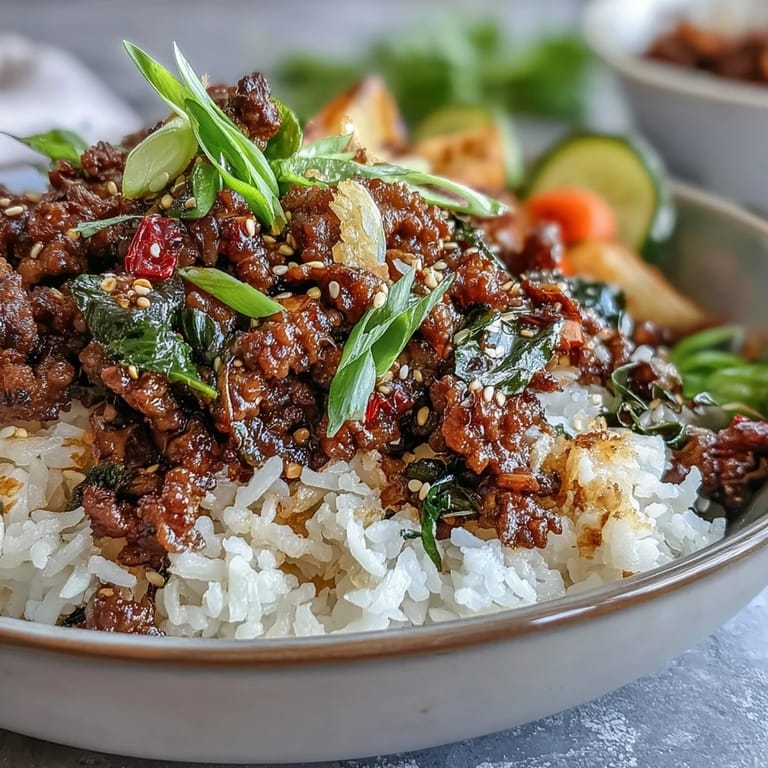
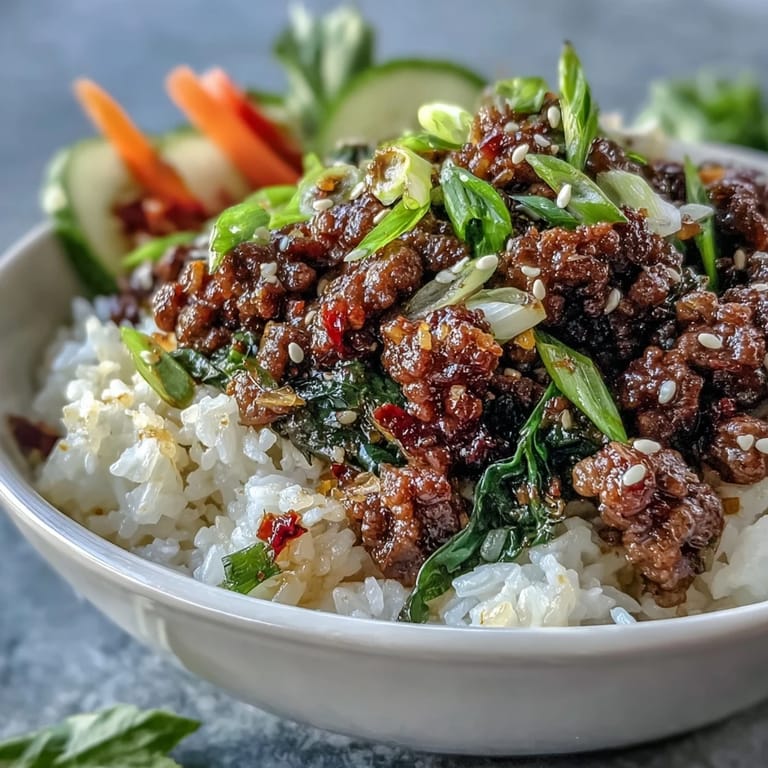
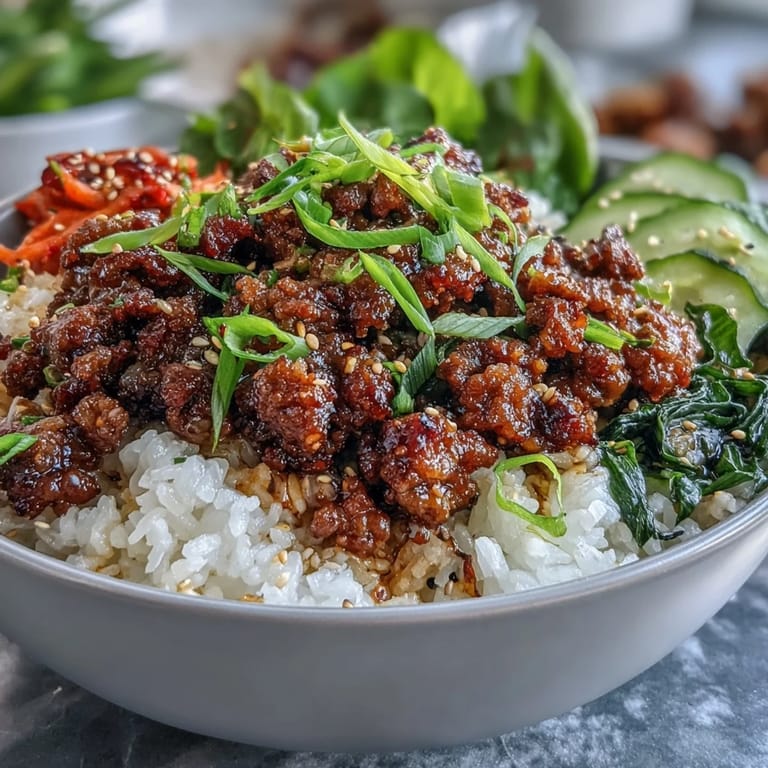
- Divide the warm rice among bowls and top with the seasoned beef, letting the sauce pool slightly into the rice. Crown each bowl with a generous handful of pickled vegetables so you get that crunch and tang in every spoonful.
- Garnish and serve:
- Finish with extra sliced green onions and sesame seeds, then serve immediately while everything is at its peak.
 Save to Pinterest
 There's a specific moment when you fold those sesame seeds into the beef and the toasted aroma hits you that makes you realize you're about to eat something really good. That's when the bowl stopped being just dinner and became a ritual I actually looked forward to.
Why This Bowl Works as Meal Prep
I've made this in batches and stored the components separately so nothing gets soggy by lunchtime the next day. The seasoned beef keeps beautifully in the fridge for three days, the pickled vegetables actually improve overnight, and you can cook rice fresh or reheat it gently. Just assemble everything when you're ready to eat and it tastes nearly as good as the first time.
Playing with Heat and Flavor Levels
Gochujang brings this fermented, complex spice while sriracha is sharper and more immediate, so choose based on what you're craving that day. I've made this bowl for friends with totally different heat tolerances by letting them customize their own gochujang dollop, which turns the meal into something everyone participates in making.
Substitutions That Actually Work
Ground turkey or chicken works if you want something leaner, though you'll need to add a touch more sesame oil to prevent it from drying out during cooking. A fried egg on top transforms this into breakfast for dinner, or you can crumble tofu for a vegetarian version that's genuinely satisfying. For low-carb eating, cauliflower rice absorbs all those beef and vinegar flavors perfectly while keeping the bowl feeling complete.
- Use tamari instead of soy sauce if gluten is a concern and double-check your gochujang label for hidden gluten.
- Toast your own sesame seeds in a dry pan for 2-3 minutes if you have time, the flavor difference is worth those few extra minutes.
- Make the pickled vegetables the night before so they develop deeper flavor and you reduce your cooking time the next day to just 15 minutes.
 Save to Pinterest
 This bowl became proof that you don't need complicated techniques or hard-to-find ingredients to make something genuinely crave-worthy. Every time I make it, I'm reminded why it hooked me in the first place.
Recipe FAQs
- → Can I make this dish ahead of time?
The seasoned beef and quick pickled vegetables both store well in the refrigerator for 3-4 days. Keep them in separate airtight containers. When ready to serve, gently reheat the beef and assemble with freshly cooked rice for the best texture and flavor.
- → What vegetables work best for quick pickling?
Carrots, cucumbers, and radishes are ideal because they retain their crisp texture. You can also add thinly sliced red cabbage, daikon radish, or even sliced bell peppers. The key is cutting them into thin, even pieces so they pickle quickly and evenly.
- → Is gochujang necessary for this dish?
Gochujang adds authentic Korean flavor with its fermented chili paste depth, but it's optional. If you don't have it, sriracha works well for heat, or you can simply omit it for a milder bowl. The ginger, garlic, and soy sauce provide plenty of savory complexity on their own.
- → Can I freeze the seasoned ground beef?
Yes, the cooked and seasoned beef freezes beautifully for up to 3 months. Let it cool completely, then store in freezer-safe containers or bags. Thaw overnight in the refrigerator and reheat gently on the stove with a splash of water to refresh the sauce.
- → What other toppings can I add?
A fried or sunny-side-up egg adds richness and a runny yolk that complements the beef. Sliced avocado, fresh cilantro, kimchi, or steamed edamame also make excellent additions. For extra crunch, try toasted chopped peanuts or cashews.
- → How can I adjust the spice level?
Control the heat by adjusting the gochujang or adding it gradually. For a spicier kick, add sriracha, crushed red pepper flakes, or sliced fresh chilies. If you prefer mild flavors, omit the gochujang entirely—the dish remains delicious with just the ginger, garlic, and sesame flavors.