 Save to Pinterest
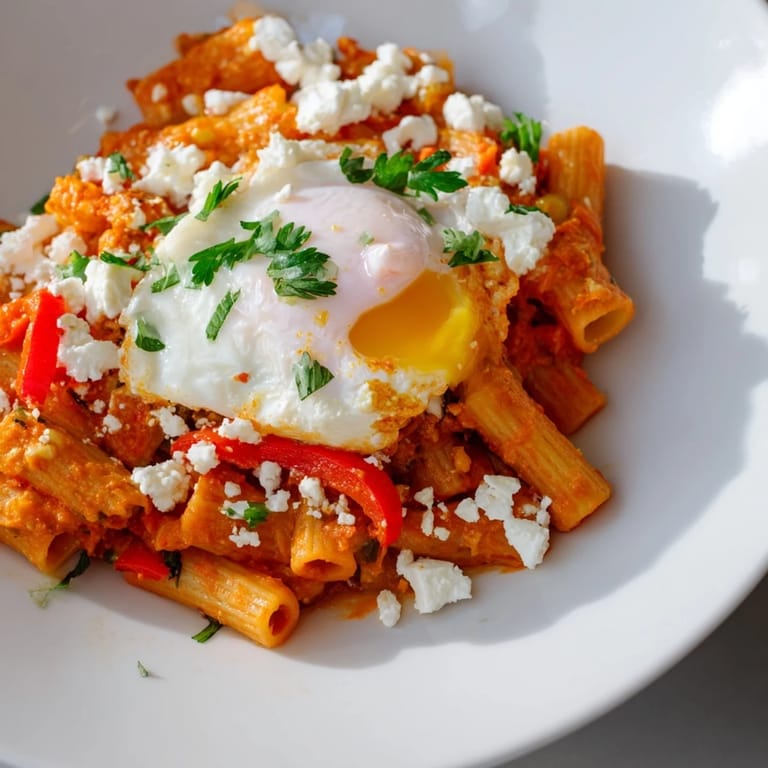
 There's something magical about watching a skillet go from stovetop to oven and come back transformed. I discovered this dish on a Tuesday evening when I had leftover pasta, a can of tomatoes, and an inexplicable craving for eggs—not breakfast eggs, but something warm and savory that demanded to be baked. What emerged was pure comfort: pasta cushioned in a spiced tomato sauce with eggs nestled into the heat, their yolks still runny and ready to break into every forkful. It's become my go-to when I want something that feels both exotic and deeply familiar.
I made this for friends on a cold winter night, and watching them break those eggs into the pasta, their faces lighting up with that first bite—that's when I knew this recipe was special. Everyone went quiet for a moment, the kind of quiet that only happens when food hits exactly right. It's the dish I reach for now whenever I want to feed people something that feels both surprising and welcoming.
Ingredients
- Pasta (300g short shapes like penne or rigatoni): Al dente is your target—it'll soften a bit more in the oven, so don't cook it fully on the stovetop or you'll end up with mush.
- Onion and red bell pepper: These soften into the sauce and add sweetness that balances the spices beautifully; don't skip the pepper for its color and mild sweetness.
- Garlic (3 cloves, minced): Three cloves gives you flavor without overwhelming—fresh is non-negotiable here.
- Olive oil (2 tbsp): Good quality matters because it's a foundational flavor; cheap oil will taste thin and flat.
- Canned diced tomatoes (400g): The backbone of your sauce; San Marzano varieties tend to be sweeter and more reliable.
- Tomato paste (2 tbsp): Adds depth and helps the sauce cling to the pasta; don't substitute with more canned tomatoes.
- Ground cumin, smoked paprika, ground coriander, cayenne pepper: These spices are what make this feel Middle Eastern rather than generic; toast them briefly with the garlic to wake them up.
- Sugar (1 tsp): Cuts the acidity of the tomatoes and rounds out the sauce—tastes better than saying it's acidic.
- Mozzarella or feta (100g, optional): Feta brings tanginess and crumbles beautifully; mozzarella melts into creamy pockets; choose based on your mood.
- Eggs (4 large): These need to be room temperature or close to it so they cook gently in the oven instead of scrambling around the edges.
- Fresh parsley or cilantro: Brightness at the end that cuts through the richness; don't add it before baking or it'll turn bitter.
Tired of Takeout? 🥡
Get 10 meals you can make faster than delivery arrives. Seriously.
One email. No spam. Unsubscribe anytime.
Instructions
- Get your oven and pasta ready:
- Preheat your oven to 200°C (400°F) so it's hot when you need it. Meanwhile, cook your pasta in salted boiling water until it's just al dente—taste it at the earlier end of the suggested time because it will continue cooking in the oven.
- Build your flavor base:
- Heat olive oil in your oven-safe skillet over medium heat, then add your chopped onion and diced bell pepper. Let them soften for about five minutes, stirring occasionally until they're turning golden at the edges and releasing their sweetness into the oil.
- Bloom the spices:
- Stir in your minced garlic, cumin, paprika, coriander, and cayenne if you want heat. Cook for just about one minute—you'll smell when they're ready, that toasted, fragrant moment that means the spices are waking up.
- Make your sauce:
- Add the tomato paste first and stir it into the oil for a minute to deepen its color, then pour in your canned tomatoes with their juices. Add the sugar, salt, and pepper to taste, then let it simmer gently for eight to ten minutes until it thickens slightly and the flavors start melding together.
- Marry the pasta and sauce:
- Drain your cooked pasta and stir it into the sauce along with half the cheese if you're using it. Everything should be well coated and look like it belongs together, not like separate components.
- Create your egg nests:
- Spread the pasta mixture evenly in your skillet or transfer it to a baking dish. Using the back of a spoon, gently make four small wells across the surface—think little nests waiting for their eggs.
- Add the eggs and finish:
- Crack each egg directly into a well, then sprinkle the remaining cheese over the top if you have it. The eggs should be surrounded by sauce and pasta, cradled in heat.
- Bake until perfect:
- Bake uncovered for fifteen to eighteen minutes until the egg whites are set and opaque but the yolks still jiggle slightly when you gently shake the pan. The timing depends on your oven and how warm your eggs started, so check around the fifteen-minute mark.
- Rest and garnish:
- Pull it from the oven, scatter fresh parsley or cilantro over everything, and let it sit for just a minute before serving so the eggs finish cooking from residual heat.
 Save to Pinterest
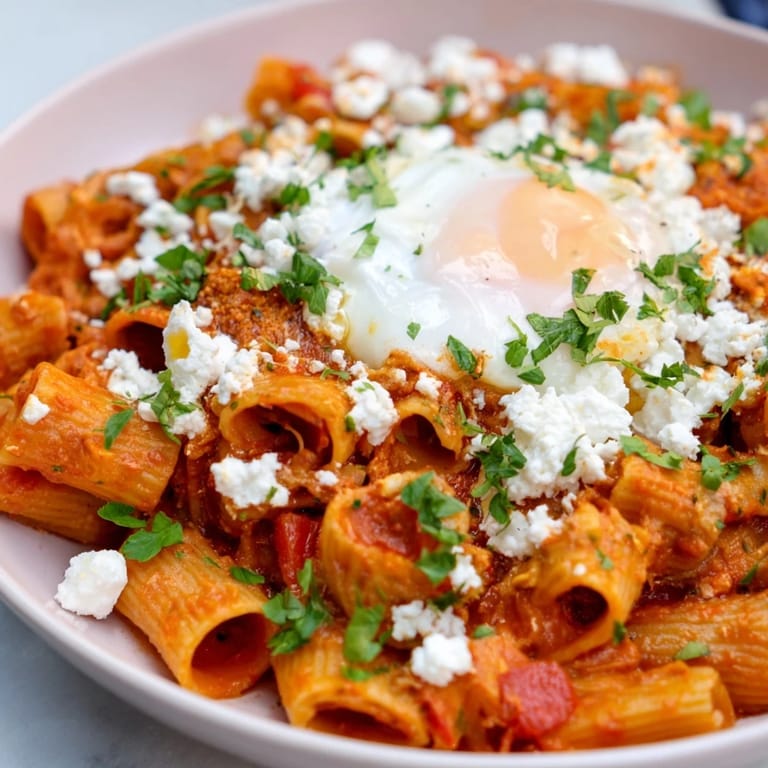
 There's a moment right before you serve this when the aroma hits you—toasted spices mingling with tomatoes and melted cheese, all of it warmed through. That's when you know it's more than just dinner; it's the kind of food that brings people to the table and keeps them there longer than they planned.
Why One Skillet Changes Everything
Cooking in one oven-safe skillet from start to finish feels like a small act of rebellion against complicated recipes. You sauté on the stovetop, then slide it straight into the oven without transferring anything—fewer dishes, more flavor because everything stays in contact with the pan. I learned early on that the browned bits stuck to the bottom of the skillet (what cooks call fond) are where the deepest flavor lives, so don't be tempted to wipe it clean between steps.
Cheese and Heat Work in Layers
I used to dump all the cheese in at once and watch it disappear into the sauce without adding much texture. Now I split it—half goes into the pasta mixture to meld everything together, and half waits until the end to scatter over the top where it gets bubbly and slightly crispy from the oven heat. Feta brings a bright tang that cuts through the richness, while mozzarella melts into creamy threads; neither is wrong, just different moods. If you can't decide, use both and discover your own ratio.
The Small Variations That Become Your Version
This recipe welcomes improvisation the way comfort food should. On nights when I want greens, I toss a handful of spinach or kale into the sauce before baking and watch it wilt into invisible nutrition. Adding a sprinkle of red pepper flakes to the spice mixture gives you heat that builds slowly instead of shocking your mouth. For a vegan version, skip the eggs and cheese entirely, then add a can of drained chickpeas to the sauce for protein and earthiness that works surprisingly well.
- Fresh herbs can go in the sauce (mint or basil are lovely) or saved for garnish—both work, and it changes how the dish tastes.
- A splash of red wine or even chicken broth thinned into the sauce adds complexity without changing the core recipe.
- Crusty bread alongside is not optional if you want to catch every drop of that golden sauce.
 Save to Pinterest
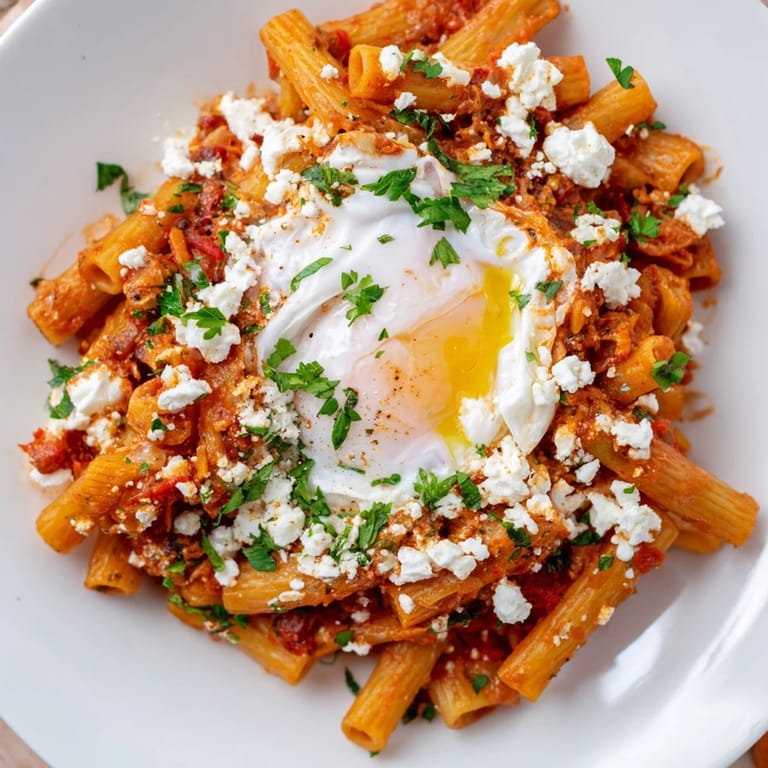
 This is the kind of dish that tastes like you've been cooking all day but only took fifty minutes start to finish. Serve it hot straight from the skillet, and watch people break their eggs into it like they're discovering gold.
Recipe FAQs
- → What pasta types work best for this dish?
Short pasta like penne, rigatoni, or fusilli hold up well and capture the sauce nicely.
- → Can I prepare this dish ahead of time?
Yes, you can assemble and refrigerate before baking, then add eggs and bake just before serving.
- → How can I adjust the spice level?
Modify or omit cayenne pepper to control heat according to your preference.
- → What cheese options complement the flavors?
Crumbled feta adds tanginess while mozzarella offers creamy meltiness; both enhance the dish well.
- → Is there a vegan alternative?
Omit eggs and cheese, and add chickpeas for protein to maintain heartiness and texture.