 Save to Pinterest
 I discovered zaatar at a tiny spice market tucked between two apartment buildings, where the owner's daughter was baking focaccia in the back room. The smell—peppery, tangy, with just a hint of thyme—made me stop mid-stride. When she offered me a warm slice studded with olives, I knew I had to recreate that moment at home. This focaccia became my answer to those afternoons when I wanted something substantial but still light, something that tasted like travel without leaving the kitchen.
The first time I made this for friends, I pulled it from the oven just as everyone arrived, and the dimpled surface glistened with golden oil. My neighbor appeared at the door drawn by the smell alone, and I ended up slicing an extra portion. Now it's become my go-to when I want to feel generous without spending hours in the kitchen.
Ingredients
- Bread flour (500 g): Choose a good quality flour with at least 12 percent protein—it gives the focaccia structure and that satisfying chew that separates homemade from store-bought.
- Active dry yeast (7 g): Measure carefully; too much yeast rushes the flavor development, too little and you'll wait longer than expected.
- Fine sea salt (1½ tsp for dough, 1 tsp flaky for topping): The fine salt dissolves into the dough evenly, while the flaky salt on top adds bursts of salinity and texture.
- Warm water (325 ml): Test the temperature on your inner wrist—it should feel comfortably warm, not hot, or you'll damage the yeast's delicate work.
- Extra virgin olive oil (80 ml total): Don't skip the quality here; the oil is a starring ingredient, not just a vessel for moisture.
- Zaatar spice blend (2 tbsp): This is the soul of the bread—a blend of sumac, thyme, sesame, and salt that brings brightness and earthiness simultaneously.
- Kalamata olives (100 g): Halving them prevents them from sinking, ensuring every slice gets those briny pockets of flavor.
Tired of Takeout? 🥡
Get 10 meals you can make faster than delivery arrives. Seriously.
One email. No spam. Unsubscribe anytime.
Instructions
- Bloom your yeast:
- Dissolve the yeast in warm water and wait five minutes. You'll see it come alive—the surface should turn foamy and slightly aromatic. This tells you the yeast is ready to work.
- Bring the dough together:
- Combine flour and salt, then add the yeast mixture and oil. Mix with your hands until everything is incorporated and shaggy. Don't worry about smoothness yet; you're just getting acquainted.
- Knead into silkiness:
- Work the dough for 8–10 minutes by hand or machine until it transforms into something smooth and elastic that springs back when you poke it. Your hands will tell you when it's ready—it becomes almost alive under your palms.
- First rise, patience required:
- Oil a bowl, nestle the dough inside, cover with a towel, and let it rest in a warm spot for an hour. The dough should roughly double; if your kitchen is cool, give it extra time without stress.
- Shape and second rise:
- Oil your pan, press the dough evenly into it, cover, and let rise another 30 minutes. This second rise is gentler but crucial—it ensures the focaccia stays tender inside.
- Dimple and dress:
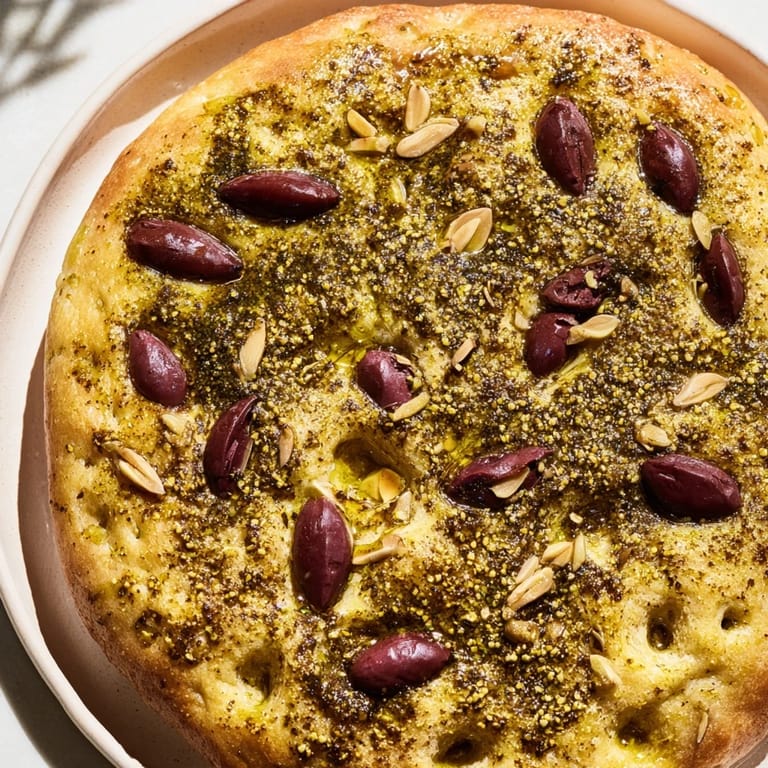
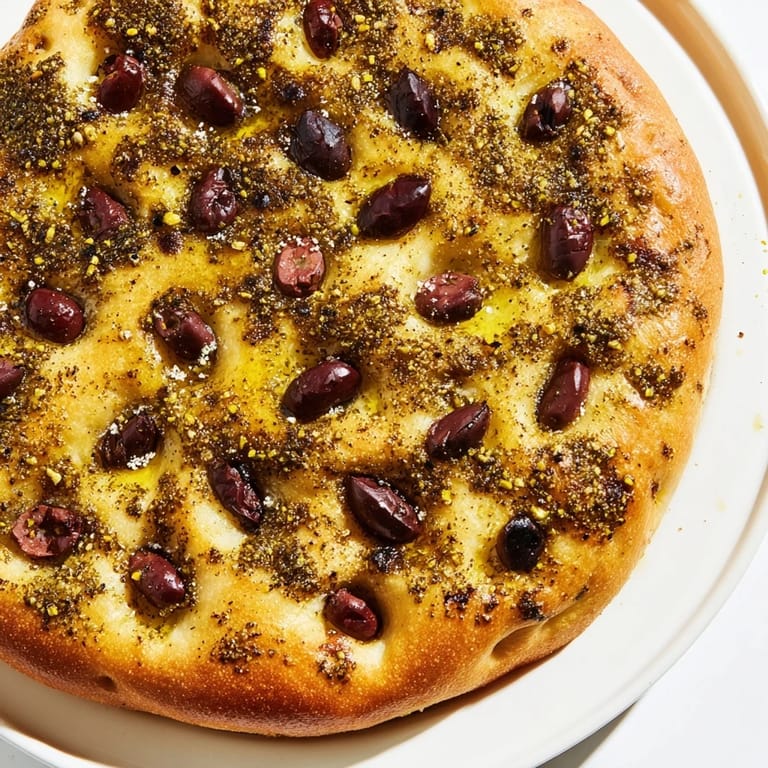
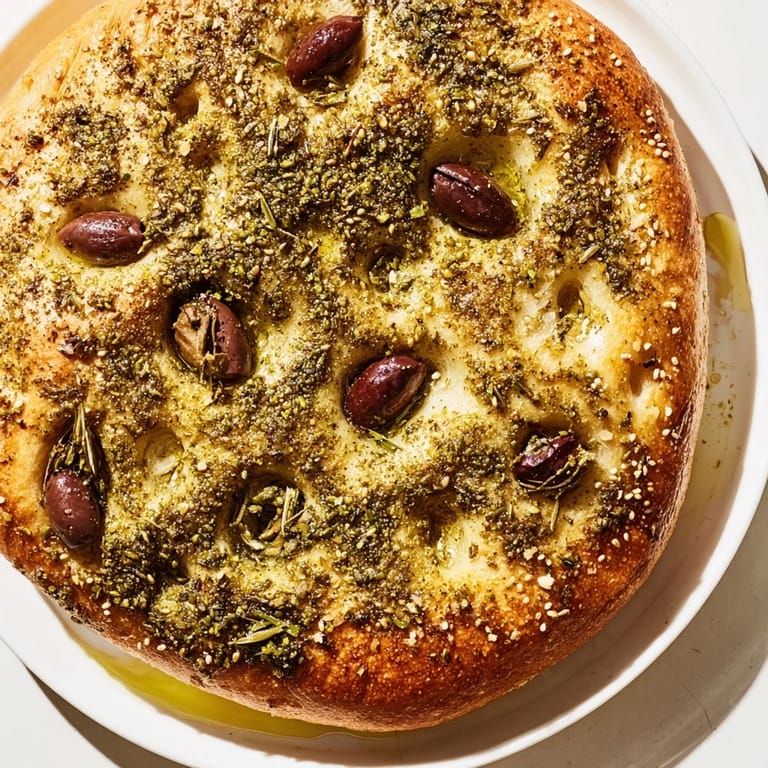
- Use your fingertips to create deep dimples all over the surface; these pockets catch oil and toppings. Drizzle with fresh oil, scatter zaatar, dot with olives, and finish with flaky salt.
- Bake until golden:
- Slide into a 220°C oven for 20–25 minutes. Watch for the edges to turn deep golden and the aroma to fill your entire home—this is how you know it's done.
- Cool and serve:
- Let it rest for a few minutes so the interior sets, then slice and enjoy warm or at room temperature. The focaccia is best on the day it's made but reheats beautifully.
 Save to Pinterest
 There was an evening when a friend with celiac disease stood in my kitchen, watching me prepare a regular focaccia for someone else. I made this zaatar version just for them, and seeing their face light up when they tasted something warm and homecooked—something I'd made thinking of their needs—reminded me that good food is sometimes the most generous gesture we can offer.
Why Zaatar Makes Everything Better
Zaatar has become my secret weapon for transforming ordinary bread into something memorable. It brings a lemony brightness from the sumac, an earthy depth from the thyme, and a subtle nuttiness from sesame—all without overpowering the delicate crumb of the focaccia. Once you taste how it brings the olives into conversation, you'll understand why this spice blend has been a cornerstone of Middle Eastern cooking for centuries.
Storing and Reheating
Focaccia is best on the day it's made, but wrapped well at room temperature it keeps for a day or two. To revive it, wrap it loosely in foil and warm in a 180°C oven for 10 minutes—the oil will reawaken and the crust will recrisp. I've also found that day-old focaccia makes surprisingly wonderful sandwiches, especially when split and filled with hummus and roasted vegetables.
Playing with Variations
Once you master the base, this focaccia becomes a canvas. I've pressed sun-dried tomatoes into the surface, scattered crispy roasted garlic cloves, and even added a whisper of fresh rosemary. The beauty is that the dough is forgiving—it adapts to what you love while keeping its essential character intact.
- Try sun-dried tomatoes, roasted garlic, or caramelized onions for deeper flavor variations that still let the zaatar shine through.
- Green olives work beautifully if you prefer something milder, or use a mix of Kalamata and green for complexity.
- Always let topping additions dry slightly before pressing them in; excess moisture can create soggy spots.
 Save to Pinterest
 This focaccia has become a quiet ritual in my home—something I make when I want to slow down and taste where my food comes from. It fills the kitchen with the kind of warmth that makes people linger a little longer around the table.
Recipe FAQs
- → What makes this focaccia unique?
The combination of zaatar spice blend and Kalamata olives infuses the bread with a distinctive Mediterranean flavor profile.
- → How long should the dough rise?
The dough rises twice: first for about 1 hour until doubled, then again for 30 minutes after shaping for optimal texture.
- → Can I substitute the olives?
Yes, green olives can be used for a milder, less briny taste without overpowering the spices.
- → What type of flour is recommended?
Bread flour is preferred to achieve a chewy texture and good structure for the focaccia.
- → How should I store leftovers?
Keep the focaccia wrapped at room temperature and reheat in a warm oven to restore crispness.
- → Can I add other toppings?
Sun-dried tomatoes or roasted garlic can be mixed in or added on top for extra depth of flavor.