 Save to Pinterest
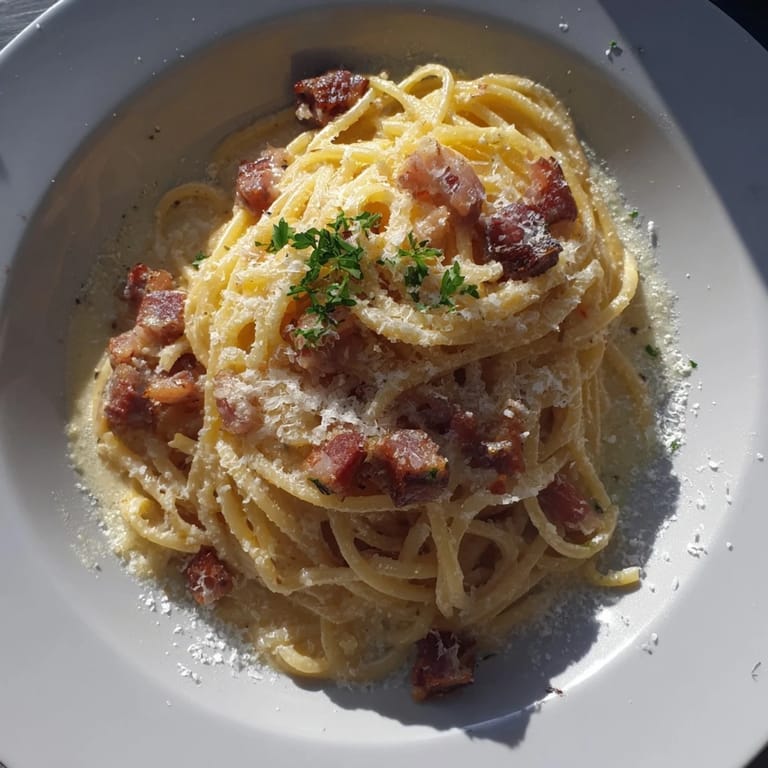
 I once burned garlic while trying to multitask during a carbonara attempt, and the smell clung to my kitchen for hours. That mistake taught me what this dish really demands: presence. Now when I make carbonara, I turn off my phone, pour myself a small glass of wine, and give those fifteen minutes my full attention. The reward is a plate of pasta so creamy and rich it feels like a secret between you and the stove.
The first time I served this to friends, they went quiet after the first forkful. One of them looked up and said, This is what pasta is supposed to taste like. I realized then that carbonara is less about following rules and more about understanding the rhythm: hot pasta, cool bowl, fast hands. When you get it right, the eggs transform into silk instead of scramble, and that moment feels like magic every single time.
Ingredients
- Spaghetti or linguine (200 g): The long strands hold the sauce better than short shapes, and cooking them just until al dente gives you the perfect chew that soaks up every bit of creaminess.
- Large eggs (2): These create the velvety base of the sauce, so use the freshest ones you can find for the richest color and flavor.
- Parmesan cheese (50 g, freshly grated): Pre-grated cheese contains anti-caking agents that make the sauce grainy, so take the extra minute to grate it yourself.
- Heavy cream (50 ml, optional): Purists skip this, but a splash makes the sauce more forgiving and luscious if youre still learning the technique.
- Black pepper (freshly ground): This is not a garnish, its a main ingredient, so crack it generously and let it perfume the eggs.
- Pancetta or guanciale (75 g, diced): The rendered fat becomes the foundation of flavor, and crisping it just right gives you salty, porky bites in every forkful.
- Salt (small pinch): The pasta water and pancetta are already salty, so go easy here and adjust at the end.
- Extra Parmesan and parsley for garnish: A final shower of cheese and a sprinkle of green make the plate look as good as it tastes.
Tired of Takeout? 🥡
Get 10 meals you can make faster than delivery arrives. Seriously.
One email. No spam. Unsubscribe anytime.
Instructions
- Boil the Pasta:
- Bring a large pot of salted water to a rolling boil and cook the spaghetti until al dente, following the package timing. Before draining, scoop out half a cup of the starchy cooking water, it will be your secret weapon for a silky sauce.
- Crisp the Pancetta:
- While the pasta bubbles away, heat a large skillet over medium heat and add the diced pancetta. Let it sizzle and render its fat for three to four minutes, stirring occasionally, until the edges turn golden and crisp.
- Whisk the Sauce Base:
- In a mixing bowl, whisk together the eggs, grated Parmesan, heavy cream if using, a pinch of salt, and a generous amount of black pepper until smooth and pale. The mixture should look thick and glossy, almost like loose custard.
- Combine Pasta and Pancetta:
- Once the pasta is drained, immediately toss it into the skillet with the pancetta while everything is still hot. The heat from the pasta and the rendered fat will help the sauce coat every strand evenly.
- Create the Creamy Sauce:
- Pull the skillet off the heat completely, then pour in the egg mixture and toss vigorously with tongs. Add the reserved pasta water a splash at a time, stirring constantly, until the sauce turns creamy and clings to the pasta without pooling at the bottom.
- Serve Immediately:
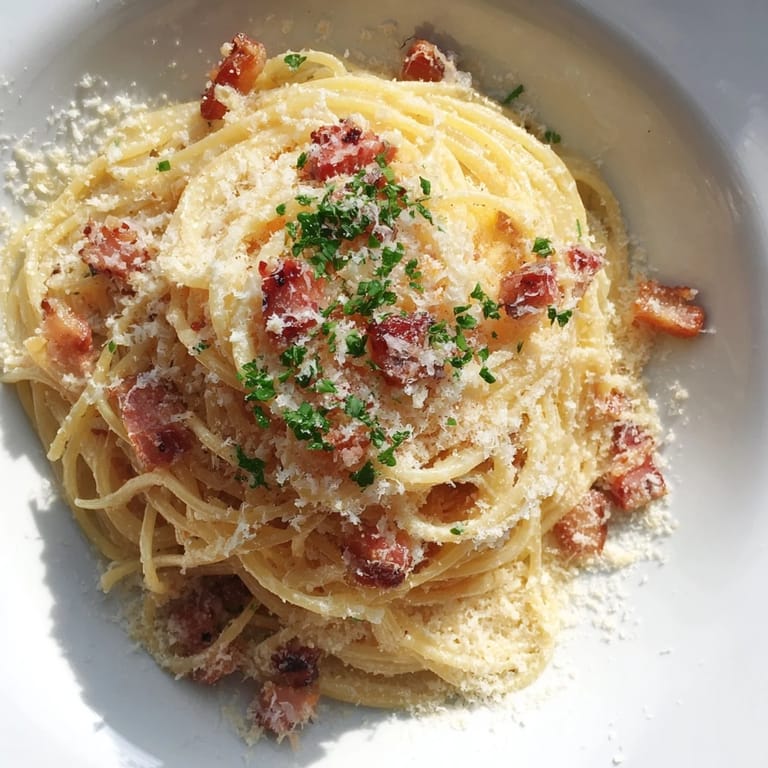
- Plate the carbonara right away, topping each serving with extra Parmesan and a sprinkle of parsley if you like. The sauce will start to tighten as it cools, so enjoy it while its warm and glossy.
 Save to Pinterest
 One rainy Tuesday, I made this for myself after a long day and ate it straight from the pan while standing at the counter. The first bite, all pepper and Parmesan and crispy pork, made me close my eyes and exhale. Sometimes the best meals are the ones you make just for yourself, with no one watching and nothing to prove.
How to Make It More Authentic
If you want to honor the Roman tradition, skip the cream entirely and let the eggs and cheese do all the work. Use guanciale instead of pancetta for a deeper, more savory flavor, and finish with an extra crack of black pepper. The result is leaner, sharper, and undeniably classic.
What to Do If You Dont Have Pancetta
Thick-cut bacon works in a pinch, though it brings a smokier, slightly sweeter flavor. Cook it the same way until crisp, and if it renders a lot of fat, pour off some before adding the pasta. The dish will still be delicious, just with a different accent.
Pairing and Serving Suggestions
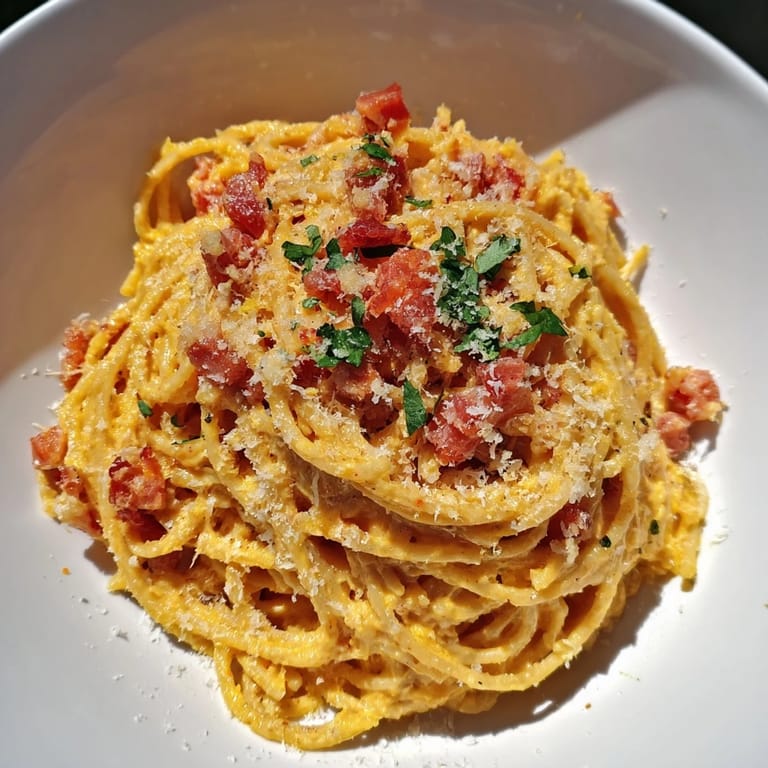
This carbonara loves the company of a crisp white wine like Pinot Grigio or Verdicchio, something bright enough to cut through the richness. Serve it with a simple arugula salad dressed in lemon and olive oil, or just eat it on its own with crusty bread to soak up any lingering sauce.
- Add a pinch of red pepper flakes to the pancetta for a subtle kick.
- Toss in frozen peas during the last minute of pasta cooking for color and sweetness.
- Top with a soft-poached egg for an over-the-top breakfast-for-dinner moment.
 Save to Pinterest
 Carbonara is proof that you dont need a long ingredient list or hours of work to make something unforgettable. Just good timing, a little confidence, and the willingness to stand at the stove and pay attention.
Recipe FAQs
- → What pasta works best for this dish?
Spaghetti or linguine are ideal as they hold the creamy sauce well and complement the pancetta's texture.
- → Can I omit the cream in the sauce?
Yes, for a more authentic Roman style, simply omit the cream and rely on eggs and Parmesan to create the sauce's creaminess.
- → How do I prevent the eggs from scrambling?
Remove the skillet from heat before adding the egg mixture and toss vigorously, allowing residual heat to gently cook the sauce without curdling.
- → What can be used instead of pancetta?
Thick-cut bacon is a good substitute, offering a similar smoky and crispy element to the dish.
- → How is the sauce thickened without cream?
The combination of eggs, grated Parmesan, and hot pasta water creates a smooth, silky texture that clings to the noodles naturally.
- → Do I need to reserve pasta water?
Yes, adding reserved pasta water gradually helps achieve the desired creaminess and loosen the sauce if it becomes too thick.