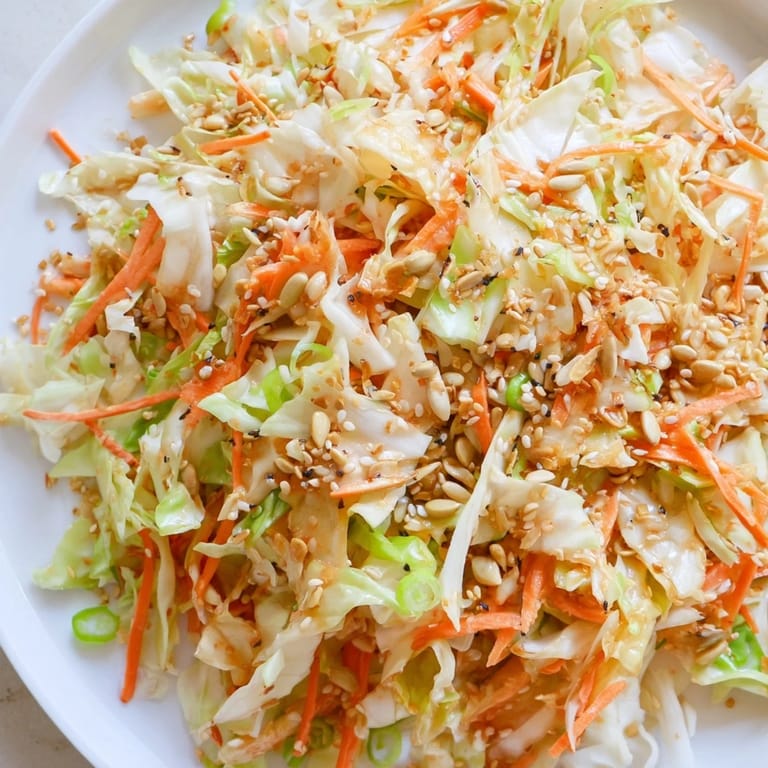
 Save to Pinterest
 I discovered the magic of cabbage cores entirely by accident one weeknight when I was trimming a head of cabbage and my roommate walked by, asking why I was about to toss the dense inner part. She grabbed a piece, raw, and crunched it thoughtfully—then suggested I shred it into a slaw. What followed was a revelation: those cores, neglected and heading for the compost, turned out to be the most satisfying, fiber-packed foundation for a salad I'd ever made. Now I actually plan my meals around finding the crispest cores.
I made this for a potluck last spring when everyone was bringing heavy casseroles, and I wanted something that felt bright and almost cleansing. One guest came back twice, convinced it had some secret ingredient—it was just the toasted sesame oil and the fact that I didn't hold back on the seeds. That moment taught me that simple, well-executed salads get underestimated at gatherings.
Ingredients
- Cabbage cores, finely shredded: This is where the recipe lives—dense, sweet, and packed with fiber that regular leaf cabbage can't match.
- Green cabbage leaves: Use these for color contrast and to stretch the volume without diluting the core's texture.
- Carrot, julienned: The sweetness balances the nutty dressing and adds a gentle color gradient that makes the bowl feel intentional.
- Green onions: They soften slightly as the salad sits, becoming creamy and mild rather than harsh.
- Toasted sesame oil: Non-negotiable for depth; the toasted variety has warmth that raw oil never delivers.
- Rice vinegar: Gentle and slightly sweet, it lets the other flavors shine instead of dominating.
- Soy sauce or tamari: A small amount anchors everything with umami without making it taste Asian-restaurant predictable.
- Maple syrup or honey: Just enough sweetness to round the edges and help the dressing emulsify properly.
- Fresh ginger and garlic: Minced small so they dissolve into the dressing rather than announce themselves in every bite.
- Toasted sesame, pumpkin, and sunflower seeds: Toast them yourself if you can—store-bought toasted seeds have usually started losing their flavor by the time they reach your kitchen.
Tired of Takeout? 🥡
Get 10 meals you can make faster than delivery arrives. Seriously.
One email. No spam. Unsubscribe anytime.
Instructions
- Prep your vegetables with intention:
- Shred the cabbage core on a box grater or with a sharp knife, aiming for threads thin enough to be delicate but sturdy enough to hold texture. The carrot should be julienned to match, not diced—it changes how everything tastes when the pieces are the same size and shape.
- Build the dressing in a separate bowl:
- Whisk sesame oil, rice vinegar, soy sauce, and maple syrup together vigorously; you'll feel it thicken slightly as the oil and liquid begin to emulsify. Add the ginger and garlic last, stirring until they're evenly distributed and the whole thing smells like it means business.
- Combine vegetables and dress generously:
- Toss the shredded cabbage, leaves, carrot, and green onions with the dressing until every strand is coated. Don't be timid—the vegetables can handle more dressing than you'd think they need.
- Toast and scatter the seeds:
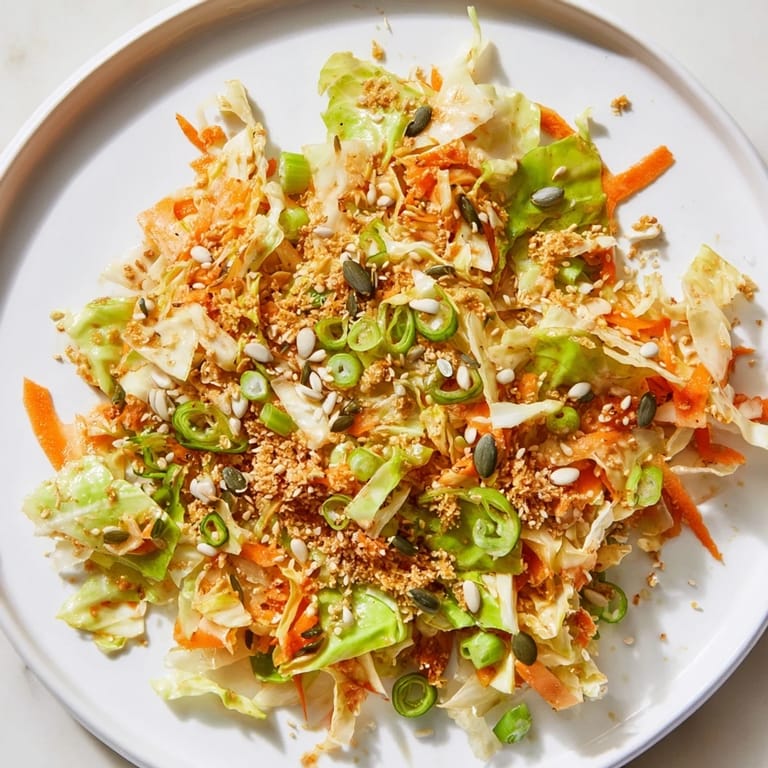
- Sprinkle most of the seeds over the salad and toss once more, reserving some for a final garnish on top if you want it to look intentional. Some people prefer keeping seeds separate so they stay crispy; I always fold them in because I like how they soften slightly and add texture throughout.
- Let it rest and serve:
- Give it 10 minutes for the flavors to settle into each other, then taste and adjust the seasoning if needed. Serve chilled or at room temperature—both work beautifully.
 Save to Pinterest
 This salad became my default when I wanted to cook for someone without overwhelming them—something that said I'd paid attention, but wasn't trying too hard. There's honesty in a good slaw, and I realized that was what people responded to.
The Soul of the Cabbage Core
Most people trim cabbage cores into the trash without thinking, but those dense inner layers are where the plant stores its sweetness and structural integrity. When you shred them raw, you're getting the most tender, yielding texture possible—no cooking required, no wilting, just pure crunch and slight sweetness that becomes more pronounced when it mingles with a good dressing. I've started buying cabbage with this salad in mind, knowing exactly how I'll use every bit.
Building Layers of Flavor
Sesame oil is the backbone here, but it needs company—the rice vinegar keeps it from feeling heavy, the soy sauce adds depth, and the maple syrup ties everything together with a subtle sweetness that keeps your palate interested. The ginger and garlic aren't meant to scream; they're there to give the dressing complexity so it feels like more than just oil and acid. When you taste each component first, you understand why they're there, and you can adjust confidently.
Variations and Honest Upgrades
This slaw is patient with additions, but it never needs them. That said, I sometimes add a pinch of chili oil if I'm feeling bold, or a handful of cilantro if the moment calls for something fresher. The seeds can be swapped for whatever you have toasted in the pantry—cashews work beautifully, as do crushed peanuts if you're comfortable with them. The one thing I'd never change is the core itself.
- A whisper of chili oil or fresh red chili slices lifts everything into a spicier register without overtaking the delicate balance.
- Cilantro, mint, or even thinly sliced basil can be scattered over the top just before serving for a last-minute freshness that guests always notice.
- If you're serving this at a gathering, keep the dressing and vegetables separate until the moment before plating—it buys you flexibility and guarantees the texture holds.
 Save to Pinterest
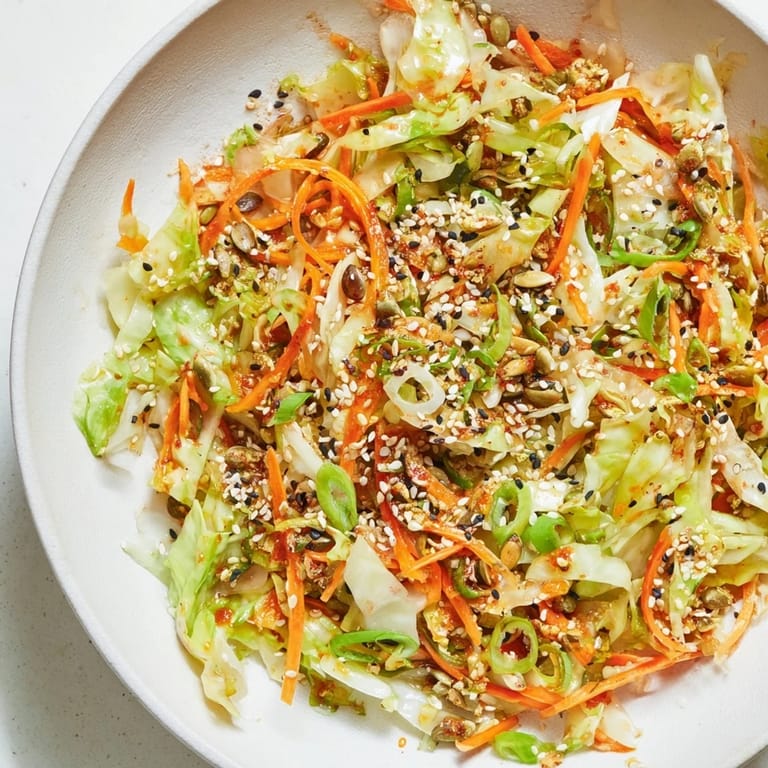
 Every time I make this, I'm reminded that the best meals often come from paying attention to what we usually overlook. This slaw taught me that simplicity and intention matter more than complexity.
Recipe FAQs
- → What part of the cabbage is used in this slaw?
The slaw highlights the finely shredded cabbage cores along with green cabbage leaves to provide texture and fiber.
- → How is the dressing prepared for this slaw?
The dressing combines toasted sesame oil, rice vinegar, soy sauce or tamari, maple syrup or honey, grated ginger, and minced garlic whisked together until emulsified.
- → Can the slaw be served immediately?
For best flavor, let the slaw sit for 10 minutes after tossing to allow ingredients to meld, then serve chilled or at room temperature.
- → What seeds are included as toppings?
Toasted sesame seeds, pumpkin seeds (pepitas), and sunflower seeds add crunch and nutty flavor to the slaw.
- → Are there options to adjust the flavor profile?
Adding sliced red chili or a dash of chili oil provides heat, while fresh cilantro or mint add brightness and freshness.