 Save to Pinterest
 The first time I made falafel from scratch, I'd just borrowed a food processor from a neighbor and felt genuinely invincible standing in my kitchen with a bag of dried chickpeas. I soaked them overnight like the recipe instructed, and by morning, I was convinced I'd discovered some ancient culinary secret. Turns out, that overnight soak is what separates the crispy, fluffy falafel from dense little pucks—and I learned that lesson the messy way after my first batch.
I remember making these for a roommate's birthday potluck, and I was nervous about the deep frying—I'd never heated oil quite that hot before. But when those falafel came out golden and my friend bit into one, their eyes actually went wide. That's when I realized this wasn't just another chickpea recipe; it was the kind of dish that makes people feel cared for, like you'd gone to real effort.
Ingredients
- Dried chickpeas (1½ cups, soaked overnight): Don't be tempted to use canned—they'll make your falafel fall apart in the oil. The soaked dried chickpeas have just the right moisture and firmness to hold everything together as they fry.
- Fresh herbs (parsley and cilantro, ½ cup each): These aren't just garnish; they're what makes the inside taste alive and bright. I learned to buy them from the farmers market where they're fresher, and it genuinely changes the dish.
- Ground cumin and coriander (1 tsp each): Toast these in a dry pan for thirty seconds before adding if you want the spice to sing—a trick that transformed my falafel from good to memorable.
- Tahini (½ cup): The sauce wouldn't exist without this. Look for tahini that's creamy and not separated; if it's rock hard in the jar, it's been sitting too long.
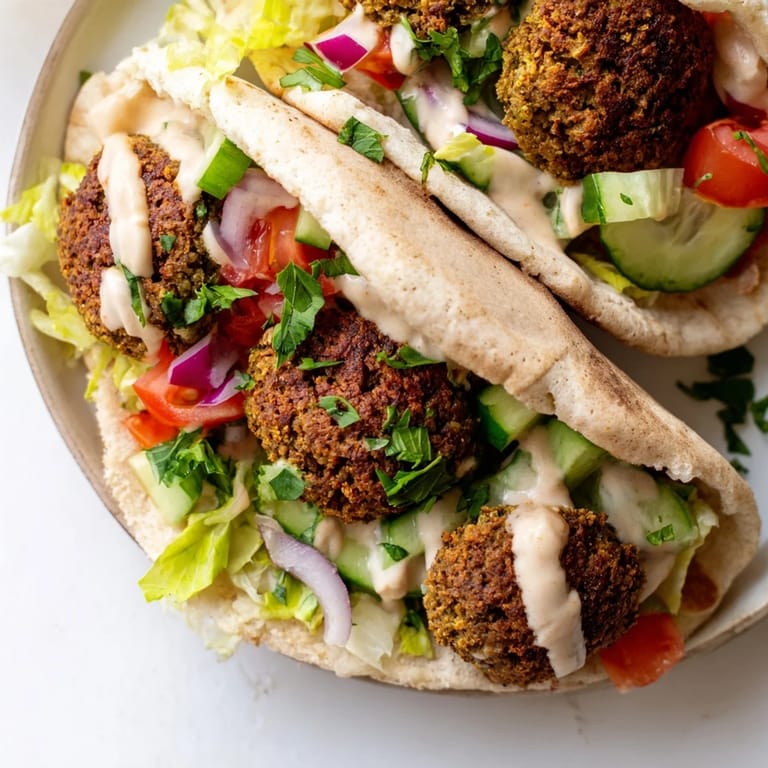
- Pita bread (4, warmed): Warm them just before serving—either wrapped in foil in a low oven or held over a gas flame if you're feeling adventurous and want those charred spots.
- Fresh vegetables (lettuce, tomatoes, cucumber, red onion): Use whatever looks best at your market; crispy lettuce and perfectly ripe tomatoes make all the difference in how the whole dish feels to eat.
Tired of Takeout? 🥡
Get 10 meals you can make faster than delivery arrives. Seriously.
One email. No spam. Unsubscribe anytime.
Instructions
- Pulse the mixture into coarse crumbs:
- Drain your soaked chickpeas and pat them completely dry—moisture is the enemy here. Add them to the food processor with onion, garlic, parsley, cilantro, cumin, coriander, cayenne if you're using it, and salt. Pulse just until everything looks like coarse breadcrumbs and holds together when you squeeze it; over-processing makes them dense and gummy.
- Rest the mixture in the fridge:
- Stir in baking powder and flour, then refrigerate for at least 30 minutes. This step lets the starches absorb moisture and makes the mixture much easier to shape without falling apart in your hands.
- Heat your oil to the right temperature:
- Pour 2 inches of vegetable oil into a deep skillet and let it heat to 350°F (175°C)—use a thermometer if you have one, or test it by dropping a tiny piece of mixture in; it should sizzle immediately and rise to the surface.
- Form and fry the falafel:
- With wet hands or a falafel scoop, form the mixture into balls about 1½ inches wide. Fry them in batches (don't crowd the pan) for 2–3 minutes per side until golden and crisp, then transfer to paper towels to drain. They'll crisp up even more as they cool.
- Whisk together the tahini sauce:
- Combine tahini, lemon juice, minced garlic, and salt in a bowl. Gradually whisk in cold water, a tablespoon at a time, until you reach a drizzly, pourable consistency—it should coat the back of a spoon but not be thick like hummus.
- Build and serve your pita pockets:
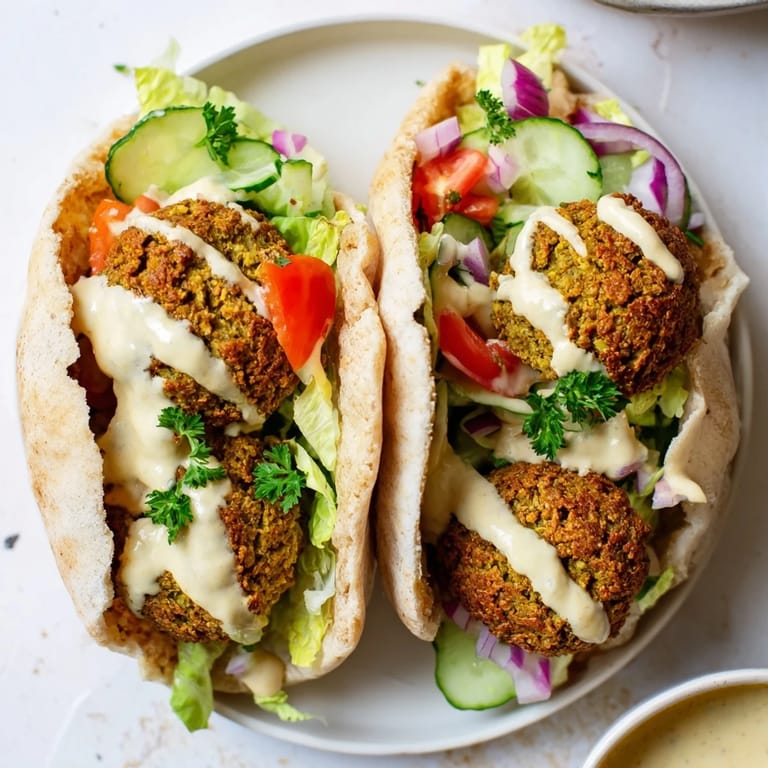
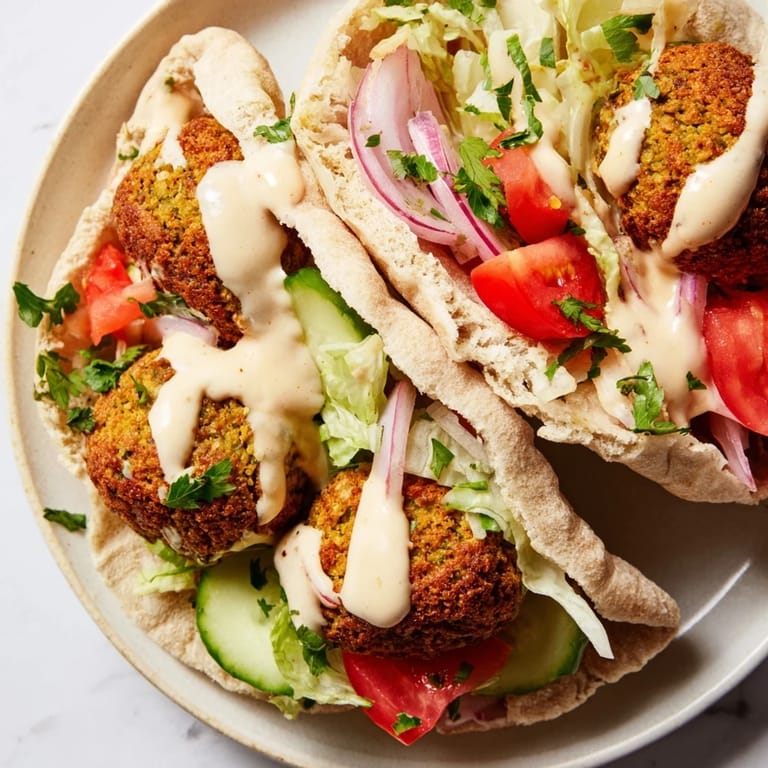
- Cut the warm pitas in half to form pockets, then layer in lettuce, tomatoes, cucumber, and red onion. Nestle 3–4 warm falafel into each pocket, drizzle generously with tahini sauce, and top with fresh parsley. Serve immediately while everything's still warm.
 Save to Pinterest
 There's something almost magical about the moment you pull a batch of falafel from the oil and they're golden brown and still sizzling. My kitchen smelled like toasted spices and sesame, and I felt like I'd unlocked something special—not complicated, just good cooking that shows up when you're patient and pay attention to small details.
Why Homemade Beats Store-Bought
The first time someone bit into my homemade falafel, they immediately noticed the difference from anything they'd had before. Homemade versions have this brightness to them—the fresh herbs are vibrant, the spices taste awakened rather than dusty, and the texture is genuinely crispy outside with almost a fluffy crumb inside. Store-bought falafel, even from good places, often sits around and gets dense or tastes like it was made last week. Making your own takes less time than you'd think, and once you taste the real thing, there's no going back.
The Tahini Sauce Is Everything
I spent so long thinking tahini sauce was mysterious and hard to make, but it's genuinely just tahini, lemon juice, garlic, and water whisked together. The secret is patience—add the water slowly and keep whisking so it emulsifies and becomes silky instead of separating into a grainy mess. Once you master this sauce, you'll find yourself making it for everything: roasted vegetables, grilled chicken, even as a dip for bread. It's the kind of recipe that pays dividends.
Variations and Serving Ideas
One night I had pickled turnips in my fridge and threw them into my falafel pita on a whim—that sharp, tangy bite completely changed the whole experience and made me feel like I'd discovered something new. You can swap in shredded cabbage for lettuce, add fresh mint alongside the parsley, or drizzle with hot sauce if you want more heat. If you want to skip the deep frying, you can bake them at 400°F for 20–25 minutes, turning halfway; they won't be quite as crispy but they'll still taste really good and feel less heavy.
- Layer in a few sliced radishes or pickled vegetables for brightness and crunch.
- Add a dollop of hummus or baba ganoush inside the pita for extra richness.
- Serve alongside a simple tomato and cucumber salad dressed with lemon and olive oil.
 Save to Pinterest
 This recipe has become my go-to when I want to cook something that feels special but doesn't require hours of work. Every time I make it, I'm reminded that the best meals come from paying attention to good ingredients and taking time with technique.
Recipe FAQs
- → How do I get falafel crispy without frying too long?
Use moderately hot oil (around 350°F/175°C) and fry briefly on each side until golden; avoid overcrowding the pan to maintain temperature.
- → Can I bake falafel instead of frying?
Yes, baking at 400°F (200°C) for 20–25 minutes, turning halfway, yields a lighter version with crisp edges.
- → What herbs enhance the falafel flavor?
Fresh parsley and cilantro add vibrant freshness, complementing spices like cumin and coriander.
- → How is tahini sauce made smooth and creamy?
Whisk tahini with lemon juice, garlic, salt, and gradually add cold water until reaching a pourable consistency.
- → What vegetables work best in the pita pocket?
Crisp lettuce, diced tomatoes, sliced cucumber, and red onion provide texture and freshness to balance the falafel.
- → Can I prepare falafel mixture ahead of time?
Yes, refrigerate the mixture for up to 24 hours; chilling helps firm it for easier shaping.