 Save to Pinterest
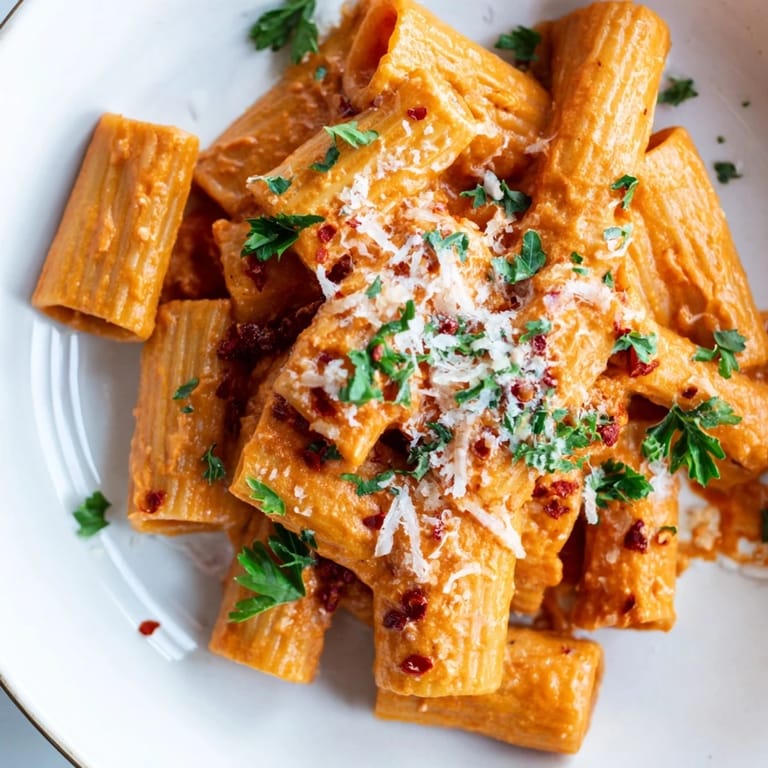
 The first time I made this, I wasn't trying to recreate anything famous—I just had a bottle of vodka sitting in my freezer and a craving for something that felt both cozy and a little dangerous. That combination of creamy, spicy, and rich kept me thinking about it for days after, so naturally, I had to figure out how to nail it at home. This Gigi Hadid-style rigatoni became one of those dishes I'd make on nights when I wanted to feel like I was treating myself, without the fuss of complicated technique. The beauty of it is how quickly the sauce comes together, transforming simple pantry staples into something that tastes like it took hours.
I remember making this for a friend who claimed they didn't really like spicy food, and watching their face change after the first bite was unforgettable. They went back for seconds without hesitation, and suddenly the whole table wanted to know what I'd done differently. That's when I realized this recipe had something special—it wasn't just heat for the sake of it, but a layered, almost creamy heat that somehow made everything feel indulgent.
Ingredients
- Rigatoni (400g): The ridges are your friend here—they trap the sauce in every bite, so don't swap this for spaghetti or penne unless you want a completely different experience.
- Olive oil (2 tbsp): Use something you actually like tasting, because it's one of only a few fat bases carrying the whole dish.
- Shallot (1 small, finely chopped): Shallots are milder and sweeter than onions, which means they soften into the sauce rather than announcing themselves.
- Garlic (2 cloves, minced): Mince it yourself if you can; pre-minced garlic tastes like disappointment in a jar.
- Red chili flakes (1 tsp): This is your starting point, but taste as you go—some batches are hotter than others, and you're the one eating it.
- Tomato paste (60 ml): The real MVP of this sauce; letting it caramelize for a few minutes concentrates all that umami into something deep and complex.
- Vodka (60 ml): It needs to simmer long enough for the harsh edge to cook off, leaving just the flavor-enhancing magic behind.
- Heavy cream (120 ml): Full-fat is non-negotiable here; don't try to lighten this up with half-and-half or you'll lose the luxurious texture.
- Parmesan cheese (60g, grated): Freshly grated is always better than the pre-grated stuff, which has anticaking agents that make the sauce grainy.
- Butter (2 tbsp, unsalted): A small amount of cold butter stirred in at the end gives the sauce an almost silky finish.
- Fresh parsley (2 tbsp, chopped): Add it at the very end so it stays bright green and doesn't cook into submission.
- Salt and black pepper: Season in layers, not all at once at the end.
Tired of Takeout? 🥡
Get 10 meals you can make faster than delivery arrives. Seriously.
One email. No spam. Unsubscribe anytime.
Instructions
- Get the water boiling and pasta going:
- Salt your water generously—it should taste like the sea. While the rigatoni cooks, you'll have time to build the sauce, and reserving that starchy pasta water is going to be your secret weapon for getting the consistency just right at the end.
- Sauté your aromatics:
- Medium heat is key here; you want the shallot to turn translucent and soft, not brown. Once the garlic and chili flakes go in, keep the heat steady for just a minute—you're looking for fragrant, not burned.
- Caramelize the tomato paste:
- This step is easy to rush, but those 2–3 minutes make all the difference. You'll see the paste darken and maybe even stick to the bottom of the pan a little—that's exactly what you want, because those browned bits are pure flavor.
- Deglaze with vodka:
- Pour it in slowly and give it a good stir; let it bubble away for a couple of minutes so the sharp alcohol taste cooks off, leaving just the depth behind. If you skip this step, the sauce will taste tinny and one-note.
- Add the cream and bring it together:
- Lower the heat and stir in the cream slowly; you're building something silky here, not breaking it with too much heat. Simmer for a few minutes until everything is smooth and cohesive.
- Melt in the Parmesan:
- Stir constantly until the cheese disappears into the sauce, then taste and season with salt and pepper. This is your last chance to adjust the balance.
- Combine the pasta with the sauce:
- Add the drained rigatoni and toss everything together. If the sauce seems thick, add reserved pasta water a splash at a time—remember, the sauce will continue to coat the pasta as it sits, so err on the side of slightly looser.
- Finish with butter and parsley:
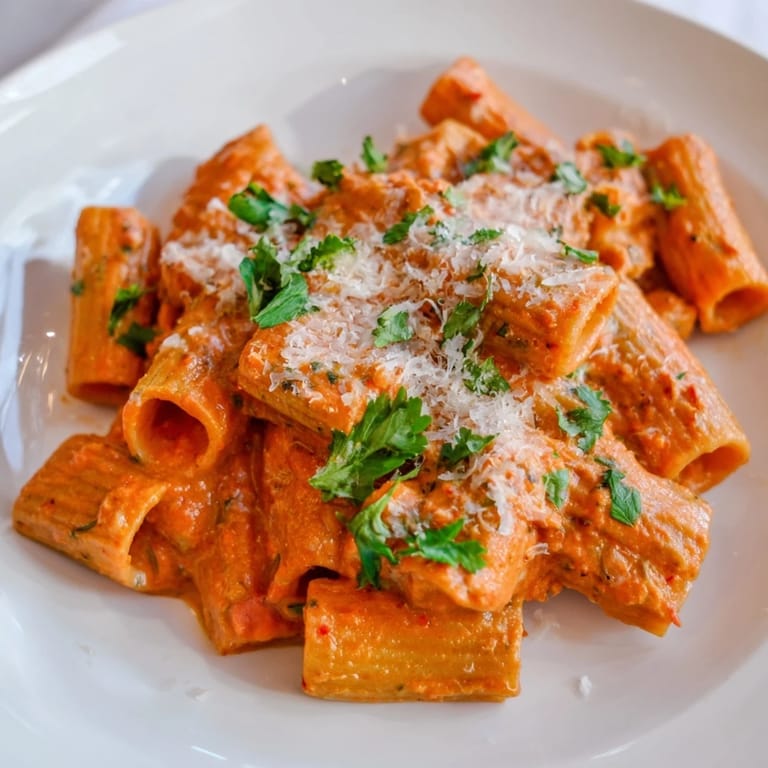
- Stir in the butter for a final touch of silkiness, then scatter the fresh parsley on top. This brightness cuts through all that richness and reminds your palate that vegetables exist.
- Serve immediately:
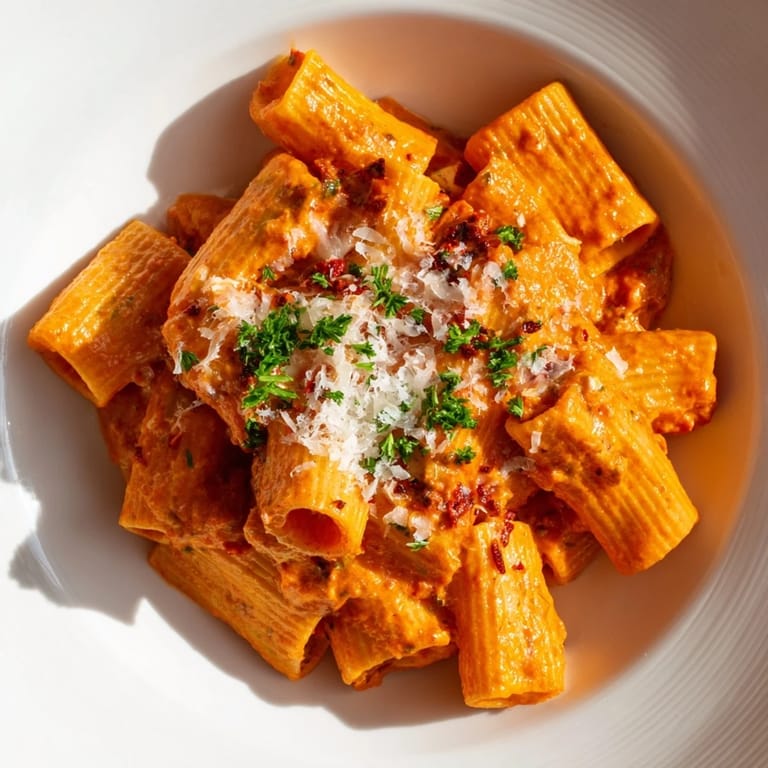
- Plate it right away and top with extra Parmesan and maybe a pinch more chili flakes. This dish doesn't wait well; the sauce will tighten up as it cools.
 Save to Pinterest
 There's something about watching someone's eyes light up when they taste something they didn't expect to love that makes cooking feel less like a chore and more like a small magic trick. This dish has that power—it's fancy enough to impress, but casual enough to make on a random Tuesday night.
Why Vodka Actually Matters Here
When people hear vodka in a pasta sauce, they sometimes think it's just for show, but it's genuinely not. The alcohol burns off during simmering, but what it leaves behind is a flavor depth that you can't quite put your finger on—it rounds out the tomato and makes the spice feel smoother. I've made this sauce without vodka before out of necessity, and it was fine, but it was missing that subtle complexity that makes people ask for your recipe.
Building Heat Without Overwhelming the Dish
The trick with this sauce is that the cream acts as a buffer for the spice, so the chili flakes feel warm and rich rather than aggressive. If you like heat, don't be shy—start with the full teaspoon and add more when you taste. If you're cooking for someone who prefers milder food, use half a teaspoon and let them add more at the table; chili flakes can't be un-added, but they can always be sprinkled on afterward.
Variations That Actually Work
This sauce is forgiving enough that you can play with it without ruining the whole thing. I've added sautéed mushrooms for umami, thrown in a handful of baby spinach for color, and even experimented with a splash of balsamic for depth. The core recipe stays stable no matter what you add, which is the mark of a really solid sauce.
- For a vegan version, swap the heavy cream for oat or cashew cream and use nutritional yeast or vegan Parmesan—you'll lose some of the silk, but it's still delicious.
- If you have fresh red chili in the kitchen, minced and cooked with the shallot, it's even better than flakes because it adds texture and brightness.
- Finishing with fresh mint or basil instead of parsley is not traditional, but it's a small change that feels summery and unexpected.
 Save to Pinterest
 This is the kind of recipe that sneaks into your regular rotation without you planning it. Once you've made it a few times, you'll find yourself craving it on nights when you want to feel taken care of by your own cooking.
Recipe FAQs
- → How can I adjust the spice level?
Modify the amount of red chili flakes according to your heat preference, starting with less and adding more as desired.
- → Can I make this dish vegan?
Use plant-based cream and vegan Parmesan alternatives, and skip the butter for a vegan-friendly version.
- → What wine pairs well with this dish?
A crisp Pinot Grigio complements the rich, creamy tomato-vodka sauce and balances the spices nicely.
- → How do I prevent the sauce from getting too thick?
Reserve some pasta water and gradually stir it into the sauce to reach the desired consistency.
- → Can I add vegetables to this dish?
Sautéed mushrooms or fresh spinach can be added for extra texture and nutrients.