 Save to Pinterest
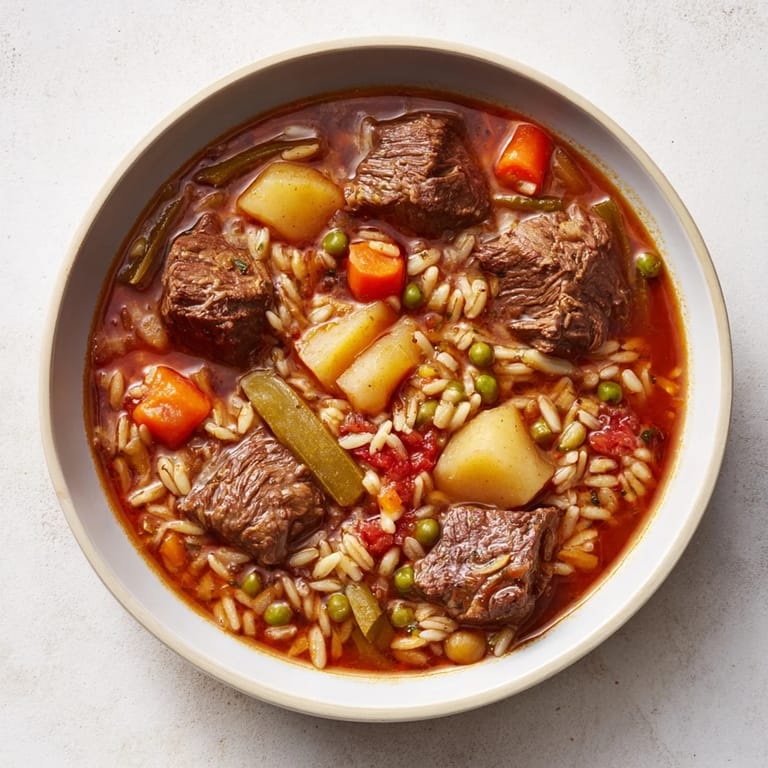
 I threw this together on a Sunday when the weather turned cold without warning. The kind of day where you wake up to frost on the windows and realize summer is truly over. I had beef in the freezer and barley in the pantry, and something about the gray sky made me crave something thick and filling. By the time it was done, the whole house smelled like a farmhouse kitchen.
The first time I made this, I served it to friends who showed up drenched from a rainstorm. They stood in my kitchen peeling off wet jackets while I ladled steaming bowls. No one said much at first, just ate. Then someone asked for seconds, and I knew it was a keeper.
Ingredients
- Beef stew meat: Look for chuck or round, it breaks down beautifully during the long simmer and stays tender.
- Olive oil: You need something with a high smoke point to get a good sear on the meat without burning.
- Onion: Yellow or white work best here, they sweeten as they cook and build the base flavor.
- Carrots: Peel them or the soup ends up with a gritty texture, I learned that the hard way.
- Celery: Adds a subtle vegetal note that balances the richness of the beef.
- Garlic: Fresh is non-negotiable, the jarred stuff tastes flat in a soup this simple.
- Russet potato: It breaks down slightly and thickens the broth naturally.
- Frozen peas: Toss them in at the end so they stay bright green and just tender.
- Diced tomatoes: Use the juice too, it adds acidity and keeps the soup from tasting one-dimensional.
- Pearl barley: Rinse it first or the soup gets cloudy and starchy.
- Beef broth: Low-sodium gives you control over the salt, boxed or homemade both work.
- Water: Thins the broth just enough so it does not become too heavy.
- Bay leaves: Pull them out before serving, they are not meant to be eaten.
- Dried thyme: Earthy and warm, it pairs perfectly with beef.
- Dried oregano: A little goes a long way, too much and it tastes like pizza.
- Black pepper: Freshly ground if you have it, pre-ground is fine if not.
- Salt: Taste as you go, broth saltiness varies wildly by brand.
- Fresh parsley: Optional but it adds a pop of color and freshness right before serving.
Tired of Takeout? 🥡
Get 10 meals you can make faster than delivery arrives. Seriously.
One email. No spam. Unsubscribe anytime.
Instructions
- Brown the beef:
- Heat the oil until it shimmers, then add the beef in a single layer without crowding. Let it sit undisturbed for a minute or two so it develops a deep brown crust. Turn the pieces and brown all sides, then pull them out and set aside.
- Soften the vegetables:
- Toss the onion, carrots, and celery into the same pot. Scrape up any stuck bits from the beef, that is pure flavor. Cook until the onion turns translucent and the celery softens, about five minutes.
- Add the garlic:
- Stir it in and let it cook just until you can smell it. If it burns, it turns bitter, so keep it moving.
- Build the soup base:
- Return the beef to the pot along with the potatoes, tomatoes, barley, bay leaves, thyme, oregano, salt, and pepper. Stir everything together so the spices coat the meat and vegetables.
- Simmer low and slow:
- Pour in the broth and water, then bring it all to a boil. Once it is bubbling, drop the heat to low, cover, and let it simmer for an hour and a half. Stir every so often to keep the barley from sticking to the bottom.
- Finish with peas:
- In the last ten minutes, add the frozen peas. Taste the broth and adjust the salt if needed, it should be savory and full-bodied.
- Serve:
- Fish out the bay leaves, ladle the soup into bowls, and sprinkle parsley on top if you like. Serve it hot with something crusty on the side.
 Save to Pinterest
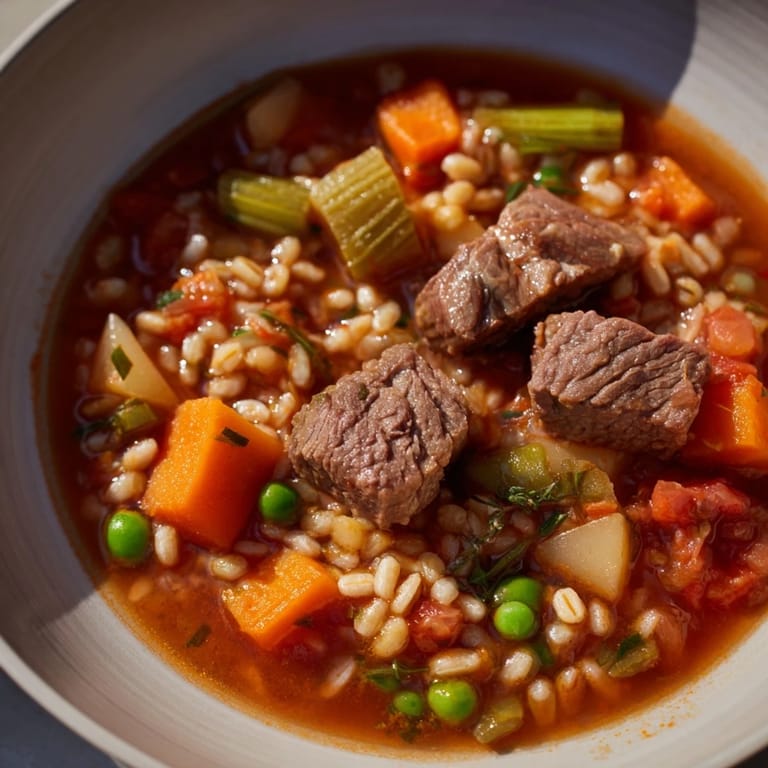
 This soup became my go-to when I did not know what else to make. It does not need fancy ingredients or perfect technique. You just need a pot, some time, and the patience to let it simmer. By the time you serve it, people forget it was simple.
How to Store and Reheat
Let the soup cool completely before transferring it to airtight containers. It keeps in the fridge for up to three days and tastes even better the next day once the flavors marry. Reheat gently on the stove, adding a little water or broth if it has thickened too much. You can freeze it for up to three months, just leave a little headspace in the container so it does not burst as it expands.
Substitutions and Variations
If you need it gluten-free, swap the barley for brown rice or quinoa and adjust the cooking time accordingly. I have made it with lamb instead of beef and it was just as good, maybe even a little richer. A splash of Worcestershire or a spoonful of tomato paste stirred in with the broth adds another layer of umami if you want it deeper.
Serving Suggestions
This soup is a meal on its own, but it pairs beautifully with crusty bread for dipping or a simple green salad on the side. I have also served it over mashed potatoes for something heartier, though that might be overkill depending on your appetite. A glass of red wine does not hurt either.
- Serve with sourdough or a warm baguette.
- Add a dollop of sour cream or a drizzle of olive oil on top for richness.
- Pair with a crisp salad dressed in lemon vinaigrette to cut through the heaviness.
 Save to Pinterest
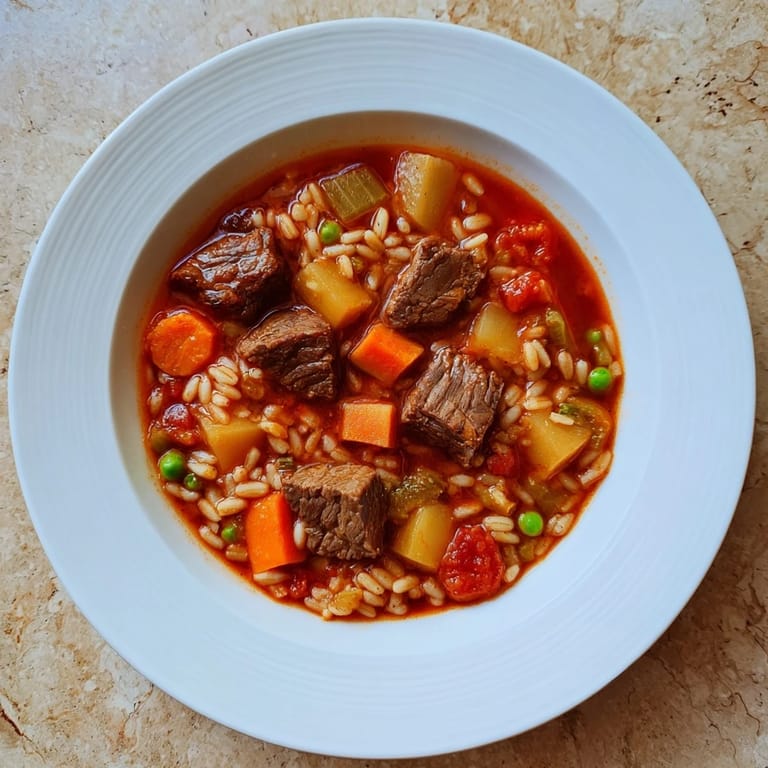
 This is the kind of soup that makes your kitchen feel like home. Make it once and it will end up in your regular rotation.
Recipe FAQs
- → What cut of beef works best for this soup?
Beef stew meat cut into 1-inch cubes is ideal as it becomes tender and flavorful through slow simmering.
- → Can I use a different grain instead of barley?
Yes, substituting barley with brown rice or quinoa works well especially for gluten-free needs.
- → How do herbs like thyme and oregano affect flavor?
Thyme and oregano add an earthy, aromatic quality that enhances the overall savoriness of the broth.
- → When should frozen peas be added to the soup?
Frozen peas are stirred in during the last 10 minutes of cooking to retain their vibrant color and texture.
- → What sides complement this hearty soup?
Crusty bread or a fresh green salad pairs wonderfully, balancing warmth with crispness.