 Save to Pinterest
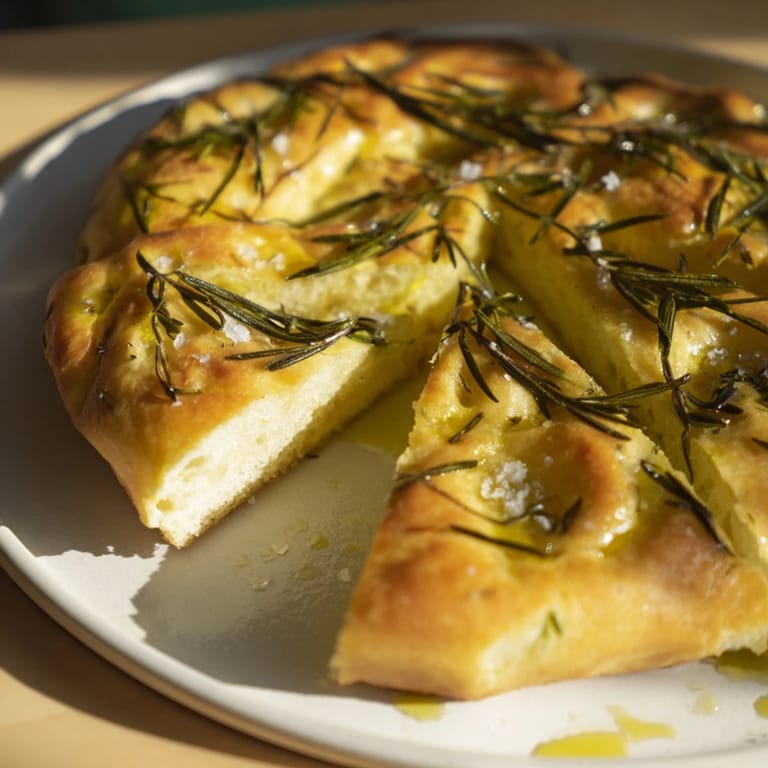
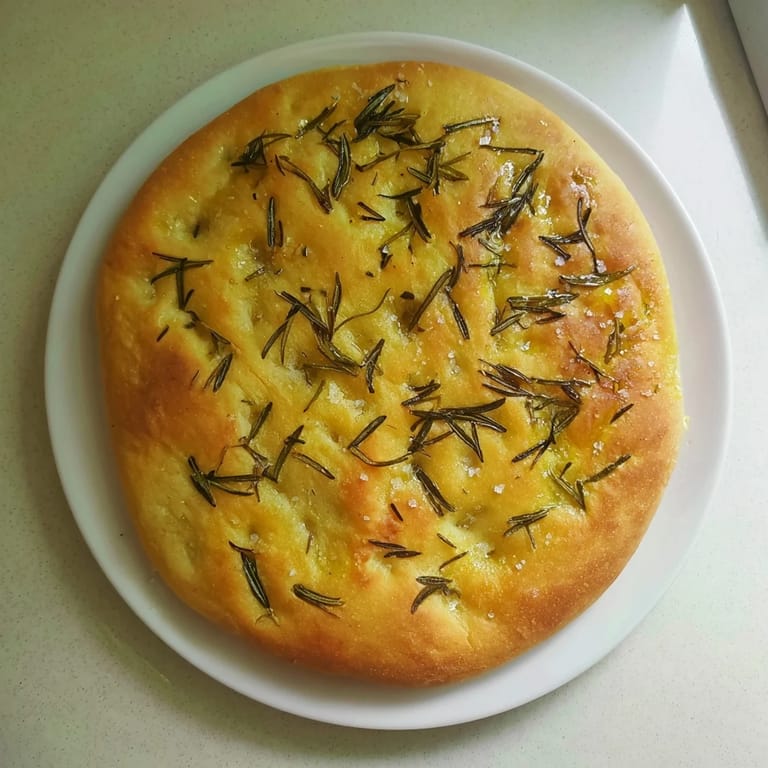
 One Saturday morning, I woke up craving something warm and carby but didn't want to leave the house. I rummaged through my pantry and spotted a bag of bread flour I'd forgotten about. Within minutes, I was kneading dough on my counter, flour dusting my pajama sleeves. The smell of rosemary and olive oil baking together filled every corner of my apartment, and by noon I had golden, dimpled focaccia cooling on a rack. It felt like magic pulling off something so impressive with such simple ingredients.
I made this for a small dinner party once, and my friend Maria, who grew up in Liguria, closed her eyes after the first bite and said it reminded her of her nonna's kitchen. I hadn't expected that kind of reaction. She told me the key was in the dimpling and the generous olive oil, which creates those little pools of flavor. Ever since, I've made focaccia whenever I want to impress someone or just treat myself to something homemade and soul warming.
Ingredients
- Bread flour: This gives focaccia its chewy, airy texture, I tried all purpose once and it turned out flat and dense.
- Instant dry yeast: It works faster than active dry, so you skip the blooming step and get straight to mixing.
- Fine sea salt: Balances the dough without overpowering, save the flaky stuff for the top.
- Extra virgin olive oil: The backbone of focaccia, use something you'd actually want to taste, it makes all the difference.
- Lukewarm water: Too hot kills the yeast, too cold slows it down, aim for just warm to the touch.
- Fresh rosemary: Dried works in a pinch, but fresh releases those piney, aromatic oils when it hits the oven.
- Flaky sea salt: Those big crunchy crystals give each bite a little surprise, don't skip this.
Tired of Takeout? 🥡
Get 10 meals you can make faster than delivery arrives. Seriously.
One email. No spam. Unsubscribe anytime.
Instructions
- Mix the dry ingredients:
- Whisk together the flour, yeast, and fine salt in a large bowl. This ensures the yeast is evenly distributed and won't clump in one spot.
- Add the wet ingredients:
- Pour in the olive oil and lukewarm water, then stir with a wooden spoon until a shaggy, sticky dough forms. It should look rough and unrefined at this stage.
- Knead the dough:
- Turn it out onto a lightly oiled counter and knead for 8 to 10 minutes. You'll feel it transform from sticky and rough to smooth and springy under your hands.
- First rise:
- Place the dough in an oiled bowl, cover it with plastic wrap or a damp towel, and let it rise in a warm spot for about an hour. It should double in size and feel airy when you poke it.
- Prepare the baking sheet:
- Line your baking sheet with parchment and drizzle it with a tablespoon of olive oil. This prevents sticking and starts building that crispy bottom crust.
- Shape and second rise:
- Transfer the dough to the sheet and gently stretch it with your fingertips to fill the pan. Cover again and let it puff up for another 30 minutes.
- Preheat the oven:
- Set your oven to 220 degrees Celsius while the dough is resting. A hot oven is essential for that golden, blistered top.
- Dimple and top:
- Press your fingertips all over the dough to create deep dimples, then drizzle with the remaining olive oil. Scatter rosemary and flaky salt generously across the surface.
- Bake:
- Slide the sheet into the oven and bake for 20 to 25 minutes, until the edges are crisp and the top is golden brown. The smell will be intoxicating.
- Cool and serve:
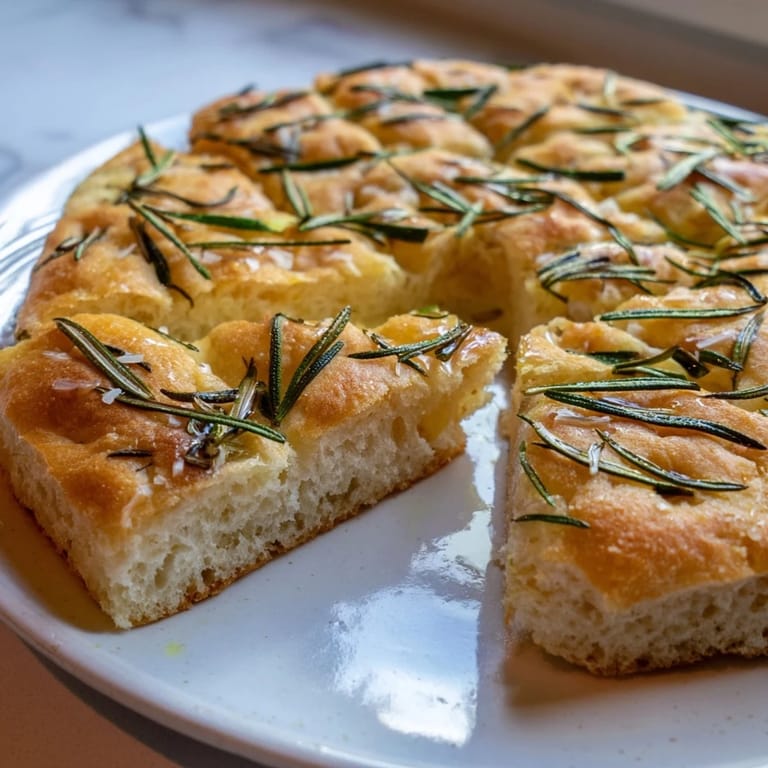
- Let the focaccia cool for a few minutes on the pan, then slice it into squares. Serve it warm or at room temperature, it's perfect either way.
 Save to Pinterest
 There was one evening when I pulled a tray of focaccia out of the oven just as my neighbor knocked on the door. I offered her a piece still warm from the pan, and she ended up staying for an hour, talking and tearing off chunks with her hands. We didn't need plates or forks, just good bread and good company. That's when I realized focaccia isn't just food, it's an invitation.
Storing and Reheating
Focaccia is best the day you bake it, but leftovers can be wrapped in foil and kept at room temperature for a day or two. I like to refresh it in a 180 degree oven for about 5 minutes to bring back some of that crispness. You can also freeze slices wrapped tightly in plastic, then toast them straight from the freezer when a craving hits.
Flavor Variations
Once you get the basic dough down, focaccia becomes a canvas. I've pressed halved cherry tomatoes into the dough before baking, and the juices caramelize into sweet little pockets. Sliced olives, caramelized onions, or even thinly sliced garlic work beautifully too. One time I added crumbled feta and thyme, and it tasted like a Mediterranean vacation on a baking sheet.
Serving Suggestions
I love serving focaccia alongside a bowl of olive oil mixed with balsamic vinegar for dipping. It also makes an incredible base for sandwiches, slice it horizontally and stuff it with mozzarella, tomatoes, and basil. Sometimes I just eat it on its own with a glass of wine, letting the olive oil and salt do all the talking.
- Pair it with a simple arugula salad dressed in lemon and olive oil.
- Use it to mop up pasta sauce or soup, it's a game changer.
- Toast leftover slices and top them with ricotta and honey for breakfast.
 Save to Pinterest
 Focaccia taught me that bread doesn't have to be intimidating or complicated. With a little time and a lot of olive oil, you can create something that feels both rustic and special, something worth sharing.
Recipe FAQs
- → What flour is best for this focaccia?
Bread flour is recommended for a chewy crumb and sturdy structure suitable for the airy texture.
- → How do I achieve a fluffy texture?
Proper kneading and allowing the dough to rise twice at warm temperatures help develop gluten and create an airy crumb.
- → Can rosemary be substituted?
Yes, herbs like thyme or oregano can be used for different aromatic profiles while maintaining freshness.
- → What purpose does sea salt serve here?
Flaky sea salt adds a crunchy texture and bright, briny flavor that contrasts the soft bread.
- → How should the focaccia be stored?
Once cooled, store in an airtight container at room temperature and consume within a day for best texture.
- → Can I add toppings before baking?
Yes, halved cherry tomatoes or sliced olives are great additions that bake into the flatbread for added flavor and moisture.