 Save to Pinterest
 The first time I made tabbouleh, I was standing in a friend's kitchen on a sweltering summer afternoon, watching her mother chop parsley with the kind of speed that made my hands ache just watching. She insisted the secret wasn't in the bulgur or even the lemon, but in how you handle the herbs—with respect, she said, and never a food processor. That afternoon taught me that some dishes carry entire stories in their simplicity, and this grain bowl became one of mine.
I remember bringing a big bowl of this to a potluck where everyone was expecting heavy casseroles, and somehow it disappeared first—even before the desserts. Watching people go back for seconds while talking about how refreshed they felt made me realize this wasn't just a salad; it was the kind of dish that quietly makes gatherings feel lighter and brighter.
Ingredients
- Fine bulgur wheat (1 cup): This is the foundation, and fine bulgur hydrates faster than its coarser cousins, which means you won't end up with hard little pellets if you're not paying close attention.
- Boiling water (1 1/2 cups) and sea salt (1/2 teaspoon): The salt goes in now, during the steeping, so every grain gets seasoned from the start rather than tasting bland underneath a dressing.
- Ripe tomatoes (2 cups, diced): This is where season matters—summer tomatoes will make you cry with how good they are, but winter ones need a little extra love and maybe a pinch of sugar to bring out what's there.
- English cucumber (1/2, diced): English cucumbers have fewer seeds, so they don't weep water into your salad and make everything soggy by day two.
- Fresh flat-leaf parsley (1 1/2 cups, chopped): Don't even think about the dried stuff here; parsley is the main event, and it needs to be vibrant and tender, chopped by hand if you can manage it.
- Fresh mint (1/2 cup, chopped): Mint brings this from good to memorable, adding a cool brightness that makes every bite feel unexpected.
- Scallions (4, thinly sliced): They add a gentle onion punch without overpowering, and that thin slice matters because it lets them scatter throughout instead of forming little crunchy bombs.
- Extra virgin olive oil (1/4 cup): This isn't the place to skimp; good olive oil tastes like sunshine and makes the whole thing sing.
- Fresh lemon juice (1/4 cup): Squeezed, not bottled—this is non-negotiable if you want the brightness that defines tabbouleh.
- Minced garlic (1 clove) and black pepper (1/2 teaspoon): Just enough garlic to whisper rather than shout, and pepper that you crack fresh from the mill.
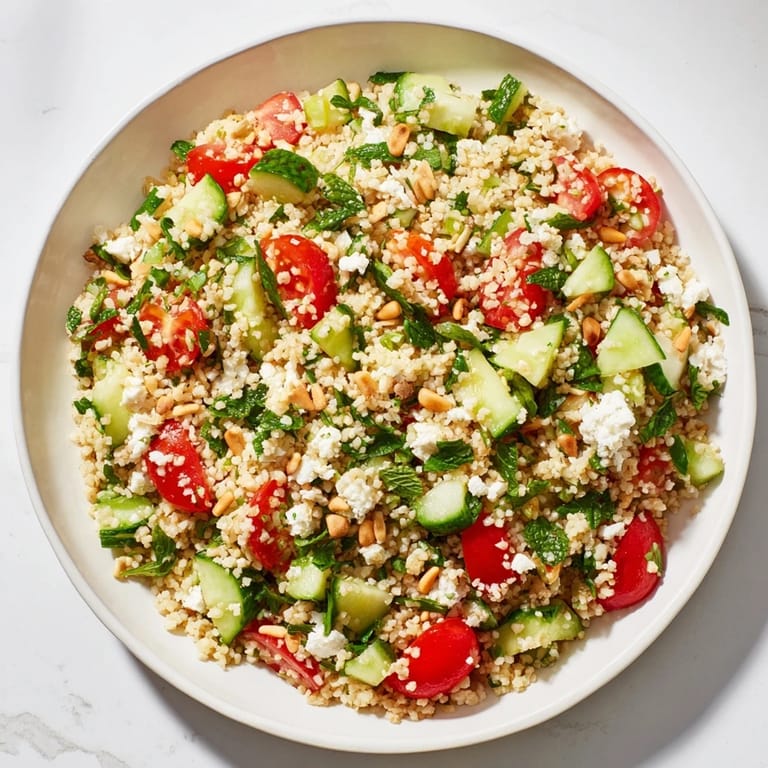
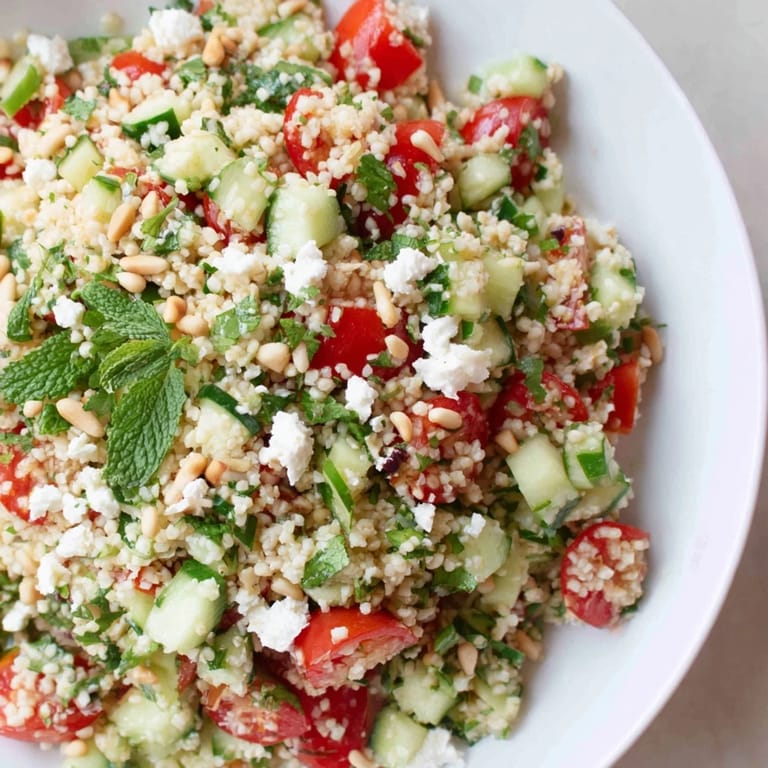
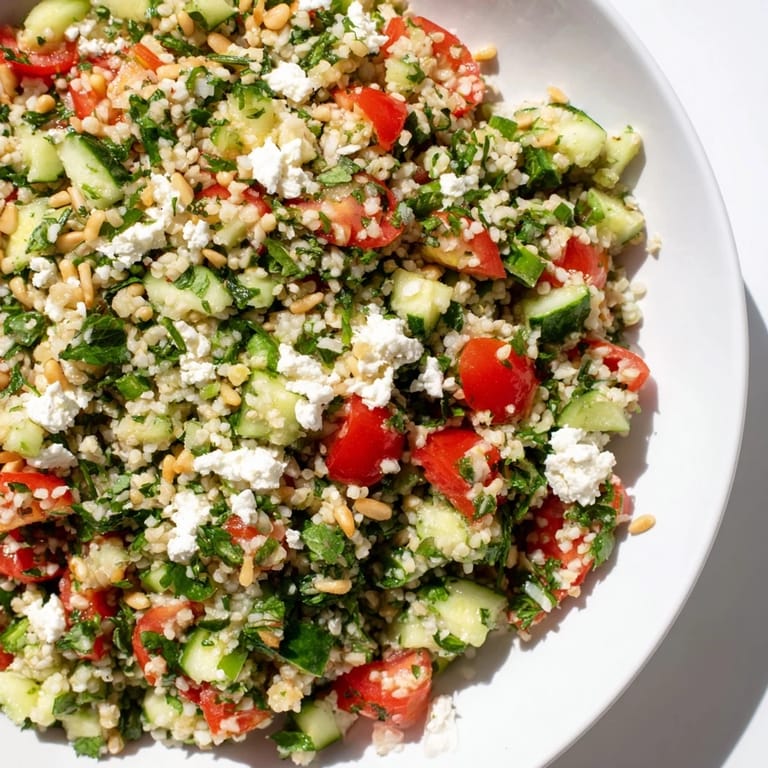
- Optional toppings (feta, pine nuts, lemon wedges): Feta adds creaminess and salt; pine nuts bring a toasted richness; lemon wedges let people adjust tartness to their taste.
Tired of Takeout? 🥡
Get 10 meals you can make faster than delivery arrives. Seriously.
One email. No spam. Unsubscribe anytime.
Instructions
- Steep the bulgur into submission:
- Pour boiling water over the bulgur and salt, cover the bowl, and set a timer for exactly 10 minutes—no peeking, no stirring. When you lift the lid, the grains will be tender and every drop of water absorbed, like magic that's actually just chemistry.
- Let it cool down:
- Fluff the bulgur gently with a fork and let it sit until it's room temperature; this matters because warm grain absorbs dressing differently than cool grain, and you want those flavors to actually stick around.
- Build the dressing:
- Whisk together olive oil, lemon juice, garlic, and pepper in a small bowl until it's emulsified and smells like something you want to drink straight. This is your bridge between the grain and everything else.
- Combine the vegetables and herbs:
- Toss the tomatoes, cucumber, parsley, mint, and scallions into the cooled bulgur with the kind of gentleness you'd use when folding whipped egg whites; you're not making mush here. The fresh herbs are the whole point, so treat them like the delicate things they are.
- Dress it all:
- Pour the dressing over everything and mix until every grain is coated and glistening. Taste it—and really taste it—because seasoning is personal, and you might want more lemon, more salt, or even a whisper of something else.
- Chill and serve:
- A 10-minute chill in the fridge lets the flavors start talking to each other, which sounds poetic but is actually true. Serve it in shallow bowls so people can see all the colors and get the full effect.
 Save to Pinterest
 There's something almost meditative about making this dish, chopping herbs by hand and watching the bowl fill with color. It became my go-to when I needed to feed people something that would make them feel nourished rather than stuffed, and somehow that mattered more than any fancier recipe ever could.
Seasonality and Flexibility
This recipe isn't locked into summer, even though that's when it shines brightest. In winter, use the best tomatoes you can find or add a tiny pinch of sugar to wake them up, and consider adding pomegranate seeds for tartness and texture. Fall is perfect for stirring in roasted chickpeas or adding some charred vegetables, and spring practically demands fresh peas mixed into the grain. The structure stays the same while the feeling shifts with the season.
Making It Your Own
I've made this recipe at least a hundred times and never the same way twice, which is the whole point. Some days I add chickpeas because I'm hungrier; other times I throw in crumbled feta and toast the pine nuts until they're almost burnt because that's what my hands reach for. The dressing is your playground—more garlic if you're feeling bold, a teaspoon of sumac if you want earthiness, or even a tiny splash of pomegranate molasses to push it in a different direction.
Storage and Make-Ahead Magic
This bowl is genuinely better the next day, once everything's had time to know each other. Store it in an airtight container in the fridge, where it will keep for about two days without getting sad or soggy if you had the foresight to go easy on the dressing initially. You can even prep all your vegetables the night before, steam the bulgur in the morning, and come together with dressing and tossing when you're ready to eat. It travels beautifully in a container, which means it's the kind of salad that makes packed lunches feel like an occasion.
- Keep the dressing separate if you're packing it for lunch the next day, adding it right before you eat.
- Toast the pine nuts fresh on the day you serve if possible—they taste exponentially better than anything that's been sitting around.
- Lemon wedges on the side let people adjust the tartness themselves, which means everyone ends up happy.
 Save to Pinterest
 This tabbouleh became my recipe for moments when I wanted to cook something that felt generous without being fussy, nourishing without being heavy. It's the kind of dish that ends up on tables over and over because it just quietly works.
Recipe FAQs
- → How do I prepare the bulgur wheat?
Pour boiling water over fine bulgur and salt, cover, and let it sit for 10 minutes until tender. Then fluff with a fork and cool before mixing.
- → Can I substitute bulgur for a gluten-free option?
Yes, cooked quinoa is a great gluten-free alternative to bulgur while maintaining a similar texture and flavor.
- → What herbs enhance this grain bowl?
Fresh flat-leaf parsley, mint leaves, and scallions bring refreshing and aromatic notes to the dish.
- → How can I add more protein to the bowl?
Incorporate chickpeas or grilled chicken to boost protein content and make it more filling.
- → What optional toppings work well here?
Crumbled feta cheese and toasted pine nuts add texture and richness, while lemon wedges provide extra brightness.