 Save to Pinterest
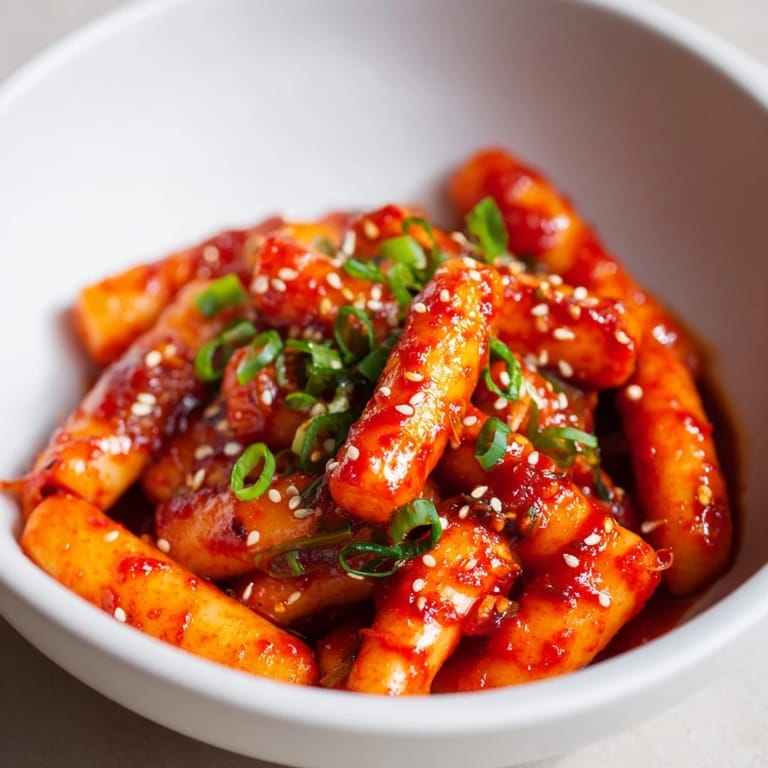
 My first encounter with tteokbokki was at a cramped food stall in Seoul, where steam poured from a cart and the air smelled like heat and garlic. I watched the vendor stir a bubbling pot of glossy red sauce and chewy white cylinders, and when I tasted it, the balance of sweet, spicy, and savory made me forget the cold. I asked for the recipe in broken Korean, and she laughed but scribbled a few words on a napkin. That napkin stayed in my wallet for months until I finally recreated it at home, and now it's the dish I make when I need comfort or a little adventure.
I made this for my roommates one rainy Tuesday, and the smell drew them into the kitchen before I even plated it. We ate straight from the pot with chopsticks, laughing as the sauce stained our fingers red. One of them said it tasted like the best kind of mistake, sweet enough to surprise you, spicy enough to make you pay attention. We finished every last rice cake, and someone suggested we make it a weekly tradition.
Ingredients
- Korean rice cakes (tteok): These cylindrical rice cakes are the heart of the dish, with a chewy, sticky texture that soaks up sauce beautifully. If they're hard from the fridge, a quick soak in warm water brings them back to life.
- Gochujang: This fermented chili paste is the backbone of the sauce, offering depth, sweetness, and a slow building heat that doesn't scream at you. Buy a good quality brand, it makes all the difference.
- Gochugaru: Korean chili flakes add bright red color and a smoky, fruity heat that gochujang alone can't deliver. You can dial it up or down depending on your tolerance.
- Soy sauce: This brings the savory, salty layer that balances the sweetness and ties everything together. Use a Korean or Japanese brand if you can.
- Sugar and honey: The combination creates a glossy, caramelized sweetness that tempers the spice and gives the sauce its signature shine. Corn syrup works too if that's what you have.
- Garlic: Fresh minced garlic adds a sharp, aromatic punch that mellows as it simmers into the broth. Don't skip it.
- Kelp and anchovies: These build a deeply savory broth that anchors the sauce, though you can leave out the anchovies for a vegetarian version. The kelp alone still gives you plenty of umami.
- Green onions: Sliced diagonally, they add a fresh, sharp bite and a pop of green that cuts through the richness at the end. They're more than a garnish.
- Onion and cabbage: These vegetables soften into the sauce and add subtle sweetness and texture without stealing the spotlight from the rice cakes. Totally optional, but worth it.
- Boiled eggs: Halved and nestled into the sauce, they soak up flavor and add richness, plus they look beautiful on the plate. I always add them.
- Sesame seeds: A sprinkle at the end adds a nutty aroma and a tiny crunch that feels like the finishing touch the dish needs.
Tired of Takeout? 🥡
Get 10 meals you can make faster than delivery arrives. Seriously.
One email. No spam. Unsubscribe anytime.
Instructions
- Wake up the rice cakes:
- If your rice cakes are firm or cold from the fridge, soak them in warm water for about 10 minutes. They'll soften just enough to cook evenly without turning mushy.
- Build the broth:
- Combine 3 cups of water, the kelp, and anchovies (if using) in a medium pot and bring it to a gentle simmer for 10 minutes. Remove the kelp and anchovies with a strainer, leaving behind a golden, fragrant broth that smells like the ocean.
- Stir in the soul:
- Add gochujang, gochugaru, soy sauce, sugar, honey, and minced garlic to the broth. Stir slowly until the paste dissolves completely and the broth turns a deep, glossy red.
- Add the rice cakes:
- Drop in the soaked rice cakes, sliced onion, and cabbage if you're using it, then bring everything to a gentle boil. Stir occasionally so nothing sticks to the bottom, and watch as the sauce begins to cling to the rice cakes.
- Let it thicken:
- Simmer for 10 to 15 minutes, stirring gently, until the sauce reduces and thickens into a glossy coat and the rice cakes are soft and chewy. The kitchen will smell incredible.
- Finish with freshness:
- Toss in the green onions and boiled eggs during the last 2 minutes so they warm through and soak up a little sauce. The green onions will soften just slightly but keep their bite.
- Serve hot:
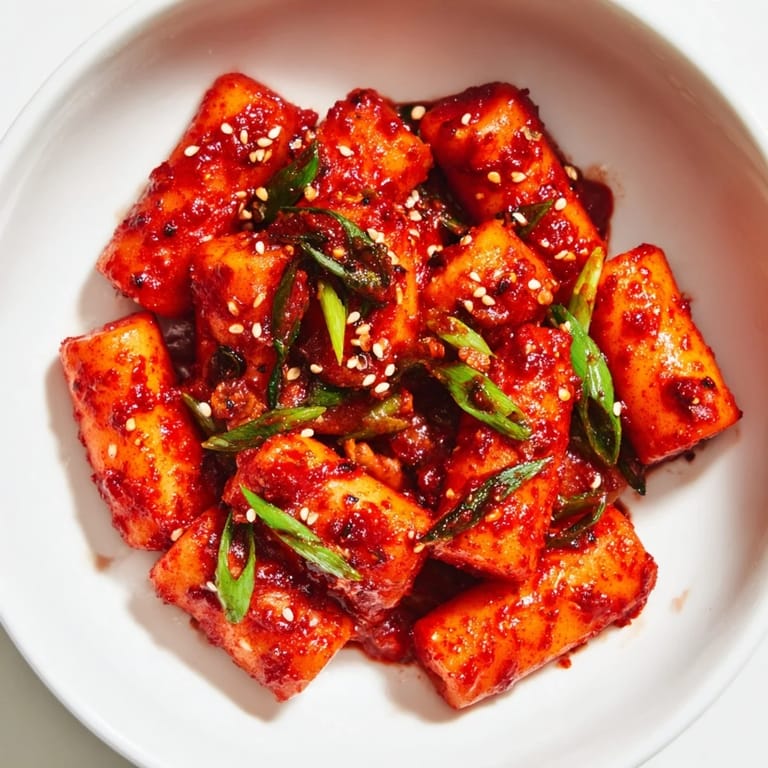
- Transfer everything to a serving platter, sprinkle with sesame seeds, and serve immediately while the sauce is still bubbling. Eat it with chopsticks and don't be afraid to slurp.
 Save to Pinterest
 The first time I nailed this recipe, I brought a big bowl to a potluck, and it disappeared in minutes. People kept asking what it was, and I loved watching them taste it for the first time, eyes widening at the spice, then softening at the sweetness. One friend said it was like eating a hug with a kick, and I think about that description every time I make it now.
Making It Your Own
Once you've made this a few times, you'll start to see how flexible it is. I've added sliced fish cakes for extra chew, thrown in instant ramen noodles during the last few minutes for a heartier meal, and even stirred in a handful of mozzarella at the end for a creamy, stretchy twist that's wildly popular in Korea. Some nights I keep it simple with just rice cakes and green onions, other times I load it up with mushrooms, bok choy, and soft boiled eggs. The sauce is forgiving and welcomes whatever you want to add.
Serving Suggestions
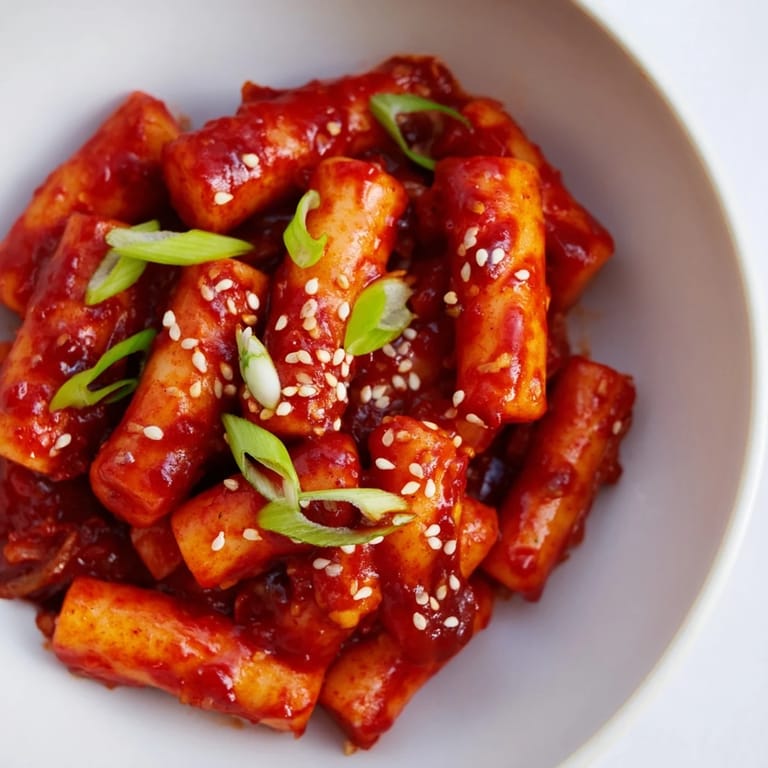
Tteokbokki is street food at heart, so it's meant to be casual and communal. I like to serve it straight from the pot or in a shallow bowl, with pickled radish on the side to cut through the richness and refresh your palate between bites. Steamed dumplings, fried seaweed rolls, or even crispy fried chicken make great companions if you're feeding a crowd. A cold glass of barley tea or a light lager balances the heat beautifully, though sometimes I just drink ice water and keep going back for more.
Storage and Reheating
Leftovers keep in the fridge for up to three days, though the rice cakes will firm up and absorb more sauce as they sit. When you reheat it, add a splash of water or broth to loosen things up and bring the sauce back to life. I usually reheat it gently on the stove, stirring often, and it tastes almost as good as the first day. The flavors deepen overnight, so some people actually prefer it the next day.
- Store in an airtight container and keep the sauce and rice cakes together so they stay moist.
- Reheat on low heat with a little extra liquid to prevent sticking and drying out.
- Don't freeze it, the rice cakes turn grainy and lose their signature chew when thawed.
 Save to Pinterest
 This dish has become my go to when I want something that feels like a small adventure without leaving my kitchen. I hope it brings you the same warmth and joy it's brought me, one chewy, spicy, sweet bite at a time.
Recipe FAQs
- → What are Korean rice cakes and where can I find them?
Korean rice cakes (tteok) are cylindrical, chewy rice products made from glutinous rice flour. They're available in Asian markets, either fresh or frozen. Fresh ones need soaking in warm water for 10 minutes before cooking, while frozen cakes can be used directly from the freezer.
- → Can I make tteokbokki less spicy?
Yes, reduce the amount of gochugaru (chili flakes) or use less gochujang. You can start with half the recommended amounts and adjust to your heat preference. The dish will still maintain its signature sweet and savory profile even with reduced spice levels.
- → Is this dish vegetarian?
Tteokbokki can be made vegetarian by substituting the anchovy broth with vegetable stock or using kelp-only dashi. Ensure your gochujang and soy sauce are certified vegetarian, and omit fish cakes if included. Boiled eggs can be added for extra protein.
- → What can I add to make tteokbokki heartier?
Fish cakes (eomuk), boiled eggs, and vegetables like cabbage, mushrooms, or spinach work wonderfully. You can also serve alongside steamed dumplings, pickled radish, or kimchi to create a more substantial meal.
- → How do I prevent the rice cakes from sticking together?
Stir occasionally during cooking and ensure the sauce is at a gentle boil rather than a rolling boil. Soaking fresh rice cakes beforehand and not overcrowding the pot also helps maintain individual cakes and prevents sticking.
- → Can I prepare this ahead of time?
Prepare the broth and sauce components in advance and refrigerate separately. Cook the rice cakes fresh when ready to serve, as they're best enjoyed immediately while they're at their chewiest. Leftovers can be stored in an airtight container for up to two days.