 Save to Pinterest
 The smell hit me first: sharp, tangy, almost electric. My roommate had left a jar of kimchi in the fridge, and I was hungry with nothing but leftover rice and eggs. I threw it all in a pan with some gochujang I found in the back of the cupboard, and suddenly my tiny kitchen smelled like a Seoul street cart. That scrappy dinner turned into my go-to comfort meal, the kind I crave after long days when I need something bold and fast.
I made this for a friend who swore she hated spicy food. She took one cautious bite, then another, then scraped her plate clean and asked for the recipe. We sat at my counter with mismatched bowls, and she admitted the funkiness of the kimchi made everything else make sense. That night taught me that the right dish can surprise people, including yourself.
Ingredients
- Cold cooked white rice: Day-old rice is drier and separates beautifully in the pan, while fresh rice turns mushy and clumpy.
- Napa cabbage kimchi: The soul of this dish, it brings tang, funk, and a little crunch that deepens as it caramelizes.
- Kimchi juice: Do not toss it, this brine is packed with umami and helps coat every grain of rice.
- Large eggs: Scrambled right in the pan, they add richness and little pockets of creamy texture.
- Onion and green onions: The white parts cook down sweet, the green parts stay bright and sharp when folded in at the end.
- Carrot: Optional, but it adds a hint of sweetness and a pop of color if you want a little balance.
- Gochujang: Korean chili paste that brings heat, sweetness, and deep red color all at once.
- Soy sauce: Adds saltiness and that savory backbone that ties everything together.
- Toasted sesame oil: A few drops at the end make the whole dish smell nutty and finished.
- Vegetable oil: For high-heat stir-frying without burning.
- Sugar: A tiny bit smooths out the acidic edge if your kimchi is extra sour.
- Optional protein: Crispy pork belly, Spam, or pan-fried tofu all work beautifully here.
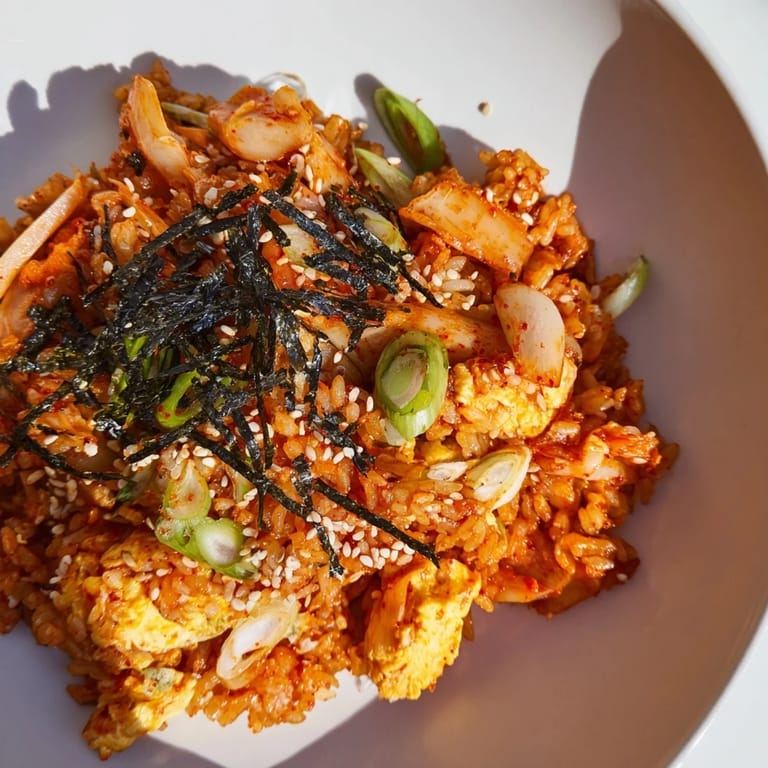
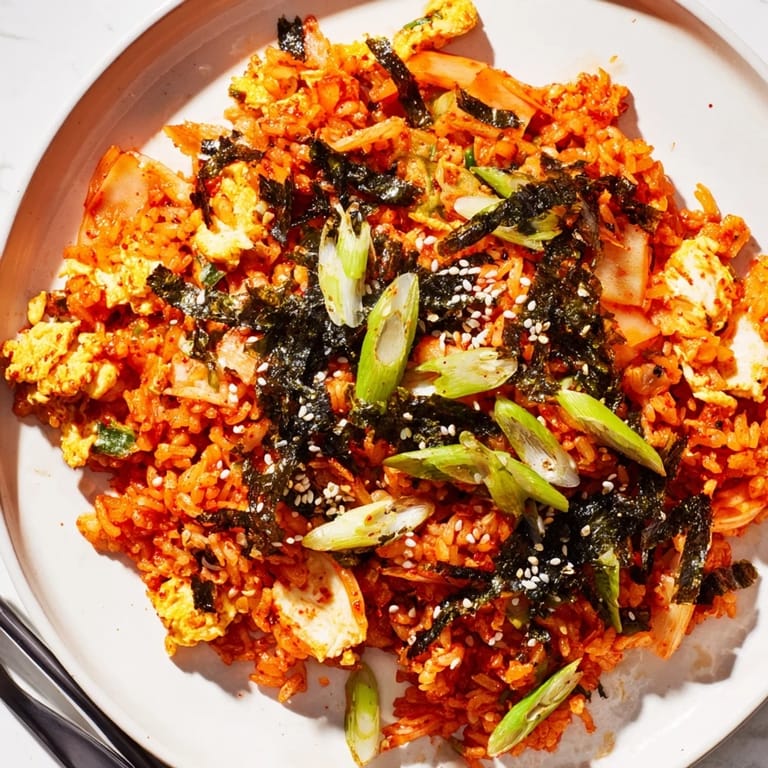
- Garnishes: Sesame seeds, extra green onion, and roasted seaweed add texture and make it look like you tried.
Tired of Takeout? 🥡
Get 10 meals you can make faster than delivery arrives. Seriously.
One email. No spam. Unsubscribe anytime.
Instructions
- Start with the aromatics:
- Heat vegetable oil in a large skillet or wok over medium-high heat. Toss in the diced onion, white parts of green onion, and carrot, and let them sizzle for 2 to 3 minutes until softened and starting to brown at the edges.
- Bring in the kimchi:
- Add the chopped kimchi and stir-fry for 2 to 3 minutes, letting it caramelize and release that funky, tangy aroma that fills the whole kitchen.
- Add the flavor base:
- Stir in the gochujang, soy sauce, and sugar if using. Mix everything together until the pan is coated in that deep red, glossy sauce.
- Scramble the eggs:
- Push everything to one side of the pan, crack the eggs into the empty space, and scramble them gently until just set. They will finish cooking as you mix everything together.
- Fold in the rice:
- Add the cold rice, breaking up any clumps with your spatula, then pour in the kimchi juice and stir-fry for 3 to 4 minutes. You want every grain coated and heated through, with a little crispy bits forming on the bottom if you are lucky.
- Finish with freshness and fat:
- Drizzle the sesame oil over the top, then fold in the green parts of the green onion and any optional protein or tofu. Taste and adjust with more soy sauce or gochujang if it needs a boost.
- Serve it hot:
- Plate it up and scatter sesame seeds, extra green onion, and roasted seaweed strips on top. Eat it while it is still steaming.
 Save to Pinterest
 One rainy Tuesday, I made this for myself and ate it straight from the pan while standing at the stove. No plate, no ceremony, just me and that perfect balance of heat and tang. It tasted better than anything I could have ordered, and I realized that some of the best meals are the ones you do not overthink.
Making It Your Own
This recipe is a template, not a rule. I have thrown in leftover rotisserie chicken, fried Spam until it was crispy, and even stirred in frozen peas when I had nothing else green. Once, I topped it with a runny fried egg and broke the yolk into the rice, and it became a whole new dish. Trust your instincts and use what you have, it is one of those rare recipes that gets better the more you improvise.
Adjusting the Heat
Gochujang varies wildly in spice level depending on the brand, so start with a tablespoon and taste before adding more. If it is too spicy, stir in a little extra sesame oil or a spoonful of butter to mellow it out. If you want more kick, add a drizzle of gochugaru (Korean chili flakes) or a diced fresh chili. I learned this after making it nuclear-hot for a guest who politely sweated through the entire meal.
Storage and Leftovers
This keeps well in the fridge for up to three days, though the rice will firm up as it cools. Reheat it in a hot skillet with a splash of water or broth to loosen it up, and it tastes almost as good as fresh. I have also packed it cold in a lunchbox and eaten it at room temperature, which is surprisingly satisfying.
- Store in an airtight container and keep the garnishes separate so they stay crunchy.
- You can freeze portions for up to a month, though the texture will soften slightly when reheated.
- Top leftovers with a fried egg or a dollop of Greek yogurt to make it feel new again.
 Save to Pinterest
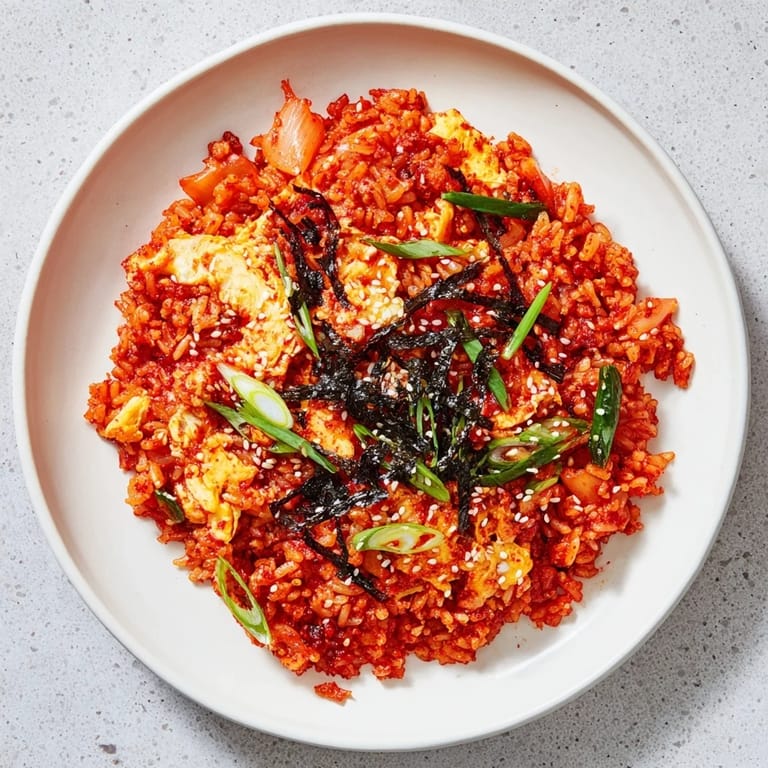
 This dish does not need much from you, just a hot pan and a willingness to let the kimchi do its thing. Make it once, and it will become the meal you turn to when you want something fast, bold, and entirely yours.
Recipe FAQs
- → Can I use fresh rice instead of day-old rice?
Day-old rice works best because it has less moisture and won't clump during stir-frying. If using fresh rice, spread it on a plate to cool completely and separate the grains before cooking. You can also lightly freeze fresh rice for 15-20 minutes.
- → How do I adjust the spice level?
Start with 1 tablespoon of gochujang and increase to 2 tablespoons for more heat. You can also reduce kimchi quantity or choose milder kimchi varieties. Add a pinch of sugar to balance the spice and acidity if it becomes too intense.
- → What's the best way to prevent mushy eggs?
Push the stir-fried mixture to the side and scramble eggs in the empty space. Once they're just set but still slightly wet, immediately combine with the rice. This prevents overcooking and maintains fluffy, tender eggs throughout the dish.
- → Can I make this vegan?
Absolutely. Omit the eggs entirely or substitute with pressed, cubed firm tofu. Add the tofu during the vegetable sauté stage to warm it through. Ensure your kimchi and gochujang are fish-sauce free for a fully vegan version.
- → How should I store and reheat leftovers?
Store in an airtight container in the refrigerator for up to 3 days. Reheat gently in a skillet with a splash of water or sesame oil over medium heat, stirring occasionally. Avoid microwaving, which can dry out the rice and make it hard.
- → What proteins work best as additions?
Cooked pork belly, Spam, diced ham, or firm tofu all work wonderfully. For seafood, try cooked shrimp or canned crab. Pre-cook all proteins before adding to ensure they're heated through. Aim for 1/2 cup diced protein per 2-serving batch.