 Save to Pinterest
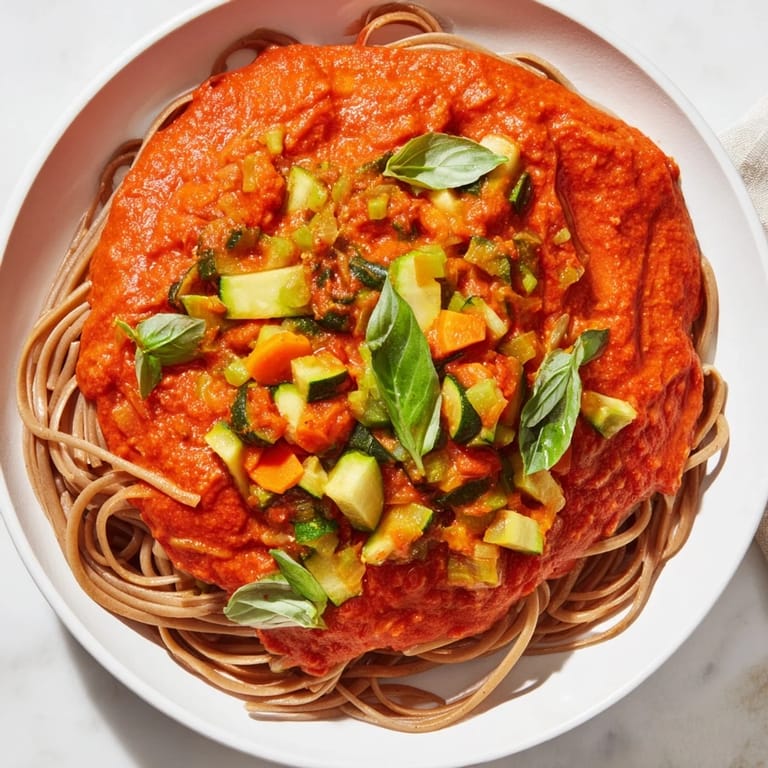
 There's something quietly magical about watching a saucepan transform from a pile of colorful vegetable scraps into something glossy and deep. I discovered this sauce one evening when I had half a zucchini softening on the counter and a carrot that refused to go to waste. What started as a practical solution became something I make constantly, not because it's virtuous, but because it tastes genuinely good—the kind of sauce that makes you forget you're eating an entire garden.
I made this for my roommate who claimed to hate tomato sauce, convinced the acidity always made her stomach hurt. She had thirds that night and asked for the recipe before I'd even finished cleaning the blender. Sometimes the smallest shift—pureeing everything smooth, adding just a hint of sugar, cooking it low and gentle instead of aggressively bubbling away—changes everything about how a dish lands.
Ingredients
- Carrot (1 medium, peeled and chopped): Adds natural sweetness and body to the sauce; carrots break down completely when blended, making the sauce velvety without cream.
- Zucchini (1 small, chopped): Disappears entirely into the blend, adding volume and moisture without overpowering the tomato flavor.
- Bell pepper (1, red or orange, seeded and chopped): Choose red or orange for sweetness; green will make the sauce taste grassy.
- Onion (1 small, chopped): The foundation for savory depth; don't skip this.
- Garlic (2 cloves, minced): Add after the softer vegetables so it doesn't burn and turn bitter.
- Celery (1 stalk, chopped): A secret weapon that adds umami without anyone knowing why the sauce tastes so complete.
- Crushed tomatoes (2 cans, 400g each): Use quality canned tomatoes; fresh ones often disappoint in cooked sauce.
- Tomato paste (2 tbsp): Concentrated tomato flavor that deepens the sauce and helps it cling to pasta.
- Olive oil (1 tbsp): Just enough to soften the vegetables without making the sauce greasy.
- Dried oregano (1 tsp): The backbone of tomato sauce; fresh herbs wilt away during cooking.
- Dried basil (1 tsp): Pairs with oregano to create that Italian flavor without effort.
- Salt (1/2 tsp) and black pepper (1/4 tsp): Season gradually; you can always add more but can't take it out.
- Sugar (1/2 tsp, optional): Balances acidity from the tomatoes; tastes nothing like sweet, just rounds out the flavor.
Tired of Takeout? 🥡
Get 10 meals you can make faster than delivery arrives. Seriously.
One email. No spam. Unsubscribe anytime.
Instructions
- Get everything ready:
- Chop all your vegetables first—onion, carrot, celery, zucchini, bell pepper—and mince your garlic. This five-minute step makes the actual cooking feel easy and prevents scrambling when the pan gets hot.
- Sauté the hard vegetables:
- Heat olive oil over medium, add onion, carrot, celery, zucchini, and pepper, and cook for 8–10 minutes until they soften and smell sweet. You'll see them go from rigid to tender; this is when the starch starts turning into natural sweetness.
- Add the garlic:
- Stir in your minced garlic for just one minute until fragrant; any longer and it starts tasting harsh. The aroma will tell you it's ready.
- Wake up the tomato paste:
- Add the tomato paste and cook for one minute, stirring constantly. This deepens its color and mellows any tinny canned taste.
- Build the sauce:
- Pour in both cans of crushed tomatoes, add oregano, basil, salt, pepper, and sugar if using. Stir everything together and bring to a gentle simmer—not a rolling boil, which breaks down the tomatoes unevenly.
- Let it soften:
- Cover and simmer for 20–25 minutes, stirring occasionally, until all the vegetables have completely softened and lost their shape. The sauce will darken slightly as it reduces.
- Blend until smooth:
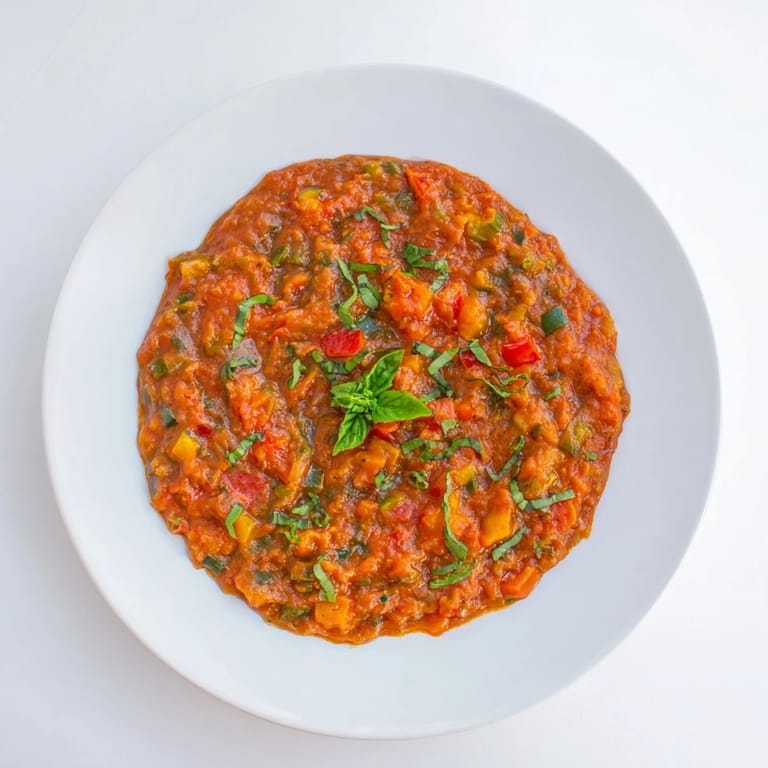
- Remove from heat and use an immersion blender to purée the sauce until completely smooth, working in batches if you're using a countertop blender. This step is where the magic happens—everything becomes luxurious and clinging.
- Final simmer:
- Return the sauce to low heat and simmer uncovered for 5–10 minutes, stirring occasionally, to adjust the thickness and let flavors marry. Taste and adjust salt or add another pinch of sugar if needed.
 Save to Pinterest
 This sauce stopped being about vegetables and nutrition the moment I realized my dad—the man who eats pasta with butter and salt—asked for seconds. It became something else entirely: proof that cooking is less about virtue and more about making people feel cared for with something delicious in a bowl.
Why This Sauce Feels Effortless
What makes this different from other tomato sauces isn't the ingredient list; it's the ratio of vegetables to tomato and the blending. Most sauces are tomatoes with vegetables scattered through them. This one is built the other way—vegetables first, tomato as the binder. By the time you blend it, you've created something that tastes richer and more complex than the sum of its parts, without a single cream-based shortcut.
Stretching This Into Other Meals
Freezing batches of this sauce is genuinely worth the effort. I'll defrost a container on busy Tuesdays and have dinner on the table in the time it takes pasta to cook. But this sauce also works as a base for other things: spread it under cheese in a baked pasta, stir it into soups, swirl it into yogurt for a vegetable dip, or simmer chicken in it for something that tastes slow-cooked without the commitment.
Small Tweaks That Change Everything
The vegetables I choose depend on what I'm trying to accomplish. A handful of spinach stirred in at the end adds iron and turns the sauce a deeper color. Broccoli florets soften and almost disappear, adding fiber without texture. For something heartier, white beans or lentils stirred in after blending transform this from a side dish into something closer to a main course.
- If the sauce tastes thin after cooking, let it simmer uncovered for an extra 10 minutes to reduce and concentrate.
- Red and orange peppers make the sauce taste brighter than green ones, which add an earthy, almost bitter note that some people love and others avoid.
- Keep tasting as you go; acidity varies wildly between tomato brands, so one batch might need an extra pinch of sugar and another might need more salt.
 Save to Pinterest
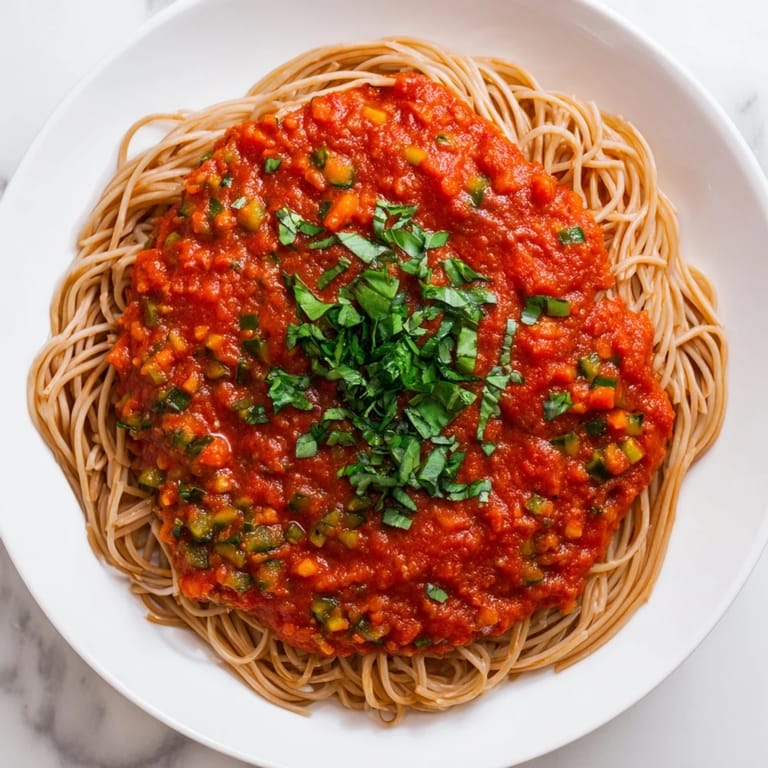
 This sauce doesn't ask for much—just time and a willingness to blend vegetables into something unrecognizable. The reward is a sauce that tastes like you've been simmering it for hours, without any of the actual hours involved.
Recipe FAQs
- → Can I make this sauce ahead of time?
Yes, the sauce can be prepared in advance and stored in the refrigerator for up to three days, or frozen for up to three months without losing flavor.
- → What vegetables enhance the sauce's flavor?
Carrots, zucchini, bell peppers, onions, celery, and garlic add depth and sweetness, creating a rich, vibrant blend.
- → How can I adjust the sauce’s texture?
Blend the cooked vegetables thoroughly for a smooth consistency, or pulse less for a chunkier texture.
- → Can I add heat to the sauce?
Yes, a pinch of red pepper flakes can be added while simmering for a subtle spicy kick.
- → What herbs best complement this sauce?
Dried oregano and basil are used during cooking, with fresh basil added as a garnish to enhance aromas and freshness.
- → Is this sauce suitable for special diets?
Yes, it is naturally vegetarian, vegan, and free of nuts, making it appropriate for a variety of dietary preferences.