 Save to Pinterest
 One humid afternoon, I was standing in my kitchen with nothing but peanut butter, noodles, and the kind of hunger that only comes from skipping lunch. I threw together what I had—some soy sauce, a dab of sriracha—and tossed it all together, half-wondering if it would even work. It did. Now, years later, this dish is my go-to when I need something warm, satisfying, and ready in under 30 minutes.
I remember bringing this to a potluck once and watching people go back for thirds, asking what restaurant I'd gotten it from. That look of surprise when I said I'd made it at home, with ingredients from the regular grocery store, made the whole thing feel a little magical.
Ingredients
- 12 oz dried rice noodles or spaghetti: Rice noodles give you that delicate, slightly chewy bite, but honestly, whatever you have works fine.
- 1/2 cup creamy peanut butter: The heart of everything—use the good stuff that doesn't have added sugar if you can.
- 1/4 cup soy sauce: This is your salt and umami base, so don't skip it.
- 2 tbsp rice vinegar: The bright note that keeps the sauce from feeling heavy.
- 1 tbsp toasted sesame oil: Just a small amount gives an incredible depth that makes people ask what's in it.
- 2 tbsp honey or maple syrup: A touch of sweetness to balance the heat and spice.
- 2–3 tbsp sriracha or chili garlic sauce: Start with 2 and taste your way to your comfort level.
- 2 cloves garlic, minced: Fresh garlic makes all the difference—don't even think about the jarred stuff here.
- 1 tbsp fresh ginger, grated: This adds a warming spice that makes the whole thing feel more sophisticated.
- 1/4 cup warm water: Use this to loosen the sauce to exactly the consistency you want.
- 1 cup shredded carrots: They stay slightly crisp and add sweetness and color.
- 1 cup thinly sliced bell pepper: Any color works, though red or yellow feels brightest.
- 2 scallions, thinly sliced: A fresh, sharp finish that's worth the extra minute to prep.
- 1/4 cup roasted peanuts: These add texture and remind you what's holding everything together.
- 1/4 cup fresh cilantro: If you're someone who loves it, this is your victory lap.
- Lime wedges: Trust me on this—a squeeze at the end brightens everything.
Tired of Takeout? 🥡
Get 10 meals you can make faster than delivery arrives. Seriously.
One email. No spam. Unsubscribe anytime.
Instructions
- Boil the noodles:
- Fill a large pot with water and bring it to a rolling boil. Add the noodles and cook according to the package directions, stirring occasionally so they don't clump. You want them tender but still with a little bite to them.
- Cool them down:
- Drain the noodles in a colander, then run them under cold water for a few seconds—this stops the cooking and keeps them from sticking together in a solid mass.
- Make the sauce:
- In a medium bowl, add the peanut butter, soy sauce, rice vinegar, sesame oil, honey, sriracha, garlic, and ginger. Whisk it all together until you've got something smooth and pourable, adding warm water a little at a time. You're looking for the consistency of thick cream.
- Bring it together:
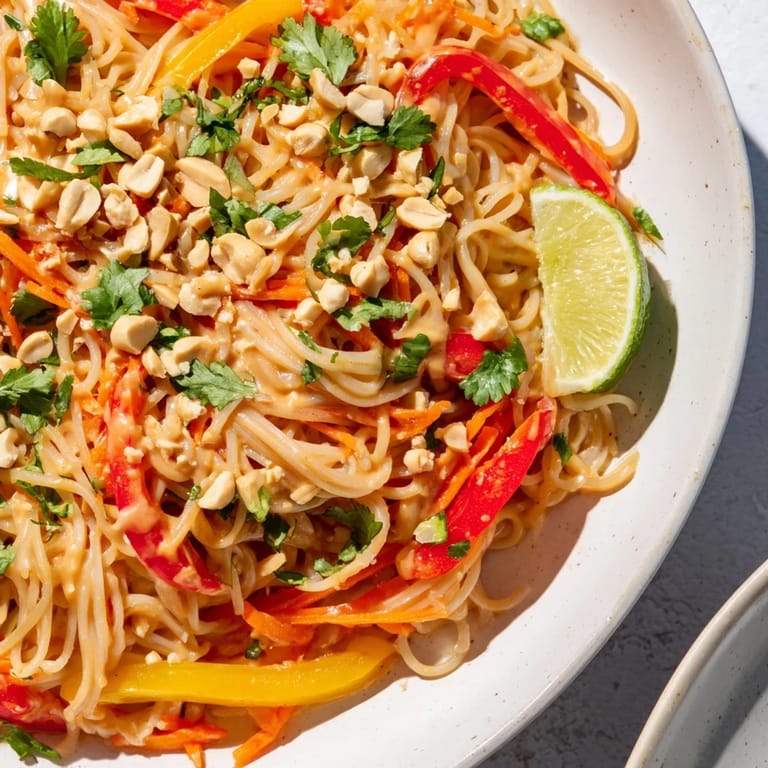
- In your largest mixing bowl, combine the cooled noodles, shredded carrots, and sliced bell pepper. Pour that gorgeous sauce over everything and toss it all together using two utensils or your (clean) hands, making sure every noodle gets coated.
- Finish and serve:
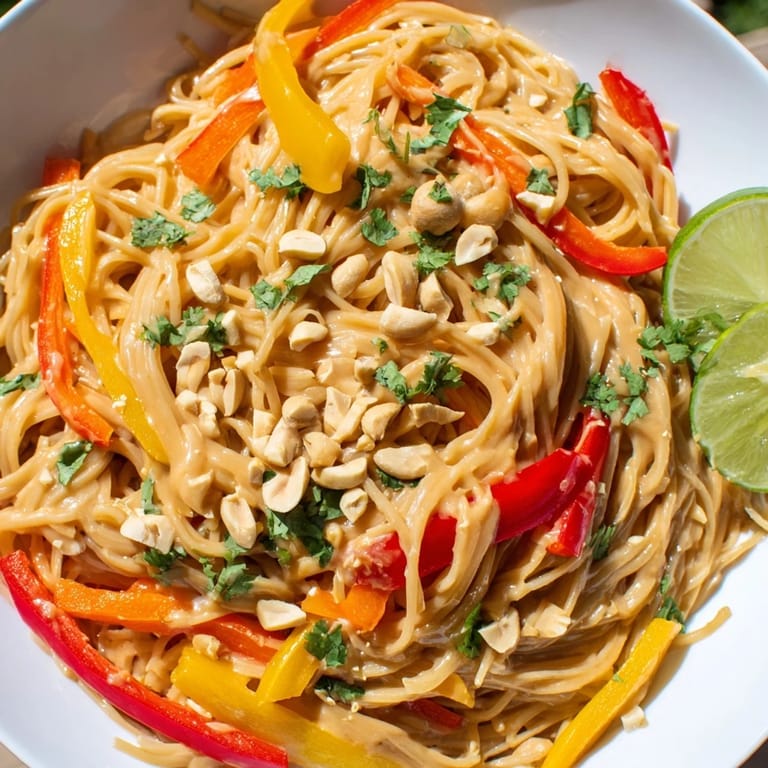
- Divide the noodles among serving bowls and top each one with sliced scallions, a handful of roasted peanuts, cilantro, and a generous squeeze of lime juice. Serve right away while it's still warm, or chill it for a cold noodle bowl if that's more your speed.
 Save to Pinterest
 There's something almost meditative about standing at the counter, tossing warm noodles through a silky sauce, watching the colors shift as you mix in the bright vegetables. By the time you're ready to eat, you've already made something that feels both homemade and a little bit fancy.
The Heat Level Is Yours to Control
This is one of the great joys of making this at home—you get to decide exactly how much fire you want. Start with 2 tablespoons of sriracha, mix the sauce, taste it, and add more if you're craving that extra kick. Some nights I barely use any heat and let the ginger and garlic take the spotlight; other nights I'm reaching for a third tablespoon because I'm in that kind of mood.
Making It a Complete Meal
On its own, this is a solid vegetarian main dish, but I've learned that a little extra protein makes it feel more substantial. A few pieces of sautéed tofu scattered through the bowl adds texture, cooked chicken brings heartiness, and shrimp transforms it into something you might order at a restaurant. Even a soft-boiled egg on top changes the whole experience.
Smart Variations and Substitutions
Over time, I've discovered that this sauce is forgiving and friendly to swaps. If you don't have sesame oil, a neutral oil works, though you lose a little of that nutty depth. Can't find rice noodles? Spaghetti or any pasta you have on hand tastes just as good, though the texture is different. For anyone avoiding soy, tamari is a straightforward swap, and if you're cooking for someone with a nut allergy, sunflower seed butter or tahini can stand in for the peanut butter.
- Almond or cashew butter brings different flavor notes if you want to experiment.
- Cold noodles work wonderfully for lunch bowls the next day when you need something refreshing.
- Prep all your vegetables the night before if you're making this on a busy weeknight.
 Save to Pinterest
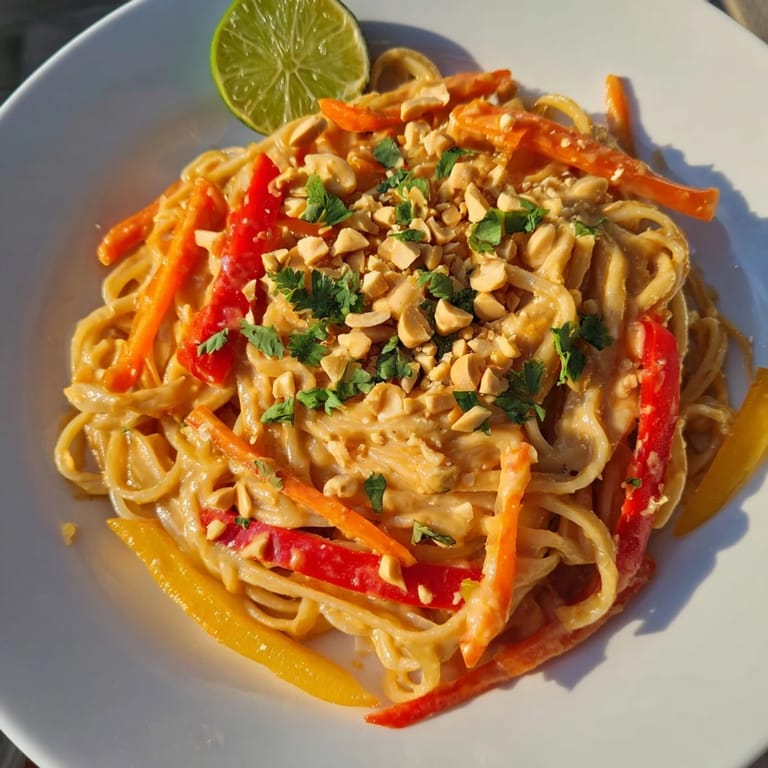
 This is the kind of dish that quietly becomes part of your regular rotation, the one you make when you want something delicious without spending hours in the kitchen. Once you've made it once, you'll find yourself reaching for it again and again.
Recipe FAQs
- → What type of noodles work best?
Dried rice noodles or spaghetti both work well; select based on preferred texture and availability.
- → How can I adjust the spice level?
Modify the amount of sriracha or chili garlic sauce to suit your taste, adding gradually for controlled heat.
- → Can I make this dish gluten-free?
Yes, use gluten-free noodles and tamari instead of soy sauce to keep it suitable for gluten sensitivities.
- → What are some good protein add-ins?
Try sautéed tofu, cooked chicken, or shrimp to enhance the dish with extra protein.
- → Is there a substitute for peanut butter?
Almond or cashew butter can be used; for nut allergies, sunflower seed butter is a safe alternative.