 Save to Pinterest
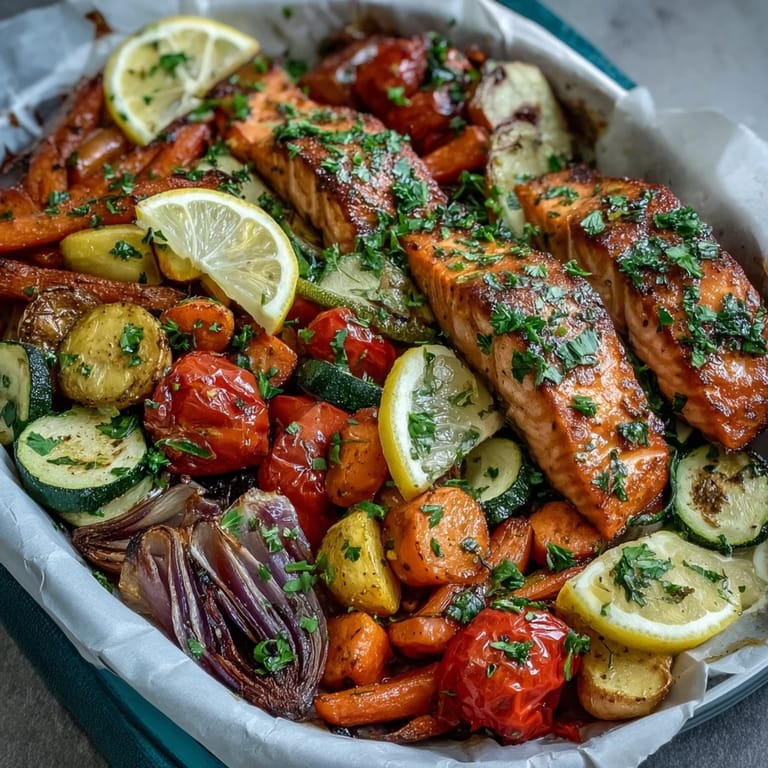
 Last Tuesday I stood in my kitchen staring at salmon that needed cooking and vegetables threatening to wilt, and I realized I'd never actually made everything on one pan before. Twenty minutes later, the whole thing came out golden and steaming, my apartment smelled like a fancy restaurant, and I understood why everyone keeps raving about sheet pan dinners. It's not fancy, but it feels that way when you're eating it.
My friend Marcus came over on a random Thursday when I was too tired to plan anything complicated, and I threw this together almost on autopilot. He kept saying things like 'wait, you're just doing this on one pan?' and then asking for seconds, which felt like winning something. That's when it clicked that simple food cooked well beats complicated food every single time.
Ingredients
- Skinless salmon fillets (4, about 5-6 oz each): Look for ones that feel firm and smell clean like the ocean, not fishy—that's your signal they're fresh and worth the money.
- Olive oil (3 tablespoons total): Use something you'd actually taste in a salad, because the quality matters when there are so few ingredients competing for attention.
- Lemon zest: Fresh is non-negotiable here; it's the brightness that makes people ask what's in this.
- Red onion, carrots, bell peppers (both colors), zucchini: Cut them all to roughly the same thickness so everything roasts at the same speed and nothing ends up raw or charred.
- Cherry tomatoes (1 cup, halved): These burst and caramelize into little pockets of sweetness, especially if you catch them at the right roasting time.
- Dried Italian herbs (1 teaspoon): A simple blend covers you when you're not thinking too hard about seasoning.
- Salt and black pepper: Generous amounts on both the veggies and the salmon separately, because they cook differently.
- Fresh parsley for garnish: Chop this just before serving so it stays bright green and actually tastes like something.
- Lemon wedges: These aren't optional; they're the finishing move that ties everything together.
Tired of Takeout? 🥡
Get 10 meals you can make faster than delivery arrives. Seriously.
One email. No spam. Unsubscribe anytime.
Instructions
- Heat your oven properly:
- Set it to 425°F and let it preheat while you work—this temperature is the sweet spot where vegetables caramelize and salmon stays moist. A cold oven is your enemy here.
- Prep your vegetables with intention:
- Toss your onion, carrots, peppers, zucchini, and tomatoes in a bowl with 2 tablespoons olive oil, the dried herbs, and salt and pepper until everything's coated evenly. Spread them across your parchment-lined sheet pan in a single layer so they actually caramelize instead of steaming.
- Give vegetables a head start:
- Roast them alone for 10 minutes while you handle the salmon—this ensures they're tender and starting to brown by the time the fish joins them. You want that caramelized edge.
- Prepare salmon with care:
- Pat your fillets completely dry with a paper towel, brush with 1 tablespoon olive oil, then sprinkle with lemon zest, salt, and pepper. Dry salmon is the secret to it not sticking and getting that gentle crust.
- Nestle salmon among vegetables:
- Pull the pan out after 10 minutes and carefully tuck the salmon fillets into the spaces between vegetables, making sure they're in contact with the hot pan. Return everything to the oven for 12-15 minutes until the salmon flakes easily and the vegetables are tender with caramelized edges.
- Finish with brightness:
- The moment it comes out, scatter fresh parsley over everything and serve with lemon wedges on the side. That fresh herb and squeeze of lemon is what makes people actually taste it as restaurant quality.
 Save to Pinterest
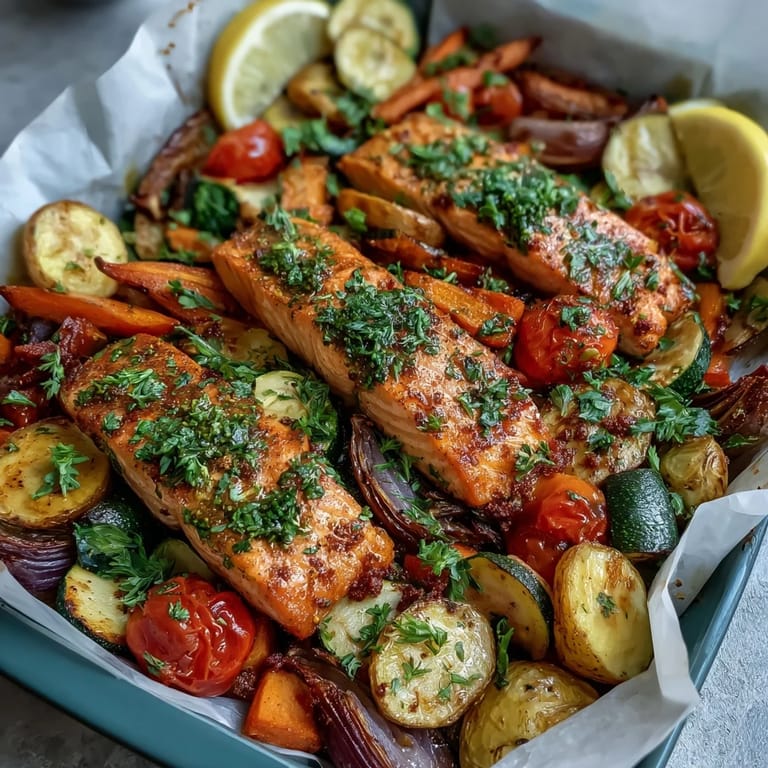
 There's a moment in the last two minutes of roasting when you open the oven and the steam hits your face carrying all these roasted vegetable smells mixed with salmon, and you just know dinner is going to be good. My daughter wandered into the kitchen halfway through that night and didn't leave until it was ready to plate.
Timing Is Everything
The 10-minute head start for vegetables is crucial because raw salmon and raw carrots finish at completely different times. If you throw everything on the pan together, you either get chewy salmon or crunchy vegetables, and neither is what you're after. This staggered approach means everything arrives at perfection simultaneously, which is honestly the whole appeal of cooking this way.
Customizing Your Vegetables
The vegetables I listed work beautifully together, but this is actually one of those rare recipes that genuinely improves when you swap in whatever looks good at your market. Asparagus, broccoli, sweet potato rounds, or thin slices of fennel all work—just keep them roughly the same size and you're fine. I've done versions with Brussels sprouts when it's cold outside and it feels different but equally satisfying.
Making It Your Own
Once you understand how this comes together, it becomes a blueprint you'll use constantly because it's so flexible. The basic structure never changes, but the personality you bring to it does.
- A scattered handful of feta cheese right after it comes out of the oven gets creamy in the heat and tastes luxury.
- A drizzle of balsamic glaze on the finished plate adds a sweet-tangy depth that makes people pause mid-bite.
- Fresh dill instead of parsley if you love fish and herb combinations, or even a sprinkle of sesame seeds for something completely different.
 Save to Pinterest
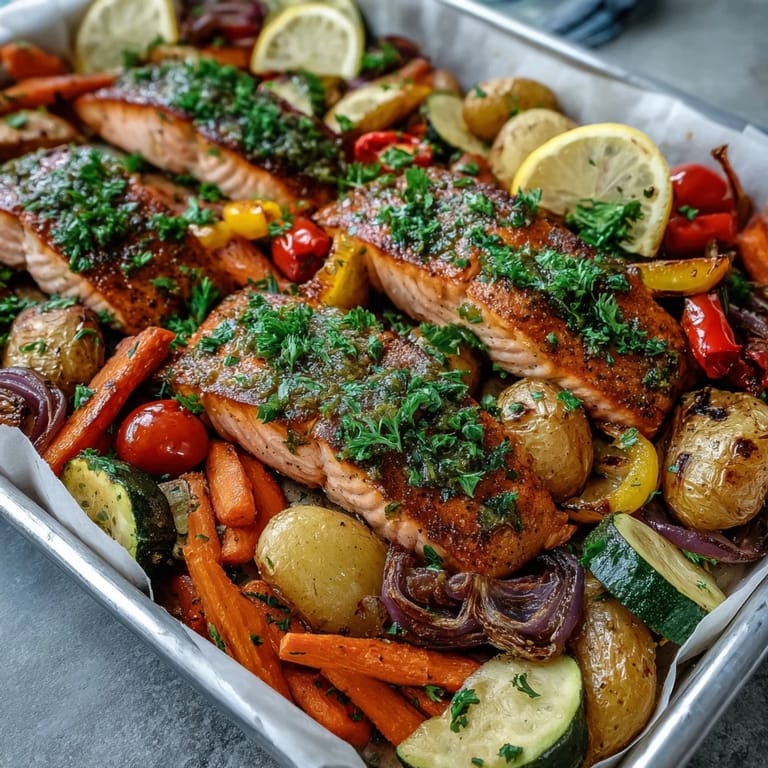
 This is the kind of dinner you make when you want something impressive but you're too tired for complexity, and somehow it always delivers. Once you nail it once, you'll be making it constantly.
Recipe FAQs
- → What temperature should the oven be set to?
Preheat your oven to 425°F (220°C) for optimal roasting. This high temperature ensures the salmon cooks through while developing a nice exterior and the vegetables become tender and caramelized.
- → Can I use frozen salmon fillets?
Yes, thaw the salmon completely before cooking and pat it dry to remove excess moisture. This helps achieve better seasoning adhesion and prevents the fish from becoming watery during roasting.
- → What other vegetables work well in this bowl?
Asparagus, broccoli florets, sweet potato cubes, Brussels sprouts, or green beans are excellent substitutes. Adjust cooking times slightly depending on the vegetable density—harder vegetables may need a few extra minutes.
- → How do I know when the salmon is done?
The salmon is finished when it flakes easily with a fork and reaches an internal temperature of 145°F (63°C). The flesh should be opaque and slightly pink throughout, with no translucency in the center.
- → Can I prepare this ahead of time?
Yes, chop the vegetables up to a day in advance and store them in an airtight container in the refrigerator. Season and roast just before serving for the best texture and flavor. Leftovers keep well for 2-3 days.